In a groundbreaking study recently published in Nature Communications, researchers have unveiled a mechanosensitive pathway within endothelial cells that appears to play a pivotal role in the progression of pulmonary fibrosis. This discovery sheds unprecedented light on the intricate molecular crosstalk that governs lung tissue remodeling, providing new avenues for therapeutic intervention in a disease that has long eluded effective treatment strategies. By leveraging cutting-edge single-cell multiomics technologies, the team has pinpointed a critical axis involving the mechanosensitive ion channel PIEZO1 and the cytokine IL-33, forging a biological nexus that drives the pathological fibrosis of pulmonary tissues.
Pulmonary fibrosis, characterized by excessive scarring and stiffening of the lung interstitium, undermines respiration and frequently culminates in respiratory failure. Despite advances in understanding this complex disorder, the cellular and molecular underpinnings remain incompletely defined, particularly regarding how mechanical forces translate into fibrotic signals within the lung microenvironment. The current study elucidates how endothelial cells, which line the blood vessels, respond to biomechanical stimuli through the activation of PIEZO1, a specialized ion channel known to convey mechanical cues into biochemical signals. This mechanotransduction event initiates a cascade culminating in the release of IL-33, a cytokine that propagates inflammatory and profibrotic responses, thereby exacerbating tissue fibrosis.
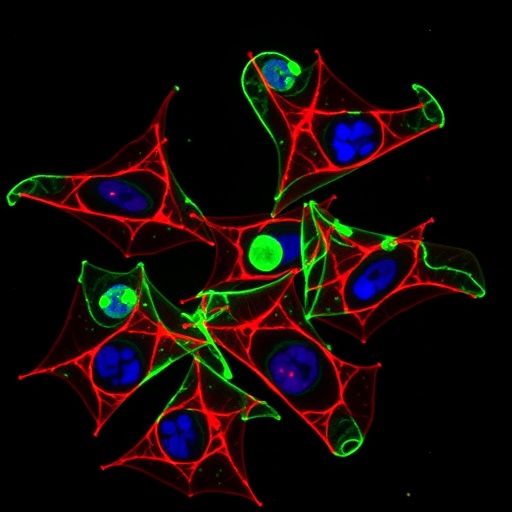
Employing a comprehensive single-cell approach, the investigators meticulously profiled transcriptomes, epigenomes, and proteomes of pulmonary cells from both fibrotic and healthy lungs, enabling a granular view of cellular heterogeneity and signaling dynamics. This multi-layered analysis revealed a distinct subpopulation of endothelial cells marked by enhanced PIEZO1 expression and mechanosensitivity, implicated directly in fibrotic processes. The simultaneous interrogation of gene expression and chromatin accessibility further illuminated how mechanical stimuli reshape the regulatory landscape within endothelial cells, priming them for pro-fibrotic behavior.
Functional studies confirmed that mechanical stretch or fluid shear stress activates PIEZO1, leading to a surge in intracellular calcium levels that stimulates the secretion of IL-33. This cytokine acts in a paracrine manner on neighboring fibroblasts and immune cells, amplifying inflammatory signaling and promoting collagen deposition, hallmark features of fibrotic remodeling. Notably, genetic ablation or pharmacological blockade of PIEZO1 in endothelial cells markedly attenuated IL-33 secretion and mitigated fibrosis in preclinical models, underscoring the therapeutic potential of targeting this axis.
The work also highlights the dual role of IL-33 within the fibrotic milieu. While historically recognized as an alarmin involved in initiating immune responses, here IL-33 emerges as a critical mediator translating mechanical stress into chronic tissue remodeling. This revelation recontextualizes IL-33 beyond its canonical immunomodulatory function, positioning it as a key effector downstream of mechanotransduction pathways. The interplay between PIEZO1 and IL-33 thus represents a novel intersection between mechanical biology and immunology in the pathophysiology of pulmonary fibrosis.
In-depth characterization of downstream signaling pathways further elucidated how IL-33 engages specific receptor complexes on target cells, eliciting NF-κB activation and fibrotic gene expression. These molecular insights reveal a feedback loop wherein mechanical cues perpetuate inflammatory and fibrotic programs, creating a vicious cycle that propels progressive lung damage. Importantly, this mechanistic link underscores the sensitivity of endothelial cells as key sensors and transducers of pathological mechanical environments in diseased lung tissue.
The implications of these findings extend beyond pulmonary fibrosis, offering broader perspectives on how mechanical forces orchestrate cellular behaviors in fibrotic diseases of diverse organ systems. Given the ubiquitous presence of PIEZO1 in endothelial and other mechanically exposed cells, this research paves the way for a new paradigm in understanding fibrotic disease etiology centered on mechanotransduction pathways. Therapeutic modulation of PIEZO1 or the IL-33 axis could thus represent a transformative strategy applicable to conditions marked by aberrant tissue stiffening and inflammation.
Furthermore, the application of single-cell multiomic technologies exemplified in this study epitomizes the power of integrative, high-resolution analyses to unravel complex cellular networks with unprecedented precision. By capturing dynamic changes across multiple molecular layers simultaneously, the researchers were able to dissect intricate signaling relationships driving disease pathogenesis at the single-cell level. This methodological advancement is likely to catalyze further discoveries by enabling researchers to decode the interplay of mechanical, genetic, and epigenetic factors in various pathological contexts.
The study’s robust experimental design also incorporated in vivo models of lung fibrosis, which validated the mechanistic insights gleaned from human samples and cellular systems. Through genetic manipulation of PIEZO1 specifically in endothelial cells and subsequent evaluation of fibrotic outcomes, the researchers demonstrated causality rather than mere association. These translational insights enhance the clinical relevance of their findings and energize efforts toward developing targeted therapeutics that can be rapidly transitioned into clinical testing.
In light of the severe morbidity and mortality associated with pulmonary fibrosis and the current paucity of effective treatments, this discovery holds great promise for improving patient outcomes. The identification of the PIEZO1-IL-33 axis provides a concrete molecular target amenable to pharmacological intervention, potentially enabling the development of novel drugs that interrupt the maladaptive mechanosensitive signaling driving fibrosis. Such breakthroughs are eagerly anticipated in clinical pulmonology, where new mechanistic insights can directly inform precision medicine approaches.
Beyond therapeutic implications, the research deepens fundamental understanding of endothelial biology within the mechanically dynamic environment of the lung. The endothelial lining is increasingly recognized as a critical regulator of tissue homeostasis and pathology, responding intricately to fluid shear forces, pressure changes, and extracellular matrix stiffness. Insights from this work underscore the role of mechanosensitive ion channels like PIEZO1 as gatekeepers of endothelial function and pathological remodeling, inviting further exploration into their diverse roles across vascular biology.
Importantly, this research also invites a reevaluation of pulmonary fibrosis as not solely an immune-driven disorder but one inherently intertwined with biomechanical dysfunction. By bridging vascular biology, mechanotransduction, and immunology, the study opens new conceptual vistas for understanding how physical forces shape disease trajectories. This integrated perspective is poised to inspire novel diagnostic and therapeutic strategies harnessing the mechanobiology of diseased tissues.
Looking forward, the authors suggest that future investigations could explore the interplay of PIEZO1 with other mechanosensors and cytokines within the lung microenvironment, as well as potential interactions with metabolic and hypoxic signaling pathways frequently dysregulated in fibrosis. Such multi-dimensional studies would further unravel the complex web of signals coordinating fibrotic remodeling and identify additional therapeutic leverage points.
In conclusion, this landmark study leverages state-of-the-art single-cell multiomics to uncover a previously unrecognized endothelial mechanosensitive axis involving PIEZO1 and IL-33 that critically drives the progression of pulmonary fibrosis. By establishing a mechanistic framework linking mechanical stress to cytokine-mediated fibrosis, the research charts a promising new course for the development of targeted therapies to combat this devastating disease. As the field embraces the nuanced interplay of biomechanics and immunology, the PIEZO1-IL-33 axis stands out as a beacon guiding future fibrotic disease research and clinical innovation.
Subject of Research: Pulmonary fibrosis mechanisms; endothelial cell mechanotransduction.
Article Title: Single-cell multiomics uncovers an endothelial mechanosensitive PIEZO1-IL-33 axis driving pulmonary fibrosis.
Article References:
Zhang, L., Gui, X., Hou, R. et al. Single-cell multiomics uncovers an endothelial mechanosensitive PIEZO1-IL-33 axis driving pulmonary fibrosis. Nat Commun 17, 2655 (2026). https://doi.org/10.1038/s41467-026-70193-w
Image Credits: AI Generated
DOI: https://doi.org/10.1038/s41467-026-70193-w
Tags: biomechanical signaling in pulmonary fibrosiscytokine-mediated inflammation in fibrosisendothelial cell mechanotransductionendothelial cells in fibrotic lung diseasefibrosis progression mechanismsIL-33 cytokine role in lung diseaselung tissue remodeling and scarringmechanosensitive signaling in respiratory diseasesmolecular pathways in lung fibrosisPIEZO1 mechanosensitive ion channelsingle-cell multiomics in pulmonary fibrosistherapeutic targets for pulmonary fibrosis