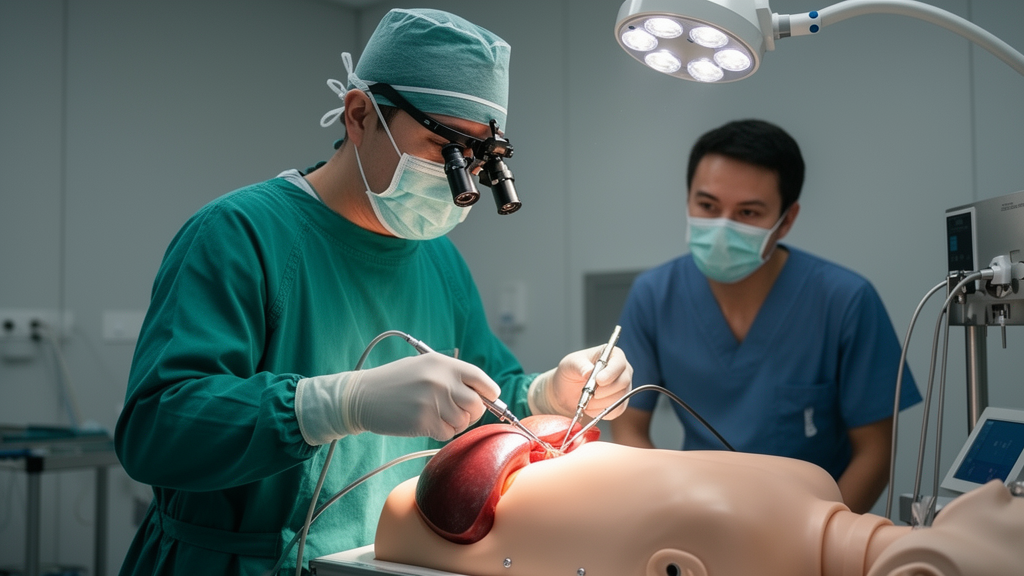
A low-cost simulator-based liver trauma surgery training curriculum significantly improved technical operative skills, procedural knowledge, and self-assessed confidence among practicing general surgeons, with demonstrable retention observed months after course completion. The prospective single-arm educational intervention evaluated whether targeted simulation could offer an effective and scalable mechanism for improving surgical preparedness for rare but critical damage-control procedures among surgeons with limited routine trauma exposure.
Within healthcare environments characterized by low-volume trauma systems, general surgeons are occasionally required to perform emergency damage-control operations for acute liver trauma despite having limited day-to-day operative trauma exposure. Because critical hepatic injuries present infrequently in these clinical settings, maintaining technical proficiency and crisis readiness poses an ongoing challenge. Simulation-based educational models offer a practical avenue to address this training gap by providing structured procedural practice outside the operating room.
The educational intervention study included forty-two general surgeons who were between five and twenty years after graduation from medical training. A key characteristic of the enrolled cohort was their limited prior experience serving as primary operating surgeons in trauma procedures. This participant profile allowed researchers to assess the curriculum’s educational impact on experienced general surgeons who nevertheless lacked regular exposure to emergent abdominal trauma operations.
The training curriculum began with video-based instruction and progressed to hands-on simulation training. The curriculum focused on critical steps in damage-control intervention: performing emergency laparotomy, executing five-point abdominal packing, delivering liver injury packing with manual compression, implementing liver hilar blockade, placing liver injury sutures, and completing temporary abdominal closure. Each of these procedural elements was directly practiced by the participants using the low-cost simulator model.
The primary outcome of technical surgical performance was measured using the Abdominal Trauma Objective Structured Assessment of Technical Skills. Secondary outcomes included objective knowledge assessments and self-assessed procedural confidence. Participants completed these assessments across three distinct evaluation periods: prior to training, immediately after completing the training curriculum, and during a follow-up assessment conducted three to six months post-training. Statistical significance was calculated using pairwise Wilcoxon signed-rank tests across the study intervals.
Technical skill scores showed marked immediate improvement followed by durable retention. Before the intervention, the forty-two surgeons achieved a median technical skill score of 26.5. Immediately following the simulation curriculum, this median score increased significantly to 39, reaching statistical significance at P < 0.001. Follow-up evaluations completed by twenty-six participants at fifteen to twenty weeks showed that the median technical skill score decreased to 34, yet remained significantly higher than baseline performance levels (P < 0.001).
Secondary evaluation measures displayed a similar pattern of marked initial gains and persistent short-term retention. The cohort’s median knowledge score increased significantly from 4 before training to 7 immediately following the educational curriculum (P < 0.001). At follow-up testing completed by thirty-nine participants at fifteen to twenty-four weeks, the median knowledge score decreased to 5 but remained significantly higher than pre-training baseline values (P = 0.010). Additionally, self-assessed confidence improved significantly after training across all procedures directly practiced during the curriculum and remained significantly higher than baseline at follow-up.
Overall, the focused, low-cost simulator-based liver trauma surgery curriculum was associated with significant improvements in technical skill scores, knowledge scores, and self-assessed confidence levels among general surgeons, demonstrating partial skill and knowledge retention at three to six months. The study authors concluded that implementing this curriculum may offer a scalable, practical approach to strengthening operative trauma preparedness and damage-control capabilities among general surgeons practicing in low-volume trauma systems.
Subject of Research: Simulation-based liver trauma surgery training and skill retention in general surgeons
Article Title: Impact of low-cost simulator-based liver trauma surgery training on technical skills and short-term retention among general surgeons
Article References: Tojima, H., Poudel, S., Murakami, S., Kurashima, Y., Ishido, K., Asano, T., Noji, T., Okada, K., Ito, Y. M., Kaneko, H., Izawa, Y., Homma, H., & Hirano, S. (2026). Impact of low-cost simulator-based liver trauma surgery training on technical skills and short-term retention among general surgeons. World Journal of Emergency Surgery. https://doi.org/10.1186/s13017-026-00748-1
Image Credits: AI Generated
DOI: 10.1186/s13017-026-00748-1
Keywords: liver trauma surgery, surgical simulation, damage-control surgery, general surgeons, low-cost simulators, technical skill retention, emergency laparotomy, abdominal packing, manual compression, liver hilar blockade, liver injury suturing, temporary abdominal closure, Abdominal Trauma OSATS, surgical education, trauma preparedness, low-volume trauma systems, Wilcoxon signed-rank test
News Source: Ophelia Keating. (November 23, 2026). Simulator Training Improves General Surgeons’ Liver Trauma Skills and Retention. Scienmag.