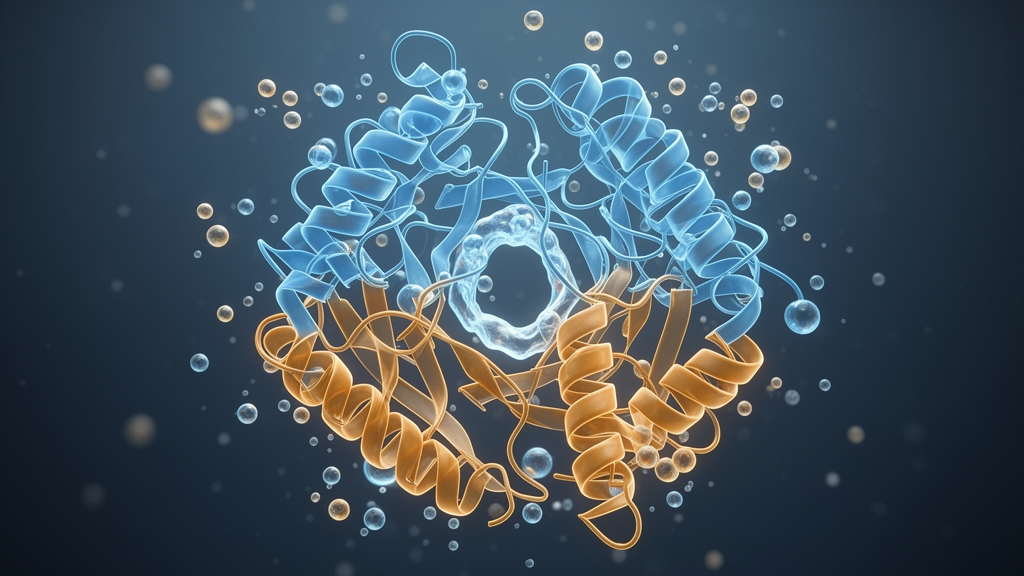
Researchers have identified a previously unreported homozygous missense variant in the GAMT gene that causes cerebral creatine deficiency syndrome 2 in a 17-year-old Iranian female patient. The patient, who belongs to the Iranian Fars ethnic background and was born to parents in a consanguineous marriage, presented clinically with severe intellectual disability, complete inability to walk, observable muscle atrophy, and epileptiform EEG activity.
Cerebral creatine deficiency syndrome 2, officially cataloged in medical genetics databases under OMIM number 612736, represents an exceptionally rare autosomal recessive neurometabolic disorder. The disease is caused by pathogenic variants occurring within the GAMT gene, which directly result in deficient creatine synthesis in the brain.
To identify the precise genetic etiology underlying the patient’s symptoms, the research team performed diagnostic whole-exome sequencing. The sequencing analysis identified a previously unreported homozygous missense variant in the GAMT gene, designated at the transcript level as NM_000156.6: c.326A > G. At the protein level, this nucleotide alteration produces an amino acid substitution designated as p.Lys109Arg. In accordance with established ACMG guidelines for variant interpretation, the novel mutation was formally classified as likely pathogenic. Furthermore, evolutionary cross-species sequence alignment demonstrated that the affected lysine residue located at position 109 is highly conserved across different species.
To investigate the biophysical and structural consequences of the p.Lys109Arg substitution, the investigators carried out all-atom molecular dynamics simulations over a duration of 100 nanoseconds. The computational modeling revealed that the p.Lys109Arg substitution induces a distinctly more compact global conformation in the GAMT protein structure. This structural compaction was quantitatively demonstrated by lower root-mean-square deviation and lower radius of gyration values throughout the 100-nanosecond simulation trajectory when compared to baseline wild-type parameters. Despite this global conformational compaction, the molecular dynamics analysis revealed that the substitution drastically alters the internal dynamic coupling network of the enzyme.
The molecular dynamics simulations provided extensive quantitative data regarding the internal dynamics and correlated residue motions of the mutant enzyme. Upon evaluating the cross-correlation matrix across the full 100-nanosecond simulation trajectory, the mutant protein exhibited a substantially higher standard deviation than the wild-type enzyme, recording a value of 0.323 compared to 0.236 in the wild-type structure.
A closer examination of the dynamic coupling network revealed profound quantitative alterations in residue-residue correlations throughout the simulated macromolecule. Compared to the wild-type enzyme, the mutant structure exhibited a markedly increased number of strongly positive correlated residue pairs, reaching 4,006 pairs in the mutant versus 1,574 pairs in the wild-type. Concurrently, the number of strongly negative correlated residue pairs showed a dramatic increase, with 3,326 pairs observed in the mutant compared to only 576 pairs in the wild-type protein. These striking numerical disparities confirm an extensive reorganization of both positive and negative correlated motions across the protein matrix.
According to the study findings, the marked escalation in both positive and negative correlated residue pairs indicates the emergence of extensive long-range allosteric perturbations across the GAMT structure that may disrupt its functional dynamics and enzymatic stability. The authors noted that their report highlights the value of molecular dynamics simulations as a tool to evaluate the structural consequences of genetic variants.
Subject of Research: Molecular dynamics and genetic characterization of a novel GAMT variant in cerebral creatine deficiency syndrome 2
Article Title: A novel homozygous missense variant in the GAMT gene causing cerebral creatine deficiency syndrome 2 in an Iranian patient: molecular dynamics insights and literature review
Article References: Al-karim, A., Khosravi, T., Hajmohammadi, M., Mohsenipour, M., Kowsari, A., Golalipour, M., Samaei, N. M., & Oladnabi, M. (2026). A novel homozygous missense variant in the GAMT gene causing cerebral creatine deficiency syndrome 2 in an Iranian patient: molecular dynamics insights and literature review. BMC Medical Genomics, 19(1), Article 172. https://doi.org/10.1186/s12920-026-02451-1
Image Credits: AI Generated
DOI: 10.1186/s12920-026-02451-1
Keywords: GAMT gene, cerebral creatine deficiency syndrome 2, CCDS2, c.326A>G, p.Lys109Arg, molecular dynamics, whole-exome sequencing, neurometabolic disorder, creatine synthesis, ACMG guidelines, cross-correlation matrix, allosteric perturbations, radius of gyration, RMSD, epileptiform EEG, consanguineous marriage
News Source: Gregory Coleman. (November 11, 2026). Simulations Show Novel GAMT Variant Alters Protein Dynamics in CCDS2. Scienmag.