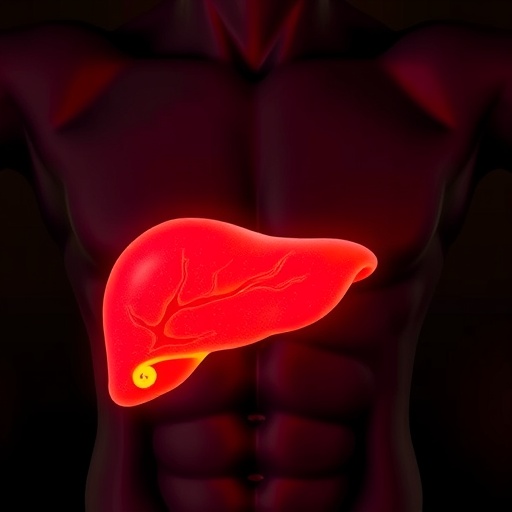
In a groundbreaking study published in Nature Communications, researchers have uncovered pivotal mechanisms behind hepatic metabolic reprogramming in male mice subject to short-term caloric restriction, revealing a complex interplay with enhanced glucocorticoid rhythms. This discovery not only deepens our understanding of the liver’s adaptability but also shines a new light on how transient dietary interventions may orchestrate systemic metabolic benefits through synchronized hormonal fluctuations.
Caloric restriction (CR) has long been recognized as a powerful modulator of lifespan and healthspan across multiple species, from yeast to mammals. However, the precise physiological and molecular underpinnings that enable such beneficial effects remain incompletely understood. The liver, as the central hub of metabolic homeostasis, plays a crucial role in determining the organism’s response to energy scarcity. This new research elucidates how short-term CR prompts the liver to reprogram its metabolism dynamically, adapting fuel utilization and gene expression in a manner closely linked to altered circadian glucocorticoid secretion.
Glucocorticoids, primarily cortisol in humans and corticosterone in rodents, are steroid hormones regulated by the hypothalamic-pituitary-adrenal (HPA) axis and are known to influence a vast array of metabolic processes. These hormones exhibit pronounced circadian rhythms, peaking at specific times of day to align energy availability with physiological demand. The study demonstrated that short-term caloric restriction amplifies these glucocorticoid rhythms, in turn orchestrating time-of-day-specific changes in hepatic metabolism. This finding is significant because it integrates endocrine rhythmicity with metabolic flexibility.
Using sophisticated techniques including time-resolved transcriptomics and metabolomics, the team meticulously mapped the hepatic gene expression and metabolite landscape at multiple circadian intervals in mice undergoing caloric restriction. The data revealed a robust shift in metabolic pathways toward enhanced gluconeogenesis, fatty acid oxidation, and amino acid catabolism during the fasting phase. Importantly, these changes were strongly temporally gated, corresponding with glucocorticoid peaks, suggesting a coordinated endocrine-metabolic axis.
This targeted metabolic reprogramming facilitates effective energy mobilization during the nutrient-scarce periods induced by CR. For instance, elevation in genes governing gluconeogenesis enables sustained blood glucose homeostasis despite reduced caloric intake. Concurrently, increased fatty acid oxidation supports alternative energy production, preserving essential cellular functions. Notably, the sharp rhythmic modulation ensures that these processes do not occur indiscriminately but instead respect circadian niches optimizing resource use and minimizing stress.
The study further explored the causative links by experimentally blunting glucocorticoid rhythmicity through pharmacological and genetic interventions. The abolishment of diurnal glucocorticoid fluctuations profoundly impaired the hepatic metabolic adaptations to caloric restriction. This causality strongly implicates glucocorticoid rhythms as key drivers, rather than mere correlates, of metabolic remodeling in this context.
The implications of these findings extend beyond rodent biology, offering tantalizing prospects for human health. Sporadic fasting and time-restricted feeding regimens are gaining widespread attention for their metabolic and therapeutic benefits. Understanding how the liver’s metabolic machinery interfaces with rhythmic glucocorticoid signals could optimize the timing and efficacy of such dietary interventions. It heralds a future where chronobiology-informed nutritional strategies might enhance healthspan and mitigate age-associated disorders.
Moreover, the research delineates how short-term caloric restriction provokes beneficial metabolic shifts without long-term deprivation, a detail of great translational relevance. Sustained caloric restriction, while effective in model organisms, is often impractical or unsustainable for humans. Insights from acute CR phases can illuminate shortcuts to metabolic health improvements, minimizing adverse effects and maximizing compliance.
At the molecular level, the study identified key transcriptional regulators and metabolic enzymes whose expression oscillates in synchrony with glucocorticoid peaks. These include components of the glucocorticoid receptor signaling pathway, rate-limiting enzymes in gluconeogenesis (such as phosphoenolpyruvate carboxykinase), and fatty acid β-oxidation enzymes. The precise timing of their activation underscores the sophistication of the liver’s response network to hormonal cues under energy stress.
In addition to metabolic enzymes, circadian clock genes themselves displayed altered expression rhythms, suggesting feedback loops between glucocorticoid signaling and intrinsic hepatic clocks. This bidirectional communication enhances the liver’s temporal precision in deploying metabolic programs. Such clock-hormone-metabolism crosstalk highlights the multilayered regulatory architecture underpinning physiological resilience.
Investigating the impact on systemic metabolism, the team noted that hepatic metabolic reprogramming may influence whole-body energy balance, insulin sensitivity, and lipid profiles. These systemic effects arise not solely from liver-autonomous changes but also from altered inter-organ communication mediated by circulating metabolites and hormonal factors. This holistic perspective paints the liver as a central node translating environmental inputs (i.e., food availability) into coordinated endocrine-metabolic outputs.
While the current findings focus on male mice, future research is warranted to elucidate sex-specific differences and extend observations to females, given known sexual dimorphism in glucocorticoid regulation and metabolism. Additionally, longitudinal studies investigating whether enhanced glucocorticoid rhythmicity persists or adapts during prolonged caloric restriction are needed to delineate acute versus chronic responses.
The study’s methodological rigor, including timed sample collection, multi-omics integration, and functional perturbation experiments, sets a new standard in metabolic chronobiology research. It emphasizes the critical need to consider time-of-day effects in nutritional and metabolic studies to avoid confounding results and capture physiological realities.
These discoveries open avenues for pharmacological targeting of glucocorticoid rhythms or their downstream hepatic effectors to mimic the beneficial aspects of caloric restriction without altering dietary intake—a tantalizing possibility for treating metabolic disorders such as obesity, diabetes, and nonalcoholic fatty liver disease.
In summation, this research represents a monumental advance in decoding the liver’s adaptive strategies during short-term caloric restriction, tightly linked to enhanced circadian glucocorticoid rhythms. By unveiling the temporal orchestration of metabolic reprogramming, it lays the foundation for novel chronotherapeutic approaches to metabolic health, with the promise to revolutionize nutrition science and preventive medicine.
Subject of Research: Hepatic metabolic adaptations to short-term caloric restriction and the role of enhanced glucocorticoid circadian rhythms in male mice.
Article Title: Hepatic metabolic reprogramming in male mice during short-term caloric restriction involves enhanced glucocorticoid rhythms.
Article References: Makris, K., Fonda, V., Ramadhani, F.F. et al. Hepatic metabolic reprogramming in male mice during short-term caloric restriction involves enhanced glucocorticoid rhythms. Nat Commun (2025). https://doi.org/10.1038/s41467-025-67228-z
Image Credits: AI Generated
Tags: circadian hormone fluctuationsdietary interventions and metabolismenergy scarcity responseglucocorticoid rhythmshepatic metabolic reprogramminglifespan and healthspan modulationmale liver metabolismmetabolic homeostasis in liverphysiological effects of caloric restrictionresearch on liver adaptabilityshort-term caloric restrictionsteroid hormones and metabolism