• HOME
  • NEWS
  • EXPLORE
    • CAREER
      • Companies
      • Jobs
    • EVENTS
    • iGEM
      • News
      • Team
    • PHOTOS
    • VIDEO
    • WIKI
  • BLOG
  • COMMUNITY
    • FACEBOOK
    • INSTAGRAM
    • TWITTER
Friday, March 27, 2026
BIOENGINEER.ORG
No Result
View All Result
  • Login
  • HOME
  • NEWS
  • EXPLORE
    • CAREER
      • Companies
      • Jobs
        • Lecturer
        • PhD Studentship
        • Postdoc
        • Research Assistant
    • EVENTS
    • iGEM
      • News
      • Team
    • PHOTOS
    • VIDEO
    • WIKI
  • BLOG
  • COMMUNITY
    • FACEBOOK
    • INSTAGRAM
    • TWITTER
  • HOME
  • NEWS
  • EXPLORE
    • CAREER
      • Companies
      • Jobs
        • Lecturer
        • PhD Studentship
        • Postdoc
        • Research Assistant
    • EVENTS
    • iGEM
      • News
      • Team
    • PHOTOS
    • VIDEO
    • WIKI
  • BLOG
  • COMMUNITY
    • FACEBOOK
    • INSTAGRAM
    • TWITTER
No Result
View All Result
Bioengineer.org
No Result
View All Result
Home NEWS Science News

Sewerbot solution to billion dollar global problem

Bioengineer by Bioengineer
July 1, 2020
in Science News
Reading Time: 2 mins read
0
IMAGE
Share on FacebookShare on TwitterShare on LinkedinShare on RedditShare on Telegram

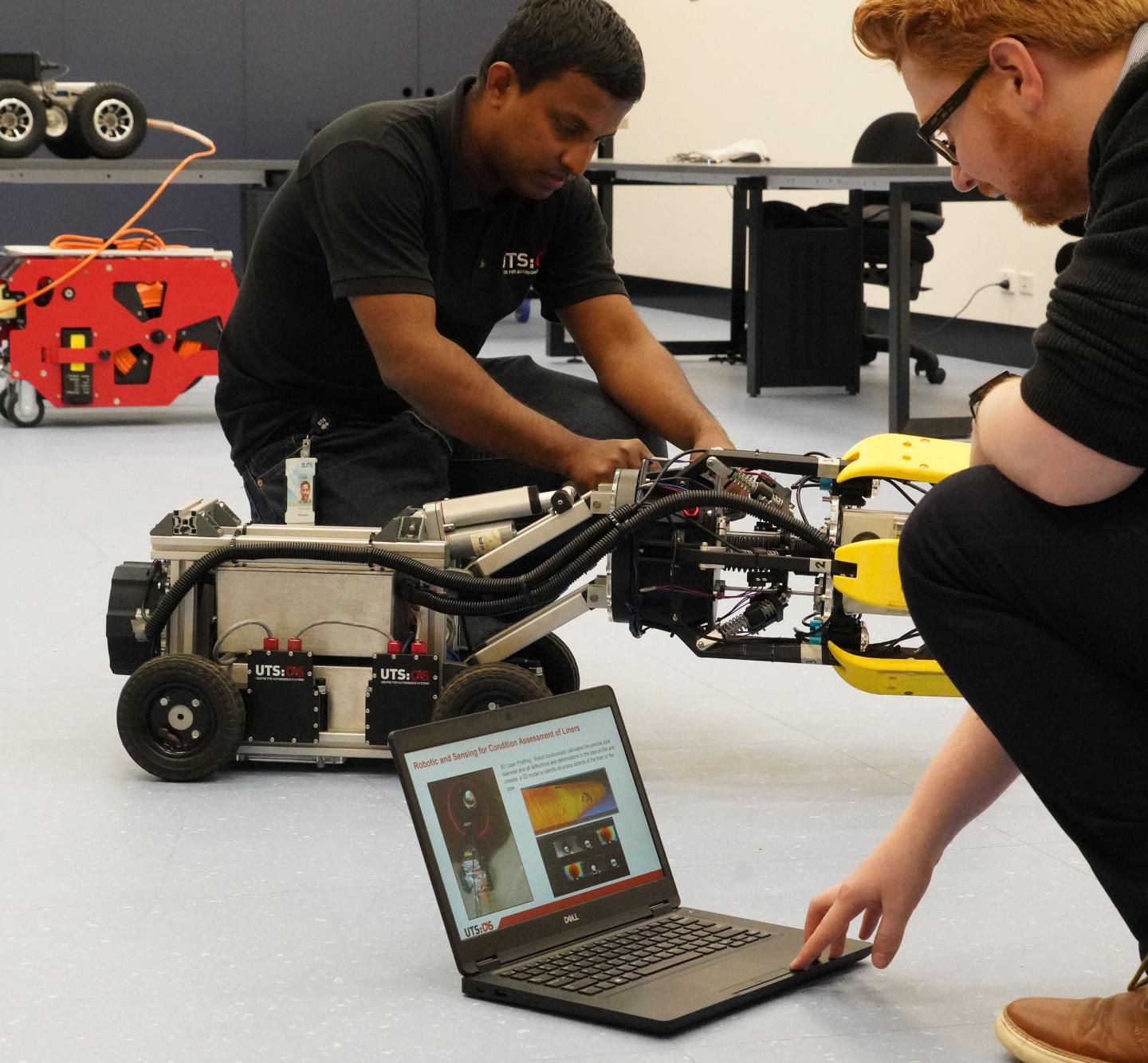
Award for solution assessing the condition of concrete sewer pipes
IMAGE

Credit: UTS

They National Research Innovation Award (sponsored by Water Research Australia) was presented for Innovative Sensor Suites and Intelligent Robotics for Condition Assessment of Concrete Sewers – a project delivering a comprehensive tool to access the condition of concrete sewerage pipes.

This Award recognises the significance of the innovative sensing and robotic toolkit, a major technological advancement for utility companies managing ageing underground assets.

The collaborative research project by the UTS ipipes team – led by Professor Sarath Kodagoda – and Sydney Water has developed a more efficient and safer way to meet a common challenge to water authorities in many cities globally – how to identify and maintain the critical network of concrete sewer pipes laid over a hundred years ago. Sydney Water estimates it spends @ $40 million annually rehabilitating sewers, relying on manual inspection to identify damage or areas for concern with staff required to enter the sewers for a visual inspection.

“Using a multi-sensor fusion approach sensors and infrastructure robotics for remote inspections we can now collect and collate crucial data and apply machine learning, which will help make timely decisions to save renewal costs and prevent harm to the environment, health and economic activity,” said Professor Kodagoda.

This information can also reduce out-of-service times and the excavation work which causes great inconvenience to the public, public transport and other road users. It can also help save costs and extend pipe life by identifying problems before they become issues.

The team developed a robotic system that enters the sewer through a 600mm diameter manhole, then expands within to either the 2.5 or 1.5 metre diameter pipes, which makes for safe inspections in confined spaces.

The Australian Water Association’s Chief Executive Corinne Cheeseman said winners found innovative ways to sustainably manage water resources, protect people, and support communities.

###

Media Contact
Grainne Murphy
[email protected]

Original Source

http://www.uts.edu.au/about/faculty-engineering-and-information-technology/news/sewerbot-solution-billion-dollar-problem

Tags: Population BiologyRobotry/Artificial IntelligenceTechnology/Engineering/Computer Science
Share12Tweet8Share2ShareShareShare2

Related Posts

Starburst Winds Drain Supernova Energy Quickly

Starburst Winds Drain Supernova Energy Quickly

March 26, 2026
Decoding the Phosphorus Puzzle: How Microplastics and Hydrochar Transform Nutrient Dynamics in Rice Paddies

Decoding the Phosphorus Puzzle: How Microplastics and Hydrochar Transform Nutrient Dynamics in Rice Paddies

March 26, 2026

Microtubules Found to Actively Ensure Accurate Chromosome Distribution During Cell Division

March 25, 2026

Aversive Learning Hijacks Brain Sugar Sensor

March 25, 2026
Please login to join discussion

POPULAR NEWS

  • blank

    Revolutionary AI Model Enhances Precision in Detecting Food Contamination

    96 shares
    Share 38 Tweet 24
  • Imagine a Social Media Feed That Challenges Your Views Instead of Reinforcing Them

    1003 shares
    Share 397 Tweet 248
  • Uncovering Functions of Cavernous Malformation Proteins in Organoids

    54 shares
    Share 22 Tweet 14
  • Promising Outcomes from First Clinical Trials of Gene Regulation in Epilepsy

    51 shares
    Share 20 Tweet 13

About

We bring you the latest biotechnology news from best research centers and universities around the world. Check our website.

Follow us

Recent News

In-Sensor Cryptography Links Physical Process to Digital Identity

Can Psychosocial Factors Influence Cancer Risk?

Depression Factors in Elderly: Pre vs. Post-COVID Analysis

Subscribe to Blog via Email

Success! An email was just sent to confirm your subscription. Please find the email now and click 'Confirm' to start subscribing.

Join 78 other subscribers
  • Contact Us

Bioengineer.org © Copyright 2023 All Rights Reserved.

Welcome Back!

Login to your account below

Forgotten Password?

Retrieve your password

Please enter your username or email address to reset your password.

Log In
No Result
View All Result
  • Homepages
    • Home Page 1
    • Home Page 2
  • News
  • National
  • Business
  • Health
  • Lifestyle
  • Science

Bioengineer.org © Copyright 2023 All Rights Reserved.