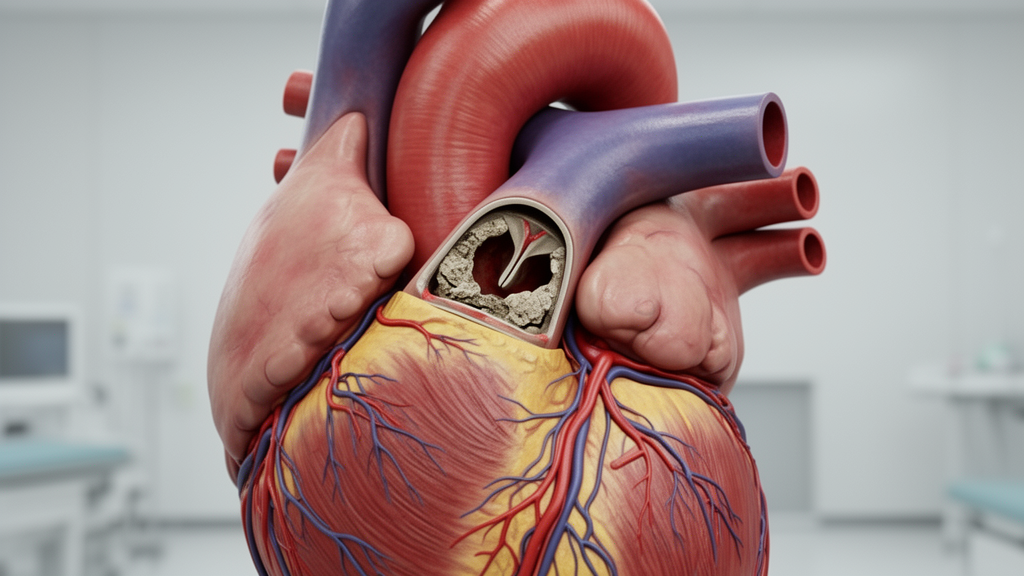
In a prospective observational investigation tracking nearly one thousand patients managed for severe aortic stenosis across an integrated care pathway, researchers identified divergent midterm survival trajectories, contrasting causes of death, and a heavy ongoing burden of secondary cardiovascular illness. Following consecutive patients evaluated by a multidisciplinary Heart Team at a Spanish tertiary hospital over a median of 4.04 years, the study documented marked differences in four-year all-cause mortality: 17.6 percent for surgical aortic valve replacement, 37.1 percent for transcatheter replacement, and 75.8 percent for conservative management. Relieving mechanical valve obstruction did not eliminate subsequent clinical risks. Patients receiving transcatheter intervention exhibited persistent post-procedural morbidity, including elevated rates of heart failure decompensation and hospital readmission, underscoring that severe aortic stenosis represents a multifaceted clinical syndrome extending well beyond isolated valvular narrowing.
The investigation analyzed prospective data from the PROCEAS registry at the University Clinical Hospital of Santiago de Compostela in Spain. Between January 2018 and December 2022, the study consecutively enrolled adult patients evaluated for valve intervention by the institutional Heart Team, tracking clinical trajectories through November 2025. Patients with active infective endocarditis were excluded. Of 988 qualifying individuals, four died before intervention, leaving an analytical cohort of 984 patients. All participants received care within an integrated clinical pathway incorporating patient education, prehabilitation, proactive nurse monitoring, cardiac rehabilitation, and scheduled follow-up visits. Baseline metrics and outcomes were recorded in a structured electronic health platform utilizing standardized Valve Academic Research Consortium-3 definitions, allowing researchers to evaluate clinical trajectories within a contemporary healthcare framework.
Among 984 analyzed patients, 432 individuals (43.9 percent) underwent surgical replacement, 490 (49.8 percent) received transcatheter replacement, and 62 (6.3 percent) were managed conservatively. The cohort had a median age of 78 years, and 42.2 percent were women. Baseline characteristics differed across treatment arms, reflecting clinical profiles that guided Heart Team decisions. Surgical patients were younger, with a median age of 73 years, 34.5 percent women, and a 20.4 percent prevalence of bicuspid anatomy. Transcatheter recipients exhibited a median age of 82 years, 48.8 percent women, and a 21.2 percent prevalence of advanced cardiac damage stages three to four. Conservatively managed patients were oldest, with a median age of 83 years and 38.7 percent in advanced cardiac damage stages. In this group, intervention was deemed inappropriate for 51 individuals due to futility or unfavorable anatomy, nine declined procedures, and two no longer required intervention upon reassessment.
Over a median follow-up of 4.04 years (interquartile range 2.86 to 5.37 years), 305 of 984 participants died, representing an overall mortality rate of 31.0 percent. Kaplan-Meier survival curves diverged significantly across management strategies (log-rank p less than 0.001). Conservatively managed individuals sustained the highest mortality, with 47 deaths among 62 patients, translating to a 75.8 percent cumulative mortality rate and displaying early, sustained separation from interventional curves. Patients receiving transcatheter aortic valve replacement demonstrated an intermediate mortality rate of 37.1 percent, accounting for 182 deaths among 490 treated individuals. Surgical patients experienced the most favorable survival trajectory, recording 76 deaths across 432 patients, corresponding to a 17.6 percent cumulative all-cause mortality rate. These divergence patterns reflect differences in baseline physiological vulnerability, age distribution, and operative risk profiles that guided Heart Team decisions.
To account for competing risks during longitudinal follow-up, investigators modeled cardiovascular mortality while treating non-cardiovascular death as an explicit competing event. This analysis evaluated 928 patients with complete survival time data, recording 96 cardiovascular and 153 non-cardiovascular deaths, while 56 patients lacking exact event dates were excluded. Using the Aalen-Johansen estimator, the four-year cumulative incidence of cardiovascular death was 5.87 percent for surgery, 7.40 percent for transcatheter replacement, and 49.39 percent under conservative management. In an unadjusted Fine-Gray model referencing surgery, the subdistribution hazard of cardiovascular death did not differ significantly between transcatheter replacement and surgery (subdistribution hazard ratio 1.39, 95 percent confidence interval 0.85 to 2.28, p equals 0.195). In contrast, conservative management displayed an elevenfold higher cardiovascular death hazard than surgery, yielding a subdistribution hazard ratio of 11.63 (95 percent confidence interval 6.84 to 19.78, p less than 0.001).
Detailed analysis of terminal events unmasked contrasting causes of death across treatment strategies. In the conservative cohort, cardiovascular causes accounted for 66.0 percent of deaths, with refractory heart failure and cardiogenic shock serving as primary fatal drivers. Conversely, mortality following transcatheter valve replacement was overwhelmingly non-cardiovascular, representing 69.8 percent of deaths in that group. Infection and sepsis constituted the leading non-cardiovascular cause across all management strategies, followed by advanced chronic disease and cancer. Surgical patients showed a balanced distribution, with cardiovascular etiologies comprising 47.4 percent of deaths, reflecting their younger age and lower comorbidity burden. While early 30-day mortality in the cohort was roughly 2.5 percent and mostly procedure-related, non-cardiac conditions emerged as the dominant drivers of long-term mortality among transcatheter recipients, demonstrating that once mechanical obstruction is relieved, systemic comorbidities dictate mid-term survival.
Secondary morbidity evaluations highlighted extensive post-procedural healthcare utilization and recurrent heart failure decompensations across all groups. Patients experienced a mean of 1.4 plus or minus 1.9 all-cause hospitalizations, with rates highest under conservative care (1.6), followed by transcatheter replacement (1.5) and surgery (1.2). In competing-risk analyses accounting for all-cause death, the four-year cumulative incidence of first heart failure hospitalization was 7.55 percent after surgery, 13.62 percent after transcatheter intervention, and 24.92 percent under conservative management. Fine-Gray regression demonstrated elevated subdistribution hazards for heart failure admission compared to surgery, yielding hazard ratios of 1.73 for transcatheter replacement and 3.38 for conservative management. Similarly, four-year cumulative rates of heart failure decompensation reached 10.26 percent after surgery, 22.12 percent after transcatheter replacement, and 41.96 percent with conservative care, corresponding to subdistribution hazard ratios of 2.03 and 4.40 relative to surgical replacement.
Beyond decompensation, investigators cataloged procedural and long-term complications across the four-year window. Permanent pacemaker implantation occurred in 18.7 percent of 921 patients without baseline devices, occurring far more frequently after transcatheter intervention (26.0 percent) than after surgery (13.2 percent) or conservative care (1.7 percent). These conduction disturbances arose early, with 83.6 percent of transcatheter pacemakers implanted within 30 days. New-onset atrial fibrillation arose in 18.5 percent of 697 patients without prior history, emerging predominantly early after surgery (21.3 percent) compared to transcatheter replacement (16.5 percent). Major bleeding affected 5.0 percent of the cohort, concentrated in the periprocedural period. Ischemic stroke or transient ischemic attack occurred in 7.8 percent of patients, predominantly as late events. Infective endocarditis occurred in 4.2 percent of surgical, 3.3 percent of transcatheter, and 1.6 percent of conservative patients, while late prosthetic dysfunction occurred in 2.1 percent of surgical and 0.8 percent of transcatheter cases.
To improve prognostic estimation beyond early perioperative risk, the team constructed a treatment-stratified multivariable model for all-cause mortality using baseline pre-procedural parameters. After excluding gait speed and pulmonary artery pressure due to high missingness, 23 candidate variables entered a LASSO-penalized Cox regression stratified by treatment strategy. In 824 complete cases with 225 deaths, the penalty parameter was selected through 10-fold cross-validation, retaining 11 predictors: age, body mass index, peripheral artery disease, atrial fibrillation, functional class, glomerular filtration rate, cancer, natriuretic peptide, left atrial area, tricuspid annular plane systolic excursion, and moderate-to-severe tricuspid regurgitation. Across 500 internal bootstrap resamples, the most stable predictors were tricuspid regurgitation (97.0 percent selection frequency), functional class (95.6 percent), glomerular filtration rate (92.0 percent), left atrial area (91.0 percent), and right ventricular excursion (90.0 percent), highlighting markers of extracardiac disease, functional impairment, and cardiac remodeling.
In the post-selection refitted stratified Cox model, several clinical and echocardiographic variables demonstrated independent conditional associations with all-cause mortality. Each additional year of age increased the mortality hazard by 3.1 percent (hazard ratio 1.031, 95 percent confidence interval 1.006 to 1.057, p equals 0.015). Moderate-to-severe dyspnea increased mortality hazards by 53.1 percent (hazard ratio 1.531, 95 percent confidence interval 1.131 to 2.072, p equals 0.006), while active cancer increased risk by 48.7 percent (hazard ratio 1.487, 95 percent confidence interval 1.071 to 2.065, p equals 0.018). Moderate-to-severe tricuspid regurgitation raised mortality hazards by 54.1 percent (hazard ratio 1.541, 95 percent confidence interval 1.080 to 2.197, p equals 0.017), and each additional square centimeter of left atrial area increased risk by 2.9 percent (hazard ratio 1.029, 95 percent confidence interval 1.007 to 1.052, p equals 0.011). Conversely, each one-unit increase in glomerular filtration rate reduced mortality hazards by 0.7 percent (hazard ratio 0.993, 95 percent confidence interval 0.986 to 1.000, p equals 0.047).
Internal validation demonstrated moderate discrimination, with an apparent concordance index of 0.673, an optimism-corrected concordance index of 0.646, and an optimism-corrected calibration slope of 0.829 indicating residual overfitting. Optimism-corrected time-dependent area under the curve values at one, two, three, and four years reached 0.796, 0.769, 0.730, and 0.735, with corresponding Brier scores of 0.049, 0.085, 0.122, and 0.151. Although the authors published an online risk calculator, they noted it does not demonstrate clinical utility or justify causal treatment comparisons. Several limitations characterize the study, including its single-center setting, the small conservative cohort of 62 patients, and the exclusion of 56 deceased patients lacking exact event dates for competing-risk models. Furthermore, non-randomized treatment allocation by the Heart Team reflects clinical associations between distinct patient populations rather than causal effects. The authors concluded that severe aortic stenosis constitutes a systemic clinical syndrome requiring continuous multidisciplinary surveillance after intervention.
Subject of Research: Mid-term mortality patterns, residual cardiovascular morbidity, and treatment-stratified prognostic modeling in patients with severe aortic stenosis.
Article Title: Mid-term mortality patterns, residual morbidity, and prognostic modelling in severe aortic stenosis: the PROCEAS study
Article References: González-Salvado, V., Sestayo Fernández, M., Alonso-Vázquez, M., Lens-Bravo, U., Ruzo-Cedillo, Á., de la Fuente-López, P., Adarraga-Gómez, J., Temtem, M., Martins da Costa, C., Villamayor-Blanco, B., & Peña-Gil, C. (2026). Mid-term mortality patterns, residual morbidity, and prognostic modelling in severe aortic stenosis: the PROCEAS study. Frontiers in Cardiovascular Medicine, 13, Article 1922843. https://doi.org/10.3389/fcvm.2026.1922843
Image Credits: AI Generated
DOI: 10.3389/fcvm.2026.1922843
Keywords: aortic stenosis, transcatheter aortic valve replacement, surgical aortic valve replacement, conservative management, PROCEAS cohort, cardiovascular mortality, non-cardiovascular mortality, heart failure decompensation, integrated care pathways, competing risks analysis, LASSO regression, prognostic modeling, pacemaker implantation, tricuspid regurgitation, left atrial area, estimated glomerular filtration rate, infective endocarditis, cardiac remodeling
News Source: Ophelia Keating. (November 23, 2026). Severe Aortic Stenosis Study Unveils Distinct Midterm Survival and Morbidity Patterns. Scienmag.