A single natural population of the fruit fly Drosophila melanogaster, sampled at one site near Ankara in Turkey, has shown sustained directional changes in its genome over seven consecutive years, according to a new study published in BMC Ecology and Evolution. Senel Selin Yagli and Banu Sebnem Onder analyzed pooled whole-genome sequencing data collected between 2015 and 2021 and found thousands of genetic variants whose frequencies shifted consistently from one year to the next, pointing to long-term microevolutionary change rather than short-term seasonal fluctuation.
The research addresses a persistent gap in evolutionary biology. While seasonal adaptation has been documented in Drosophila melanogaster before, long-term directional genomic changes within a single natural population remain poorly resolved, particularly in understudied regions such as the Eastern Mediterranean and Anatolia. Capturing such change requires high-resolution genomic data sampled repeatedly over time, which is exactly what the authors set out to provide for this region.
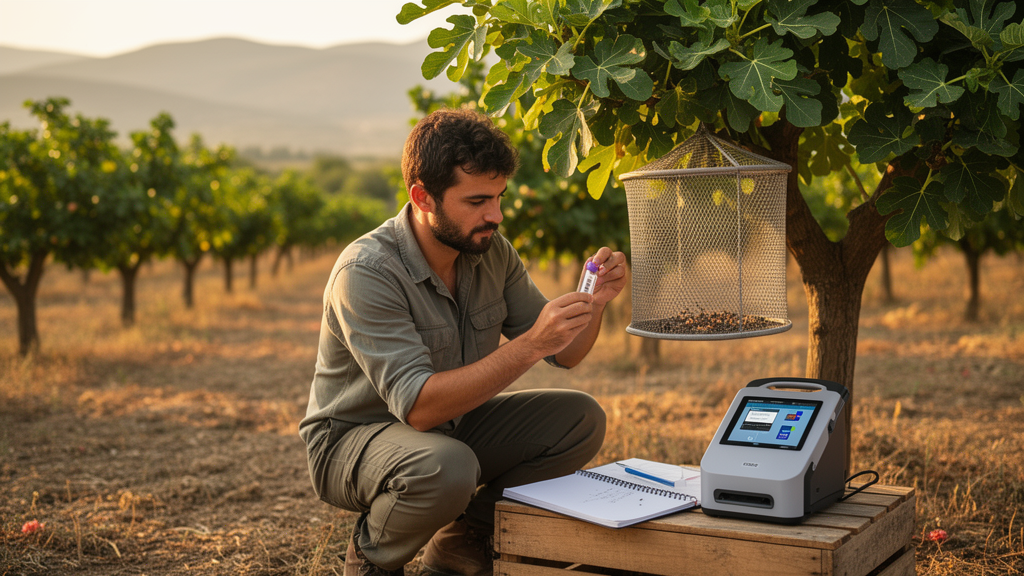
The team carried out a temporal Pool-Seq analysis of flies sampled from a single locality, Yeşilöz in Ankara, over the seven-year period from 2015 to 2021. Samples were collected in June, August, September, and October, representing post-winter emergence, peak summer temperatures, and autumn transition shocks. Pooling genomes from many individuals at each time point allowed the researchers to estimate allele frequencies across the entire genome at each sampling date.
Using multiple ANCOVA models across 1,526,725 single nucleotide polymorphisms, the researchers identified 9,055 SNPs showing significant directional allele frequency shifts across years, with a Benjamini–Hochberg q-value below 0.05. These SNPs mapped to 395 genes harboring variants classified as having HIGH or MODERATE functional impact, suggesting that the changing alleles were not confined to silent regions of the genome but included variants likely to affect gene function.
The authors took several precautions to ensure the result was robust. A sensitivity model that excluded the low-coverage September 2015 cohort yielded approximately 8,200 year-significant SNPs with highly consistent results, demonstrating that this cohort did not bias the primary findings. A second, highly conservative joint-correction model identified a core set of 627 SNPs, providing a stringent lower bound on the number of loci undergoing directional change.
Notably, seasonal allele frequency variation within years was negligible across all models, and climatic principal components related to temperature and humidity explained no additional variance beyond the overall year effect. In other words, the signal the researchers detected was a steady, year-over-year directional shift rather than a pattern driven by the timing of sampling within each season or by the measured climatic variables.
Gene Ontology enrichment analysis revealed a pronounced over-representation of genes associated with zinc ion binding, transition metal ion binding, and metallopeptidase activity in the Molecular Function category. A length-adjusted logistic regression confirmed that these associations were independent of gene size, addressing a common statistical artifact in enrichment analyses. An initially significant cellular component term, plasma membrane, did not survive this length control and was not interpreted further.
Overall, the authors conclude that their findings provide compelling evidence for sustained directional genomic change in this natural D. melanogaster population, with the primary functional targets concentrated in transcriptional regulation, particularly zinc-finger and metal-ion binding proteins, and in proteolytic processes. The study offers a rare long-term genomic perspective from a region where such data have been scarce, and it illustrates how repeated sampling at a single locality can reveal microevolutionary dynamics that shorter or seasonal studies may miss.
Subject of Research: Long-term genomic adaptation in a natural Drosophila melanogaster population in central Anatolia
Article Title: Long-term genomic adaptation in a natural Drosophila melanogaster population from central Anatolia
Article References: Yagli, S. S., & Onder, B. S. (2026). Long-term genomic adaptation in a natural Drosophila melanogaster population from central Anatolia. BMC Ecology and Evolution. https://doi.org/10.1186/s12862-026-02597-7
Image Credits: AI Generated
DOI: 10.1186/s12862-026-02597-7
Keywords: Drosophila melanogaster, Pool-Seq, genomic adaptation, microevolution, allele frequency, Anatolia, temporal genomics, SNPs, Gene Ontology, zinc ion binding, metallopeptidase, BMC Ecology and Evolution
News Source: Juliet Wilcox. (October 28, 2026). Seven years of genomic change tracked in a wild Anatolian fruit fly population. Scienmag.