The study evaluated how pre-fermenting sugarcane juice with an indigenous isolate of Hanseniaspora thailandica for forty-eight hours before introducing Saccharomyces cerevisiae restructured the chemical composition and sensory character of the collected heart fraction following vacuum distillation. Traditional rum manufacturing relies on fermentation by Saccharomyces strains to convert fermentable sugars into ethanol and aromatic secondary metabolites, followed by distillation steps that selectively concentrate and redistribute volatile constituents according to their volatility and ethanol-water partition coefficients. By altering the microbial dynamics and metabolic succession during the earliest phases of juice processing, the research team sought to clarify how non-Saccharomyces starter cultures influence post-distillation aroma-active profiles and overall perceptual balance in distilled spirits.
From four preliminary candidate strains displaying prominent fruity and alcoholic aromatic properties, the researchers isolated and selected Hanseniaspora thailandica strain YD32. This candidate demonstrated the strongest overall ester-synthesizing capacity, rapid vegetative propagation under fermentation conditions ranging between twenty-seven and thirty degrees Celsius, elevated growth performance across acidic to neutral pH environments, and superior relative ethanol tolerance among the screened wild isolates. Furthermore, strain YD32 exhibited substantial beta-glucosidase enzymatic activity measured at 90.29 plus or minus 3.35 units per milliliter, indicating an enhanced metabolic capability to hydrolyze and transform bound aromatic precursors. The genetic identity of the strain was confirmed through Sanger sequencing of the D1 and D2 domains of the 26S ribosomal RNA gene, and the isolate was systematically registered and deposited in the China General Microbiological Culture Collection Center under accession number CGMCC No. 33320.
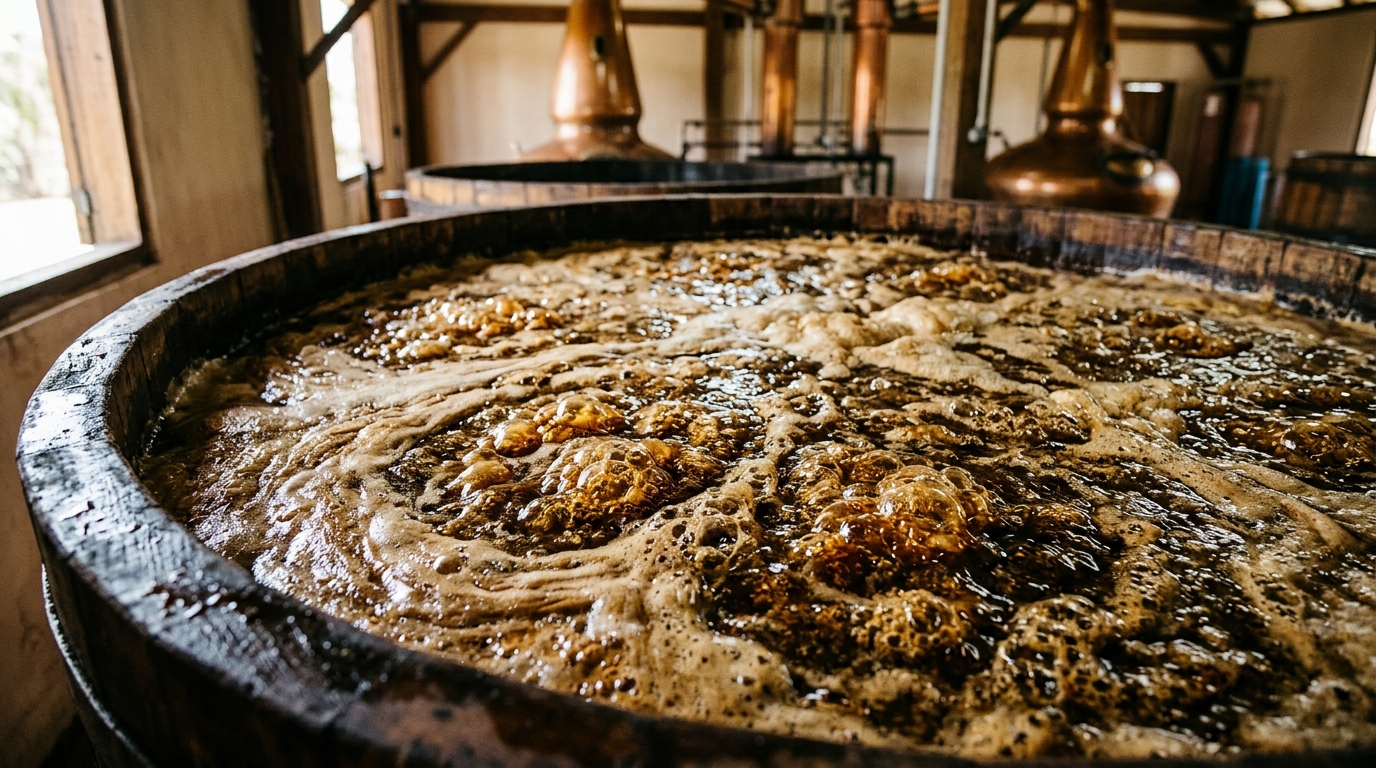
The experimental fermentations were carried out using freshly harvested sugarcane sourced from Guangdong Province, China, which was washed, pressed, and particulate-filtered to obtain a uniform sugar-rich substrate. Before fermentation, the juice was autoclaved at one hundred twenty-one degrees Celsius for fifteen minutes and cooled to room temperature to reduce wild background biological interference, resulting in an initial sugar density of twenty-two degrees Brix, reducing sugar concentrations of two hundred twenty grams per liter, and an initial pH of 5.2. Two parallel processing treatments were established in fifteen-liter food-grade stainless-steel fermenters maintained at twenty-eight degrees Celsius under semi-anaerobic conditions: a monoculture control treatment inoculated exclusively with commercial Saccharomyces cerevisiae strain 1415 on day zero, and a sequential treatment inoculated initially with Hanseniaspora thailandica YD32 at one million viable colony-forming units per milliliter, followed forty-eight hours later by the introduction of Saccharomyces cerevisiae at an equivalent viable density. The fermentation vessels incorporated one-way exhaust valves that facilitated continuous carbon dioxide venting while strictly preventing external oxygen backflow, thereby generating a hypoxic environment within the upper tank headspace throughout fermentation.
Monitoring of fermentation kinetics demonstrated that sequential inoculation modified the temporal progress of substrate utilization without impairing overall fermentation completion. While the Saccharomyces control treatment concluded fermentation within seven days, the sequential culture required eight days to attain stable carbon dioxide weight loss and exhaustive reducing sugar consumption, representing a modest one-day kinetic delay. In the control fermentations, Saccharomyces cerevisiae expanded rapidly to attain peak cell densities by day two before gradually diminishing as ethanol accumulated and sugar resources depleted. In contrast, the sequential treatment witnessed a sharp surge of Hanseniaspora thailandica reaching peak counts on day two, followed by a noticeable decline after day three as the newly introduced Saccharomyces cerevisiae colonized the medium, peaked near day four, and assumed metabolic dominance. Both groups exhibited rapid broth cooling from initial levels near thirty degrees down to twenty-four degrees Celsius, alongside consistent acidification profiles, though the sequential culture displayed a delayed acidification trajectory that ultimately matched the final control pH at fermentation termination.
Following complete attenuation, each biological replicate was independently distilled under reduced pressure between sixteen and twenty-one kilopascals of absolute pressure at operating temperatures of sixty to sixty-five degrees Celsius. The distillate fractions were partitioned volumetrically using standardized collection protocols, in which the initial ten percent was discarded as heads, the central eighty percent was collected as the refined heart fraction, and the terminal ten percent was removed as tails. The unadjusted heart distillates registered comparable raw ethanol contents, measuring 49.0 plus or minus 0.6 percent by volume in the control spirit and 48.0 plus or minus 0.5 percent by volume in the sequentially fermented distillate across triplicates. Headspace solid-phase microextraction coupled with gas chromatography-mass spectrometry was subsequently performed on standardized distillate aliquots diluted to five percent ethanol, employing a semi-quantitative internal standard methodology based on two-octanol to quantify treatment-discriminating volatile markers.
Chemical profiling of the distilled heart fractions revealed striking quantitative divergence between the two starter regimens, notably marked by substantial decreases in major ethyl esters within the sequentially fermented spirit. Relative to the monoculture control, the sequential rum exhibited statistically significant reductions across major medium-chain fatty acid ethyl esters following Benjamini-Hochberg adjustment, including ethyl hexanoate dropping from 7930.49 to 3001.06 micrograms per liter, ethyl octanoate plunging from 146,256.34 to 50,600.65 micrograms per liter, ethyl decanoate falling from 398,958.57 to 141,590.34 micrograms per liter, and ethyl dodecanoate decreasing from 337,371.21 to 110,756.23 micrograms per liter. Similarly, concentrations of higher alcohol derivatives dropped substantially, with 2-phenylethanol declining from 27,491.60 to 9719.71 micrograms per liter and 2-phenylethyl acetate falling from 112,194.83 to 8820.98 micrograms per liter. Conversely, semi-quantified concentrations of straight-chain carboxylic acids surged significantly in the sequential distillate, with octanoic acid increasing more than eighteen-fold to 26,723.85 micrograms per liter and decanoic acid increasing twenty-four-fold to 72,722.49 micrograms per liter.
In addition to altering shared chemical markers, the early presence of Hanseniaspora thailandica induced the synthesis of distinct secondary esters that were completely undetected in the monoculture control spirit under identical analytical parameters. The sequentially fermented rum contained measurable quantities of ethyl acetate at 6060.60 micrograms per liter, ethyl lactate at 4810.76 micrograms per liter, and ethyl 2-hydroxy-4-methylpentanoate at 8274.03 micrograms per liter, as well as dodecanoic acid at 8868.73 micrograms per liter. Calculations of odor activity values, determined by comparing semi-quantified headspace concentrations against matrix-independent olfactory thresholds reported in scientific literature, indicated that while both spirits preserved odor activity values exceeding unity for primary ethyl esters, the sequential distillation shifted the relative functional ratios among fruity, floral, and acidic volatile contributors, creating an entirely restructured aroma framework rather than an amplified duplicate of the control.
Despite the analytical decline in several high-potency ethyl esters, descriptive sensory evaluation conducted by twelve trained sensory assessors according to international standards established that the sequentially fermented rum exhibited a markedly superior sensory profile. Evaluating orthonasal aroma at forty-three percent ethanol and taste attributes at twenty percent ethanol using standardized ten-point continuous scales, the panel scored the sequential spirit as possessing significantly stronger fruity and ester-driven notes and intensified floral attributes compared to the monoculture control. Concurrently, the sequential rum demonstrated statistically significant reductions in undesirable harsh sensory dimensions, recording lower scores for solvent-like pungency, greasy or fatty-waxy impressions, and heavy cheesy or fermentative characteristics.
Community-level high-throughput amplicon sequencing and metatranscriptomic profiling provided functional insights into the microbiological events governing this chemical transformation. Amplicon profiling confirmed that fungal populations were dominated exclusively by Hanseniaspora during early fermentation stages in the sequential vats before being smoothly superseded by Saccharomyces cerevisiae, corroborating the designed microbial succession. Metatranscriptomic assemblies sequenced on the DNBSEQ-T7 platform highlighted distinct, stage-dependent shifts in global metabolic gene expression, with early operational stages heavily enriched in cellular stress responses and growth pathways, mid-stage fermentations emphasizing carbohydrate transport and central energy production, and terminal stages showing marked up-regulation of amino acid metabolism and lipid-related biosynthetic cascades. Correlation matrices and Mantel association tests revealed that volatile shifts were embedded within complex multi-species metabolic networks, suggesting that the initial physiological activity of Hanseniaspora depleted specific nutrient pools and rechanneled precursor flux away from heavy alcohol synthesis and toward balanced intermediary compounds.
The study authors emphasize several important experimental caveats regarding the scope and generalizability of their conclusions. The chemical quantifications were conducted using internal-standard semi-quantification rather than compound-specific external calibration curves, meaning volatile concentrations serve as relative comparative indicators rather than absolute stoichiometric values. Furthermore, while the sugarcane juice underwent autoclave sterilization, sterility was not confirmed via culture plating, leaving open the potential for uncharacterized bacterial carryover, which was mirrored by the sporadic recovery of low-abundance presumptive lactic acid bacteria on selective agar. Mechanistically, while matrix-dependent threshold alterations, masking interactions, and suppression of ester volatility by medium-chain fatty acids offer compelling hypotheses for why rum with lower ester content smells fruitier, these physical-chemical interactions require future verification through omission testing, aroma reconstitution assays, and industrial validation trials across commercial distilleries.
Subject of Research: Sequential yeast inoculation effects on volatile chemistry and sensory balance in distilled rum
Article Title: Sequential inoculation of Hanseniaspora thailandica and Saccharomyces cerevisiae reshapes aroma-active composition and perceptual balance of distilled rum
Article References: Dou, S., Yu, Y., Zhu, Y., Wang, Y., Wang, K., Yu, Z., Han, D., Yang, Y., Zhang, N., & Lin, S. (2026). Sequential inoculation of Hanseniaspora thailandica and Saccharomyces cerevisiae reshapes aroma-active composition and perceptual balance of distilled rum. Food Chemistry: X, 40, Article 104830. https://doi.org/10.1016/j.fochx.2026.104830
Image Credits: AI Generated
DOI: 10.1016/j.fochx.2026.104830
Keywords: rum distillation, Hanseniaspora thailandica, Saccharomyces cerevisiae, sequential inoculation, flavor chemistry, odor activity values, ester synthesis, gas chromatography-mass spectrometry, sensory analysis, fermentation kinetics, sugarcane juice, metatranscriptomics, amplicon sequencing, higher alcohols, volatile fatty acids, beverage biotechnology
News Source: Bethany Barker. (November 28, 2026). Sequential Yeast Inoculation Enhances Distilled Rum Aroma Balance Despite Reduced Esters. Scienmag.