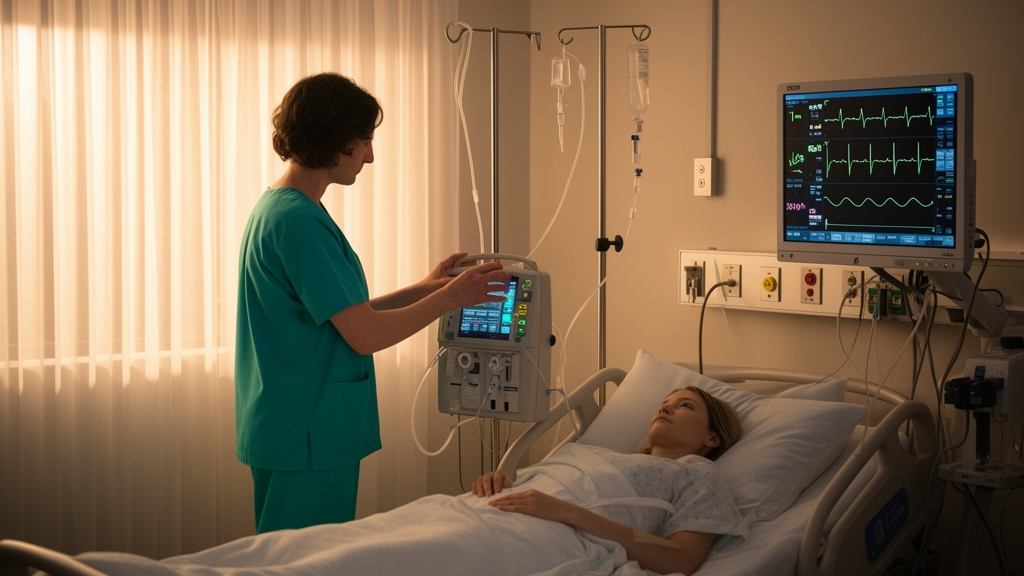
In a prospective observational study conducted at the Medical University of Lublin in Poland, researchers tracked the metabolic evolution of thirty mechanically ventilated adult patients with sepsis over the first week of their intensive care unit stay. The study, published in Annals of Intensive Care, utilized indirect calorimetry to measure resting energy expenditure and respiratory quotient on days 1, 2, 3, 5, and 7 following sepsis diagnosis. The primary finding was a statistically significant increase in resting energy expenditure by day 5 compared to baseline, with an estimated rise of 163.7 kcal/day. This temporal shift suggests that the metabolic demands of critically ill patients with sepsis are not static but evolve dynamically during the early phase of hospitalization.
The research team, led by Weronika Wasyluk and colleagues, aimed to evaluate these time-course changes in energy metabolism and identify clinical and nutritional predictors of resting energy expenditure and respiratory quotient. Sepsis is defined as life-threatening organ dysfunction caused by a dysregulated host response to infection, often accompanied by endocrine and metabolic disturbances. These disturbances involve the dysregulation of carbohydrate, protein, and lipid metabolism, which are closely linked to mitochondrial dysfunction. Understanding these dynamic changes is essential for managing critically ill patients, as both insufficient and excessive energy provision can negatively impact clinical outcomes. Indirect calorimetry is the recommended method for measuring energy expenditure in this population, enabling tailored nutritional interventions, yet most previous studies have been limited to isolated measurements without capturing the temporal evolution of these changes.
The study was conducted between January 2021 and December 2023 in the 1st Clinic of Intensive Therapy at the Medical University of Lublin. The cohort consisted of thirty Caucasian adult patients, including ten women and twenty men, who were mechanically ventilated due to sepsis-related respiratory insufficiency. At inclusion, the median temperature of the patients was 36.6 °C, with 20% exhibiting fever. The majority of patients, 87%, had a body mass index greater than 25 kg/m² at the beginning of observation. Sepsis was most frequently secondary to pneumonia, accounting for 20 cases, followed by urinary tract infections in 14 cases. The identified pathogens included Klebsiella pneumoniae, Escherichia coli, and Pseudomonas aeruginosa, among others. During the ICU stay, 17 patients died, with 13 of these deaths occurring within the study window, highlighting the severity of the patient population.
Resting energy expenditure was measured using a COSMED Quark RMR calorimeter, with a minimum recording of 30 minutes obtained for each measurement. Data quality was verified using predefined steady-state criteria, and the collected parameters included oxygen consumption and carbon dioxide production. Resting energy expenditure was calculated using the Weir equation, while the respiratory quotient was determined as the ratio of carbon dioxide production to oxygen consumption. In patients receiving continuous renal replacement therapy, carbon dioxide loss via the circuit was corrected using a method previously described by the research group. This rigorous approach to measurement ensures that the metabolic data reflect the actual energy expenditure of the patients, adjusting for technical factors that could otherwise skew the results.
The analysis revealed that resting energy expenditure increased significantly by day 5 compared to day 1, with an estimated increase of 163.7 kcal/day. This rise was accompanied by a concurrent increase in the respiratory quotient, indicating a shift in substrate utilization. The baseline resting energy expenditure for the reference group was estimated at 2358.7 kcal/day. Age was significantly associated with resting energy expenditure, with an estimated decrease of 9.718 kcal/day per year, indicating a gradual decline in energy expenditure with increasing age. Male patients had a mean resting energy expenditure approximately 236 kcal/day higher than females, although this difference did not reach statistical significance.
Several clinical and nutritional factors were identified as predictors of resting energy expenditure. Temperature emerged as the strongest positive predictor, with an estimated increase of 136.3 kcal/day for each degree Celsius rise in body temperature. Patients undergoing continuous renal replacement therapy exhibited significantly lower resting energy expenditure values, approximately 237.1 kcal/day lower than those not receiving the therapy. Lactate levels were inversely associated with resting energy expenditure, while arterial blood pH showed a positive association. Nutritional factors also played a key role, with the protein-to-non-protein calorie ratio and non-nutritional energy share significantly influencing resting energy expenditure. Higher protein intake was correlated with an increase in resting energy expenditure, whereas a higher non-nutritional energy share was linked with reduced resting energy expenditure. These associations suggest that nutritional strategies and clinical variables interact complexly to determine metabolic demands in sepsis.
The respiratory quotient, which reflects the predominant type of metabolic substrate utilization, also showed significant changes over time. A significant increase in the respiratory quotient was observed on day 5 compared to baseline, with a borderline increase on day 7. Nutritional parameters emerged as primary contributors to the respiratory quotient, with energy intake and resting energy expenditure coverage showing significant positive associations. Blood glucose levels also demonstrated a significant association with the respiratory quotient. In contrast, other clinical variables, including temperature, continuous renal replacement therapy, inflammatory markers, and severity scores, were not significantly associated with the respiratory quotient. These findings suggest that the administered nutritional substrates were actively utilized in oxidative metabolism, potentially contributing to increased carbohydrate oxidation in the later stages of sepsis.
The study also tracked inflammatory and metabolic parameters over time using generalized estimating equations. Markers of systemic inflammation, such as C-reactive protein and procalcitonin, showed a delayed but marked decrease over time, with significant declines observed on days 5 and 7. Lactate levels dropped markedly from day 2 onward, while arterial blood pH increased significantly and remained stable thereafter. These changes suggest early improvement in acid-base balance and systemic metabolic recovery. Total cholesterol and low-density lipoprotein cholesterol levels rose significantly on days 5 and 7 compared to baseline, while other parameters, including high-density lipoprotein cholesterol, glucose, triglycerides, and albumin, remained stable. These temporal trends in metabolic and inflammatory markers provide a broader context for understanding the dynamic nature of sepsis-related metabolic changes.
Nutritional intake showed dynamic changes throughout the observation period. Energy and protein intake increased significantly on day 3, with protein remaining elevated on day 5 before declining. The protein-to-non-protein calorie ratio peaked on days 3 and 5, while resting energy expenditure coverage followed a similar pattern, peaking on day 3 before declining. In contrast, the non-nutritional energy share significantly decreased starting from day 3. These fluctuations likely reflect the challenges of optimizing nutritional support in critically ill patients, particularly in the context of dynamic metabolic changes and varying clinical conditions. The gradual increase in the administration of nutritional treatment products alongside a decreasing reliance on non-nutritional energy sources may indicate a more structured nutritional management approach as patients stabilize.
The study acknowledges several limitations, including its single-center design and relatively small sample size, which may limit the generalizability of the findings and reduce statistical power for detecting certain associations. The observational nature of the study also restricts causal interpretations regarding metabolic parameters and clinical outcomes. Technical challenges associated with indirect calorimetry in critically ill patients, such as ventilator settings and oxygen supplementation, led to the exclusion of some patients or premature termination of their participation. This may have influenced the dataset, potentially underrepresenting patients at the most severe end of the clinical spectrum. Additionally, the intervals from hospital admission to study inclusion varied across patients, which may confound the interpretation of longitudinal trajectories anchored at sepsis onset.
Further research is needed to clarify the regulatory mechanisms underlying metabolic changes in sepsis and the impact of nutritional therapy. Future studies should focus on identifying factors determining individual variability in resting energy expenditure and assessing the long-term metabolic consequences in sepsis survivors. Animal models could provide valuable insights under controlled conditions, helping to explore long-term metabolic adaptations. Investigating the optimal timing and intensity of nutritional interventions could also contribute to better metabolic outcomes in patients with sepsis. The potential application of continuous bedside monitoring of the respiratory quotient as a marker for overfeeding warrants further investigation, as it could offer a valuable tool for optimizing nutritional strategies and improving patient outcomes in critically ill populations.
The findings of this study highlight the dynamic changes in energy metabolism during sepsis and underscore the limitations of predictive equations in estimating energy demands. Significant correlations between resting energy expenditure and temperature, continuous renal replacement therapy, arterial blood pH, lactate levels, and nutritional treatment strategies provide valuable insights into regulating metabolism in sepsis. The obtained results suggest the necessity of optimizing metabolic and nutritional support and indicate directions for future research on long-term metabolic consequences in patients with sepsis. By capturing the temporal evolution of metabolic changes, this study provides a more comprehensive understanding of the complex interplay between clinical variables and energy expenditure in critically ill patients with sepsis.
Subject of Research: Temporal changes in energy expenditure and substrate utilization in mechanically ventilated sepsis patients
Article Title: Time-course changes in energy expenditure in sepsis: a prospective observational study
Article References: Wasyluk, W., Fiut, R., Świetlicka, I., Szukała, M., Zwolak, A., Jonckheer, J., & Dąbrowski, W. (2025). Time-course changes in energy expenditure in sepsis: a prospective observational study. Annals of Intensive Care, 15(1), Article 158. https://doi.org/10.1186/s13613-025-01592-3
Image Credits: AI Generated
DOI: 10.1186/s13613-025-01592-3
Keywords: sepsis, energy expenditure, indirect calorimetry, critical care, metabolism, respiratory quotient, nutritional support, intensive care unit, Time-course, changes, energy, expenditure
News Source: Daisy Hatcher. (November 10, 2026). Sepsis Patients Show Rising Energy Needs by Day Five. Scienmag.