


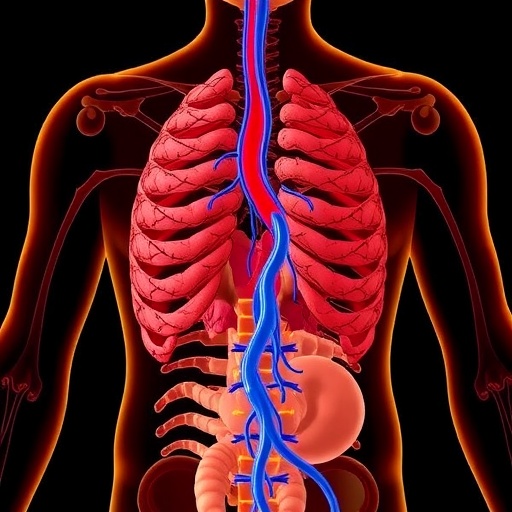
In a groundbreaking study published in Nature Metabolism, researchers have unveiled the intricacies of sympathetic nervous system projections to brown adipose tissue (BAT), illuminating how distinct neural circuits selectively govern thermogenesis and glucose tolerance. This discovery stands to revolutionize our understanding of energy homeostasis and metabolic health, shedding new light on the nuanced neurophysiological regulation of brown fat—long known as a pivotal player in heat production and energy expenditure.
Brown adipose tissue has captivated metabolism scientists for decades due to its unique thermogenic abilities. Unlike white fat, which primarily stores energy, brown fat specializes in burning calories to generate heat, a process termed non-shivering thermogenesis. This heat production is crucial not only for maintaining body temperature in cold environments but also plays a role in systemic metabolic processes, including glucose regulation. Despite insights into BAT’s metabolic functions, how the sympathetic nervous system orchestrates these responses through precise neural pathways remained elusive—until now.
The research, conducted by Neri, Lee, Fohn, and colleagues, reveals that sympathetic projections to BAT are not monolithic but rather consist of distinct populations of neurons with discrete functional roles. Using cutting-edge neuroanatomical tracing, optogenetics, and metabolic phenotyping, the investigators mapped these pathways with unparalleled clarity. They demonstrated that one set of sympathetic neurons predominantly regulates BAT-mediated thermogenesis, while another set modulates glucose tolerance—thereby dissociating two fundamental metabolic functions attributable to brown fat.
This dualistic neural control model signifies a paradigm shift. It suggests that the sympathetic nervous system exerts differentiated control over thermogenic activation and endocrine-metabolic adaptations, rather than a single, uniform output. This nuanced regulation involves distinct circuits emerging from separate nodes in the central nervous system and converging onto BAT, each modulating specific downstream metabolic outcomes. Such specificity offers potential therapeutic leverage points to selectively boost thermogenesis or improve glucose metabolism in metabolic diseases.
Detailed neuroanatomical analyses identified key brainstem and hypothalamic regions as origins of these specialized sympathetic projections. Importantly, these divergent pathways exhibited characteristic molecular markers, underscoring their unique identities. For instance, neurons governing thermogenesis displayed heightened expression of adrenergic receptor components, essential for activating BAT’s heat-producing machinery. Conversely, neurons implicated in glucose regulation interfaced with systemic metabolic networks, influencing insulin sensitivity and glucose uptake dynamics.
Functionally, optogenetic stimulation experiments substantiated the dissociation of these circuits. Selective activation of thermogenesis-related sympathetic pathways led to increased energy expenditure and heat production without significantly affecting systemic glucose metrics. Conversely, stimulating glucose-modulatory projections improved glucose tolerance independently of thermogenic changes. This functional delineation deepens our mechanistic understanding of the sympathetic control over metabolic tissues.
Importantly, the study employed a rodent model of diet-induced obesity to probe translational relevance. In this context, selective modulation of the glucose-regulating sympathetic pathway ameliorated hyperglycemia and insulin resistance, demonstrating therapeutic potential. The capacity to target discrete sympathetic outputs may pave the way for next-generation interventions aimed at distinct metabolic endpoints, bypassing the side effects associated with broad sympathetic activation.
At a cellular level, the team explored how sympathetic neurotransmitters interact with adipocyte receptors within BAT. They found that noradrenaline released from thermogenesis-specific neurons robustly activated uncoupling protein 1 (UCP1), driving mitochondrial heat production. Meanwhile, the glucose-control circuit modulated adipocyte insulin sensitivity through alternative adrenergic signaling cascades, highlighting complex intercellular communication mechanisms that orchestrate systemic metabolism.
This research also challenges current dogma by suggesting that the sympathetic nervous system’s influence extends beyond immediate metabolic toggling. It appears capable of inducing long-term adaptations in brown adipose tissue function and systemic glucose homeostasis. Such plasticity implies that sympathetic circuits may be amenable to reprogramming or fine-tuning as a durable therapeutic strategy against obesity and type 2 diabetes.
Furthermore, the elucidation of these distinct pathways enriches our understanding of brown fat’s physiological heterogeneity. Brown adipocytes have been traditionally viewed as a uniform cell type, but this study suggests that their functional diversity partly reflects the differential sympathetic innervation patterns they receive. This finding invites further exploration into the interplay between neural inputs and adipose tissue phenotypes.
The authors also discuss the implications of their findings in the context of human health. Given that brown fat activity inversely correlates with obesity and metabolic disease in humans, decoding the neuronal control mechanisms offers a translational bridge towards targeted neuromodulatory therapies. Precision interventions that selectively amplify thermogenesis could enhance energy expenditure, while those that improve BAT-driven glucose clearance could mitigate hyperglycemia without impacting thermal regulation.
Future directions proposed by the researchers include delineating the molecular signals that specify sympathetic neuron subtype identities during development and adulthood, as well as investigating how these circuits adapt to environmental stimuli such as cold exposure or dietary shifts. Such work will deepen insights into the dynamic regulation of energy balance by neuro-metabolic networks.
The study’s methodological advancements are also noteworthy. By integrating viral tracing techniques with in vivo neural manipulation and sophisticated metabolic assays, the research sets new standards for dissecting neuro-adipose tissue crosstalk. This multimodal approach promises to accelerate discoveries in the emerging field of neuro-metabolism, fostering innovations to combat metabolic diseases at the neural circuit level.
Ultimately, the identification of functionally distinct sympathetic projections controlling BAT thermogenesis and glucose tolerance marks a milestone in metabolism research. It underlines the complexity of sympathetic outputs and gently overturns simplistic views of autonomic regulation. As we unearth the molecular and circuit-based architecture underpinning metabolic control, we edge closer to novel therapies that harness the body’s own neural networks to restore and maintain metabolic health.
This landmark discovery opens a new chapter in metabolic neuroscience, promising to inspire a wave of innovative research focused on exploiting symmetrically specialized neural circuits. By bridging the gap between brain, fat, and systemic metabolism, we stand on the cusp of transformative advances that could dramatically reshape how metabolic diseases are treated in the years to come.
Subject of Research: Sympathetic nervous system regulation of brown adipose tissue thermogenesis and glucose metabolism.
Article Title: Distinct sympathetic projections to brown fat regulate thermogenesis and glucose tolerance.
Article References:
Neri, D., Lee, S., Fohn, A.M. et al. Distinct sympathetic projections to brown fat regulate thermogenesis and glucose tolerance. Nat Metab (2026). https://doi.org/10.1038/s42255-025-01429-0
Image Credits: AI Generated
DOI: https://doi.org/10.1038/s42255-025-01429-0
Tags: brown adipose tissue functionsdistinct neuronal pathways in BATglucose tolerance and brown fatgroundbreaking research in metabolic healthmetabolic phenotyping in brown fat researchneural circuits and metabolic healthneurophysiological regulation of metabolismnon-shivering thermogenesis mechanismsoptogenetics in studying brown adipose tissuerole of sympathetic projections in thermogenesissympathetic nervous system and brown fatthermogenesis and energy homeostasis



