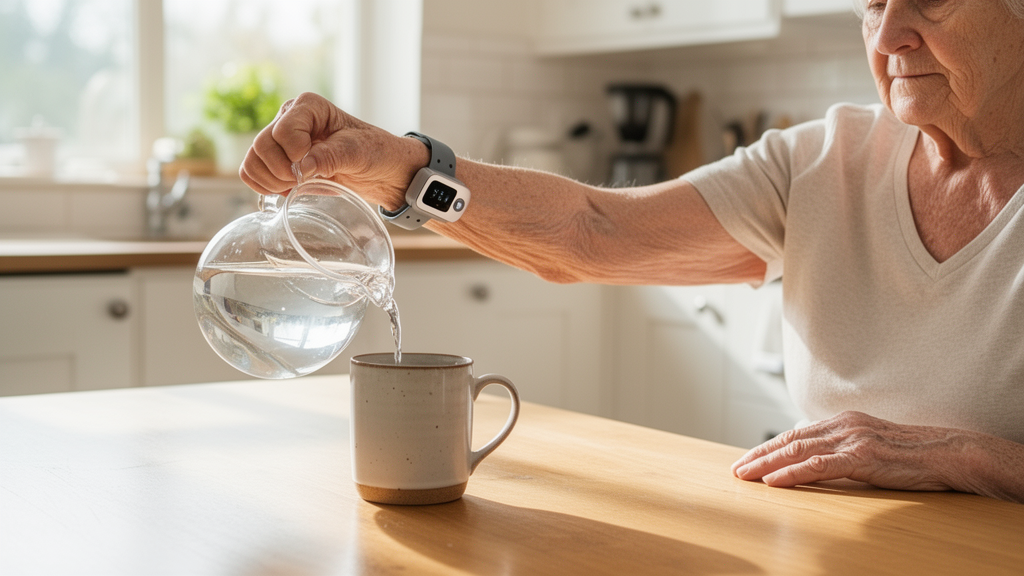
A cross-sectional investigation of 101 individuals recovering from subacute stroke demonstrated that real-world upper limb activity is shaped by behavioral and attentional factors rather than motor deficit severity alone. Using continuous 24-hour bilateral accelerometer recordings collected under free-living conditions, researchers observed pronounced variations in daily arm use among participants presenting comparable levels of clinical motor impairment. The findings reveal that standard clinical impairment scores alone do not fully capture how individuals utilize their affected limbs in everyday environments.
Clinical motor deficits in the cohort were evaluated using the Fugl-Meyer Assessment for the Upper Limb, providing a baseline measurement of motor impairment. To analyze daily extremity use patterns, the study utilized Gaussian mixture modeling to classify participants based on their clinical motor scores alongside accelerometer magnitude ratios. This computational classification identified six distinct patient subtypes across varying severities of motor deficit, highlighting heterogeneous patterns of limb use that diverge from direct motor ability.
Within the subgroups characterized by moderate motor deficits, the sensor data uncovered a distinct subtype exhibiting marked movement asymmetry despite maintaining motor scores comparable to peers.
Among participants with mild physical impairments, divergent movement patterns were also observed across distinct subgroups. One group exhibited pronounced movement asymmetry that was linked to upper limb inattention, suggesting cognitive and attentional factors substantially suppress real-world arm engagement. In contrast, other mildly impaired participants demonstrated more balanced bilateral arm engagement or even exhibited activity patterns dominated by the paretic side during everyday living.
Statistical evaluations using the Kruskal–Wallis test and Dunn’s post-hoc pairwise comparisons examined inter-cluster variations, while categorical variables were evaluated via Fisher’s exact test. To determine which clinical and behavioral characteristics best differentiated the identified subtypes, the authors conducted a C5.0 decision tree analysis. This analysis revealed that the Action Research Arm Test, the Motor Activity Log, upper limb inattention, and paretic-side dominance served as the key clinical variables distinguishing the cluster profiles.
The study highlights that real-world upper limb usage after a stroke reflects complex interactions between physical ability, limb dominance, and attentional processes. By pairing objective wearable accelerometer metrics with clinical assessments and cognitive evaluations, rehabilitation specialists can identify meaningful patient subgroups. The researchers concluded that identifying these specific behavioral subtypes could assist in tailoring individualized rehabilitation strategies that address learned non-use and inattention alongside standard motor recovery.
Subject of Research: Sensor-based analysis of real-world upper limb use after stroke
Article Title: Identifying heterogeneous patterns of real-world upper limb use beyond motor severity: a cross-sectional sensor-based study in people with subacute stroke
Article References: Minamikawa, Y., Nishi, Y., Ikuno, K., & Morioka, S. (2026). Identifying heterogeneous patterns of real-world upper limb use beyond motor severity: a cross-sectional sensor-based study in people with subacute stroke. Journal of NeuroEngineering and Rehabilitation. https://doi.org/10.1186/s12984-026-02171-8
Image Credits: AI Generated
DOI: 10.1186/s12984-026-02171-8
Keywords: stroke rehabilitation, upper limb activity, accelerometers, sensor-based monitoring, Fugl-Meyer Assessment, learned non-use, subacute stroke, Gaussian mixture modeling, motor deficits, limb inattention, Action Research Arm Test, Motor Activity Log, wearable sensors, decision tree analysis, paretic limb, rehabilitation medicine
News Source: Cassandra Pierce. (November 20, 2026). Sensor Study Links Real-World Arm Movement to Post-Stroke Behavioral Factors. Scienmag.