• HOME
  • NEWS
  • EXPLORE
    • CAREER
      • Companies
      • Jobs
    • EVENTS
    • iGEM
      • News
      • Team
    • PHOTOS
    • VIDEO
    • WIKI
  • BLOG
  • COMMUNITY
    • FACEBOOK
    • INSTAGRAM
    • TWITTER
Monday, May 11, 2026
BIOENGINEER.ORG
No Result
View All Result
  • Login
  • HOME
  • NEWS
  • EXPLORE
    • CAREER
      • Companies
      • Jobs
        • Lecturer
        • PhD Studentship
        • Postdoc
        • Research Assistant
    • EVENTS
    • iGEM
      • News
      • Team
    • PHOTOS
    • VIDEO
    • WIKI
  • BLOG
  • COMMUNITY
    • FACEBOOK
    • INSTAGRAM
    • TWITTER
  • HOME
  • NEWS
  • EXPLORE
    • CAREER
      • Companies
      • Jobs
        • Lecturer
        • PhD Studentship
        • Postdoc
        • Research Assistant
    • EVENTS
    • iGEM
      • News
      • Team
    • PHOTOS
    • VIDEO
    • WIKI
  • BLOG
  • COMMUNITY
    • FACEBOOK
    • INSTAGRAM
    • TWITTER
No Result
View All Result
Bioengineer.org
No Result
View All Result
Home NEWS Science News Biology

‘Self-cleaning’ concrete could keep buildings looking new (video)

Bioengineer by Bioengineer
November 20, 2019
in Biology
Reading Time: 2 mins read
0
IMAGE
Share on FacebookShare on TwitterShare on LinkedinShare on RedditShare on Telegram

IMAGE

Credit: American Chemical Society


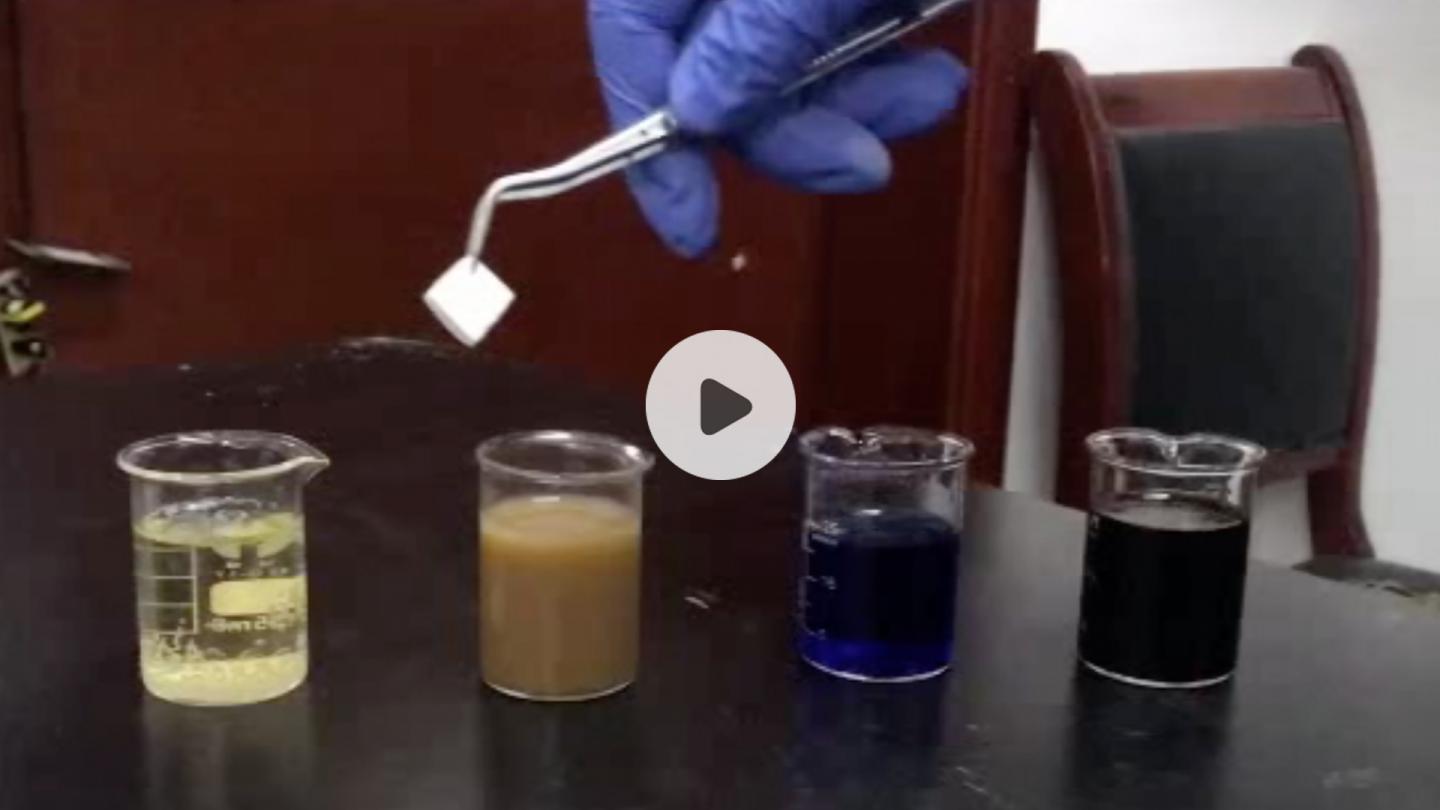
Building materials that clean themselves could save immense time and labor in homes and businesses, as well as reduce disease risk in settings such as hospitals. Now, researchers reporting in ACS Applied Materials & Interfaces have made a new type of concrete that is strong, heat-insulating and soundproof — and best of all, liquids like milk and coffee bounce right off of it, taking dust particles with them. Watch a video of the self-cleaning concrete here.

Nature boasts many examples of self-cleaning surfaces, from lotus leaves to geckos’ feet. Water droplets striking these superhydrophobic — or extreme water-hating — surfaces ball up into droplets if the surface is level, or completely roll off if it’s tilted, at the same time removing dust particles and contaminants. Scientists have tried to introduce these self-cleaning properties to concrete by adding hydrophobic materials. However, surface coatings can scratch or wear off over time, and hydrophobic materials added to the bulk concrete before drying often weaken it. Xin Xu and colleagues wanted to develop a simple method to make porous concrete with robust mechanical and self-cleaning properties.

The researchers added an oil, an emulsifier and a hydrophobic silicon polymer called polydimethylsiloxane (PDMS) to wet concrete. With the help of the emulsifier, the oil formed many tiny droplets that contained PDMS. The team then dried and heated the concrete, evaporating the oil so that PDMS-coated pores were left behind. The resulting porous concrete was lightweight, yet mechanically strong. It repelled dust particles and liquids, including milk, beer, soy sauce, coffee and dyed water, and could be immersed in the liquids and removed without leaving any stains behind. Even with mechanical grinding, heat treatment and chemical exposure, the material remained superhydrophobic. The porous concrete also absorbed sounds and insulated against heat loss, two other attractive properties for building materials.    

###

The authors acknowledge funding from the National Science Foundation of China, the China National Petroleum Corporation-Chinese Academy of Sciences Strategic Cooperation Research Program and the Open Foundation of the State Key Laboratory of Advanced Refractory Materials.

The abstract that accompanies this study is available here.

The American Chemical Society, the world’s largest scientific society, is a nonprofit organization chartered by the U.S. Congress. ACS is a global leader in providing access to chemistry-related information and research through its multiple databases, peer-reviewed journals and scientific conferences. ACS does not conduct research, but publishes and publicizes peer-reviewed scientific studies. Its main offices are in Washington, D.C., and Columbus, Ohio.

To automatically receive news releases from the American Chemical Society, contact [email protected].

Follow us on Twitter | Facebook

Media Contact
Katie Cottingham
[email protected]
301-775-8455

Tags: Chemistry/Physics/Materials SciencesPollution/RemediationPolymer ChemistryUrbanization
Share12Tweet8Share2ShareShareShare2

Related Posts

Ancient Plant Populations Reveal Fresh Insights into Climate Resilience — Biology

Ancient Plant Populations Reveal Fresh Insights into Climate Resilience

May 8, 2026
Rare Brain Disorders in Children Linked to Mutations in Lesser-Known Protein Complex — Biology

Rare Brain Disorders in Children Linked to Mutations in Lesser-Known Protein Complex

May 8, 2026

From Odd Insect to Underwater Predator: The Remarkable Evolution of a Bloodthirsty Fruit Fly

May 8, 2026

SNU Professor Sangwoo Seo’s Team Develops Next-Generation CRISPR Biocontainment Technology to Control Microbial Survival Without DNA Cleavage

May 8, 2026
Please login to join discussion

POPULAR NEWS

  • Research Indicates Potential Connection Between Prenatal Medication Exposure and Elevated Autism Risk

    840 shares
    Share 336 Tweet 210
  • New Study Reveals Plants Can Detect the Sound of Rain

    727 shares
    Share 290 Tweet 181
  • Salmonella Haem Blocks Macrophages, Boosts Infection

    61 shares
    Share 24 Tweet 15
  • Breastmilk Balances E. coli and Beneficial Bacteria in Infant Gut Microbiomes

    57 shares
    Share 23 Tweet 14

About

We bring you the latest biotechnology news from best research centers and universities around the world. Check our website.

Follow us

Recent News

New Post-Hoc Analysis Explores Daily Oral Orforglipron Use in Adults Over 65 with Obesity, Regardless of Diabetes Status

Evaluating Digoxin Use in Patients with Symptomatic Rheumatic Heart Disease

Evaluating the Effectiveness and Safety of Digitalis Glycosides in Treating Heart Failure

Subscribe to Blog via Email

Enter your email address to subscribe to this blog and receive notifications of new posts by email.

Join 82 other subscribers
  • Contact Us

Bioengineer.org © Copyright 2023 All Rights Reserved.

Welcome Back!

Login to your account below

Forgotten Password?

Retrieve your password

Please enter your username or email address to reset your password.

Log In
No Result
View All Result
  • Homepages
    • Home Page 1
    • Home Page 2
  • News
  • National
  • Business
  • Health
  • Lifestyle
  • Science

Bioengineer.org © Copyright 2023 All Rights Reserved.