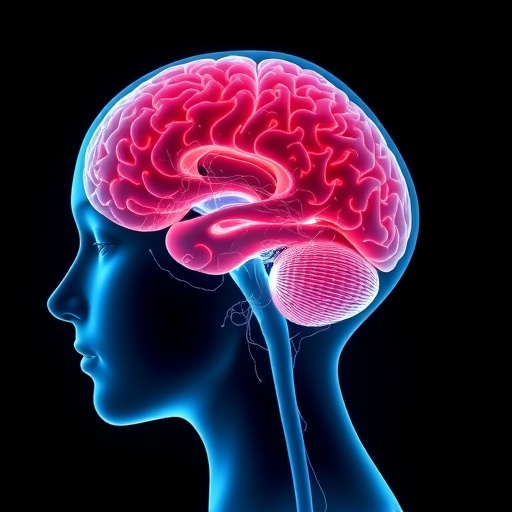
In recent years, the profound impact of pregnancy on the female brain has captured the attention of neuroscientists and psychologists alike. A groundbreaking new study published in Nature Communications by Straathof et al. (2026) delves into the less-explored territory of how a second pregnancy affects the brain’s structure and function. This research presents novel insights into the neural adaptations that occur not just once but over successive pregnancies, highlighting an intricate biological remodeling with lasting effects on the maternal brain.
The study’s authors embarked on a longitudinal analysis of women undergoing their second pregnancy, employing advanced neuroimaging techniques to capture dynamic changes in brain structure and function. Utilizing a combination of magnetic resonance imaging (MRI) and functional MRI (fMRI), the researchers were able to track subtle shifts in gray matter volume, cortical thickness, and network connectivity patterns across different stages of pregnancy and postpartum. This approach allowed them to observe the brain beyond the immediate adaptations of a first pregnancy and examine cumulative neuroplastic changes.
One of the most remarkable findings from this study is the evidence of amplified neuroplasticity during a second pregnancy, beyond what is observed in first-time mothers. Specifically, areas of the brain associated with maternal behavior, stress regulation, and social cognition showed marked structural remodeling. Regions such as the prefrontal cortex, amygdala, and hippocampus exhibited volume changes that suggest the brain is further tuned to handle the demands of caring for not just one but multiple children.
The functional changes mirror these structural adaptations. In the second pregnancy cohort, functional connectivity between networks involved in emotion regulation and executive function was significantly enhanced. This suggests that the brain primes itself to better manage the emotional and cognitive stresses associated with parenting multiple offspring. It also hints at a refined neural network for social interactions and bonding, which could be crucial for navigating the complexities of expanding family dynamics.
What distinguishes this study is its detailed temporal mapping of brain changes. Unlike cross-sectional studies, this longitudinal design allowed for tracking the trajectory of neural plasticity before, during, and well after the second pregnancy’s conclusion. The data revealed that some changes persisted into the postpartum period, indicating long-term remodeling rather than transient fluctuations. Such persistence could underpin the behavioral and psychological shifts observed in mothers adapting to multiple offspring.
At a molecular level, Straathof et al. suggest that hormonal fluctuations during the second pregnancy play a pivotal role in driving these brain changes. The interplay of estrogen, progesterone, oxytocin, and prolactin likely orchestrates synaptic remodeling and neurogenesis in key brain areas. This hormonal milieu, coupled with the increased cognitive and emotional demands of caring for an older sibling, may synergistically promote enhanced neural plasticity.
Another intriguing aspect of the research is its implication for maternal mental health. While first pregnancies have been linked with vulnerability to mood disorders postpartum, the study found that second pregnancies induce adaptive brain changes potentially serving as a buffer against such risks. The functional connectivity enhancements observed may provide a neurological scaffold that supports emotional resilience during the heightened demands inherent in caring for successive children.
The study also interrogates the lateralization effects in brain changes, revealing distinct patterns of adaptation between hemispheres. The right hemisphere, often implicated in emotional processing and social cognition, showed more pronounced changes, perhaps reflecting an evolved responsiveness to the social and emotional challenges of parenting multiple children. In contrast, left hemisphere regions tied to language and executive functions also adapted, underscoring the multifaceted cognitive demands of motherhood.
Importantly, the researchers accounted for variables such as maternal age, socioeconomic status, and pre-existing mental health conditions, ensuring that the observed effects were attributable primarily to the neurobiological impact of the second pregnancy. This rigorous methodological framework strengthens the validity of the findings and opens doors for future targeted interventions to support maternal brain health.
Moreover, these findings challenge the previously held notion that the maternal brain undergoes a one-time remodeling only during the first pregnancy. Straathof et al. demonstrate that the maternal brain remains plastic and responsive to subsequent pregnancies, adapting in unique ways that may reflect an evolutionary advantage in optimizing maternal caregiving capacity.
From a clinical perspective, this research offers promising avenues for developing strategies to mitigate postpartum complications. By understanding how the brain changes across multiple pregnancies, interventions could be tailored to enhance positive neuroplasticity or counteract maladaptive patterns that may arise in certain individuals, particularly those predisposed to postpartum depression or anxiety.
Furthermore, the study raises questions about the cumulative impact of parity on women’s cognitive aging. Does the enhanced neuroplasticity associated with successive pregnancies confer neuroprotective effects in later life, potentially slowing cognitive decline? While this research lays the groundwork, longitudinal studies extending into older age will be crucial to explore these possibilities.
In addition to its scientific contributions, this research speaks to the lived experiences of mothers navigating complex family expansions. It underscores that motherhood is not only a social and emotional journey but also a deeply biological process marked by continuous brain remodeling. Recognizing the neural basis of these transformations can foster greater empathy and inform social support systems.
The technical rigor of the study is also noteworthy. The use of state-of-the-art neuroimaging protocols enabled high-resolution mapping of brain structures rarely captured in pregnancy research. The sophisticated statistical models accounted for the nonlinear trajectories of brain changes, capturing the nuanced dynamics in a way that simpler analyses might miss.
While the findings are compelling, the authors also acknowledge limitations. The study’s sample size, though sufficiently powered for neuroimaging analyses, invites replication in larger and more diverse populations. Additionally, focusing on second pregnancies means that the neural effects of subsequent pregnancies beyond the second remain uncharted territory that merits future investigation.
In sum, the pioneering work by Straathof and colleagues enriches our understanding of the maternal brain by illuminating how subsequent pregnancies shape brain structure and function in intricate and lasting ways. This study not only expands the scientific narrative around motherhood but also offers vital insights with potential implications for maternal health policy, clinical practice, and societal attitudes regarding women’s neurobiological experiences during motherhood.
As the field continues to evolve, integrating multimodal imaging, hormonal profiling, and behavioral assessments will be essential to fully unravel the complexities of pregnancy-related brain plasticity. This research exemplifies how science can decode the subtle neural symphony underpinning one of humanity’s most profound biological transitions—the journey of motherhood, continued beyond the first child.
Subject of Research: The effects of a second pregnancy on women’s brain structure and function.
Article Title: The effects of a second pregnancy on women’s brain structure and function.
Article References:
Straathof, M., Halmans, S., Pouwels, P.J.W. et al. The effects of a second pregnancy on women’s brain structure and function. Nat Commun 17, 1495 (2026). https://doi.org/10.1038/s41467-026-69370-8
Image Credits: AI Generated
DOI: https://doi.org/10.1038/s41467-026-69370-8
Tags: cortical thickness pregnancy effectscumulative neuroplasticity pregnancyfMRI maternal brain functiongray matter volume pregnancylongitudinal pregnancy brain studymaternal behavior brain regionsmaternal brain neuroplasticityMRI brain imaging pregnancyneural adaptations successive pregnanciespostpartum brain remodelingpregnancy stress regulation brainsecond pregnancy brain changes