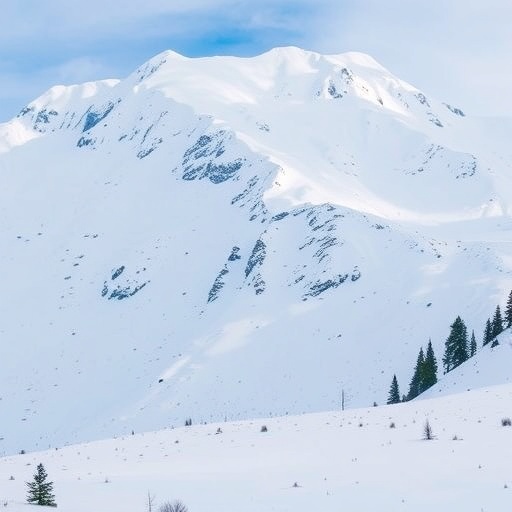
In the captivating realm of climate science, the intricate interplay between different environmental components often takes center stage. A recent exploration conducted by Sengupta and Das Bhowmik delves into an intriguing phenomenon that symbolizes this complexity: the relationship between oceans and snow cover in the Western Himalayas. Their findings shed light on how climatic teleconnections influence the distribution and variability of snow across this critical region, which is essential for both the ecosystem and human communities reliant on these valuable water resources.
The research provides a comprehensive analysis of how climatic events in distant oceans resonate with changes in snow cover, creating a ripple effect that shapes the local climate in the Himalayas. Using historical data and sophisticated climate models, the authors unravel the nuanced ways in which oceans, through their subtle whispers, influence precipitation patterns and temperature fluctuations, directly impacting snow deposition and melt rates.
Understanding these teleconnections is paramount, particularly in light of climate change. As global temperatures rise, the dynamics of these interactions may shift, potentially leading to unpredictable consequences for snow cover variability. The research emphasizes the importance of long-term monitoring to detect patterns and anomalies in snow cover, which in turn can have cascading effects on water supply for millions of people downstream.
A key aspect of this study is its focus on the Western Himalayas, a region sensitive to climatic alterations. The mountains, often referred to as the “water towers” of Asia, serve as crucial sources of freshwater for several major rivers. These rivers support agriculture, drinking water supply, and hydroelectric power for countries across the Indian subcontinent. Thus, the health of snow cover in the Himalayas translates into broader implications for regional water security.
Through meticulous observational data, Sengupta and Das Bhowmik highlight significant features of snow cover variability. They document how shifts in oceanic conditions, influenced by phenomena such as El Niño and the Indian Ocean Dipole, initiate changes in atmospheric circulation patterns. This, in turn, drives variations in snowfall and snowmelt in the Himalayas, emphasizing the interconnectedness of global climatic systems.
Discussing the methodology adopted in this research, the authors utilized advanced statistical techniques to discern patterns within extensive datasets covering decades. By analyzing snow cover trends alongside sea surface temperature anomalies, the team established a robust framework for understanding these teleconnections. Their findings underscore the need for innovative approaches in climate modeling, incorporating factors like oceanic changes to predict future snow cover dynamics more accurately.
Moreover, the article highlights the regional implications of altered snow cover patterns due to climate variability. What may seem like distant oceanic shifts can lead to significant changes in local weather, presenting challenges for agriculture and water resource management in the Western Himalayas. This realization calls for a reevaluation of current water management practices, taking into account the unpredictable nature of climatic interactions influenced by global warming.
The research also touches upon the socio-economic dimensions of snow cover variability. Communities throughout the Western Himalayas are intimately connected to their environment, relying on predictable water flows for agriculture and daily living. Disruptions in snow patterns could undermine these livelihoods, exacerbating poverty and food insecurity in vulnerable populations. Understanding these links is critical for developing adaptive strategies that can mitigate the impacts of changing environmental conditions.
Finally, as the study is published, it encourages further exploration into the intricate relationships between oceans, climate, and local environments. Continuous research in this domain will be essential for developing climate resilience strategies, ultimately guiding policymakers and stakeholders in safeguarding water resources and preserving ecosystems in the face of climate change.
In conclusion, the insights provided by Sengupta and Das Bhowmik offer valuable contributions to our understanding of climatic teleconnections and their impact on snow cover in the Western Himalayas. By elucidating the dynamics of this relationship, the research underscores the complexity of climate systems and the pressing need for a multidisciplinary approach to address the challenges posed by a rapidly changing climate. It is a reminder that what happens far away, such as in the oceans, can profoundly influence local environments and the lives of communities dependent on nature’s cycles.
Subject of Research: Climatic teleconnections and their impact on snow cover variability in the Western Himalayas.
Article Title: Publisher Correction: How seas whisper to snow: teleconnections drive spatio–temporal variability of snow cover in Western Himalayas.
Article References: Sengupta, S., Das Bhowmik, R. Publisher Correction: How seas whisper to snow: teleconnections drive spatio–temporal variability of snow cover in Western Himalayas. Sci Rep 15, 44061 (2025). https://doi.org/10.1038/s41598-025-32540-7
Image Credits: AI Generated
DOI: 10.1038/s41598-025-32540-7
Keywords: teleconnections, snow cover, Western Himalayas, climate change, El Niño, Indian Ocean Dipole, precipitation patterns, climate resilience.
Tags: climate change impacts on snow coverclimate science and ecosystemsenvironmental components interactionhistorical climate data analysislong-term climate monitoring importanceocean influence on local climatesprecipitation patterns in mountainous regionsrising global temperatures effectssnow deposition and melt ratesteleconnections between oceans and snowwater resource management in HimalayasWestern Himalayas snow variability