• HOME
  • NEWS
  • EXPLORE
    • CAREER
      • Companies
      • Jobs
    • EVENTS
    • iGEM
      • News
      • Team
    • PHOTOS
    • VIDEO
    • WIKI
  • BLOG
  • COMMUNITY
    • FACEBOOK
    • INSTAGRAM
    • TWITTER
Friday, April 3, 2026
BIOENGINEER.ORG
No Result
View All Result
  • Login
  • HOME
  • NEWS
  • EXPLORE
    • CAREER
      • Companies
      • Jobs
        • Lecturer
        • PhD Studentship
        • Postdoc
        • Research Assistant
    • EVENTS
    • iGEM
      • News
      • Team
    • PHOTOS
    • VIDEO
    • WIKI
  • BLOG
  • COMMUNITY
    • FACEBOOK
    • INSTAGRAM
    • TWITTER
  • HOME
  • NEWS
  • EXPLORE
    • CAREER
      • Companies
      • Jobs
        • Lecturer
        • PhD Studentship
        • Postdoc
        • Research Assistant
    • EVENTS
    • iGEM
      • News
      • Team
    • PHOTOS
    • VIDEO
    • WIKI
  • BLOG
  • COMMUNITY
    • FACEBOOK
    • INSTAGRAM
    • TWITTER
No Result
View All Result
Bioengineer.org
No Result
View All Result
Home NEWS Science News Chemistry

Scrambled supersolids

Bioengineer by Bioengineer
January 4, 2021
in Chemistry
Reading Time: 2 mins read
0
IMAGE
Share on FacebookShare on TwitterShare on LinkedinShare on RedditShare on Telegram

Researchers discovered a soft form of a solid
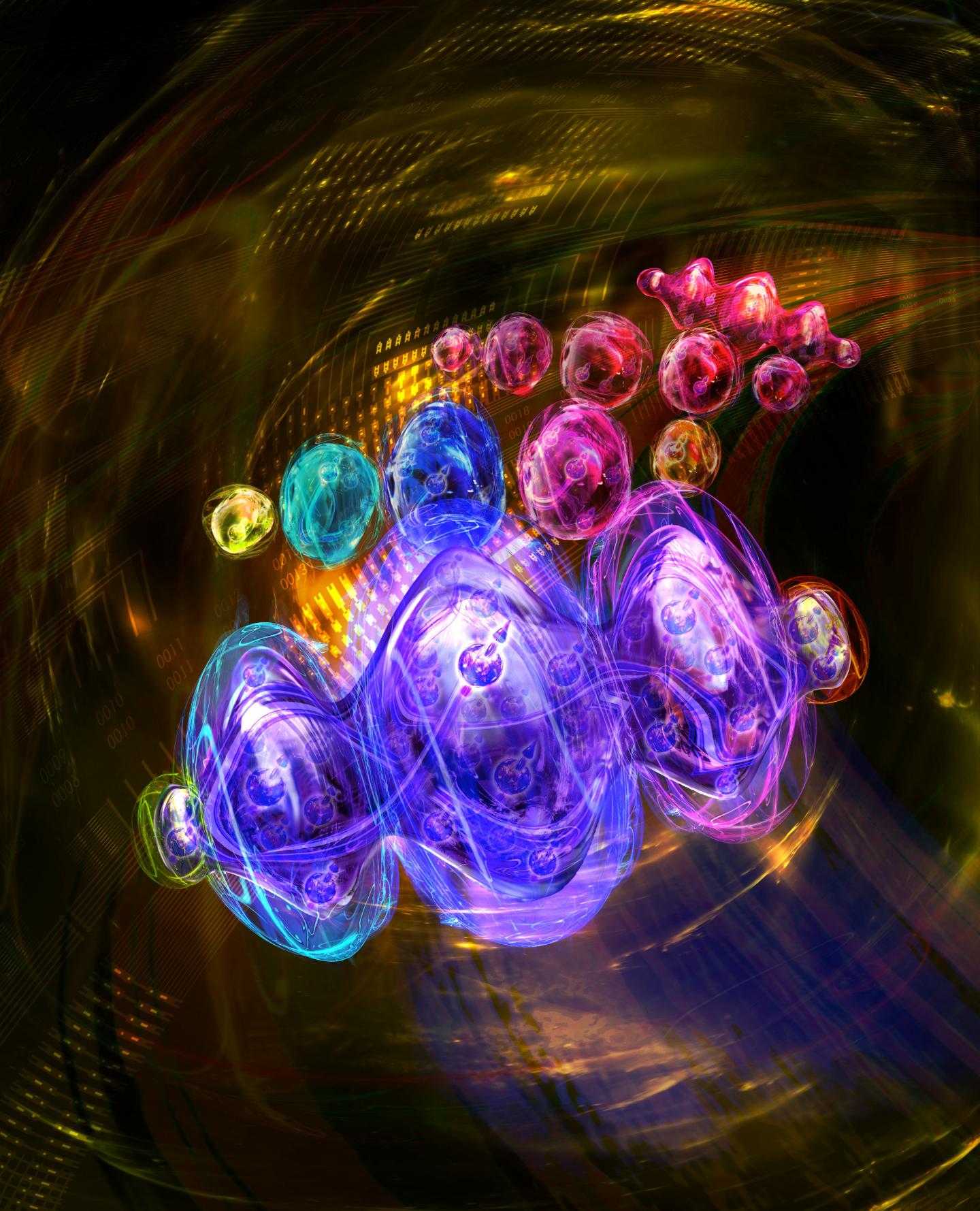
IMAGE

Credit: IQOQI Innsbruck/Harald Ritsch

Last year, more than fifty years after initial theoretical proposals, researchers in Pisa, Stuttgart and Innsbruck independently succeeded for the first time in creating so-called supersolids using ultracold quantum gases of highly magnetic lanthanide atoms. This state of matter is, in a sense, solid and liquid at the same time. “Due to quantum effects, a very cold gas of atoms can spontaneously develop both a crystalline order of a solid crystal and particle flow like a superfluid quantum liquid, i.e. a fluid able to flow without any friction” explains Francesca Ferlaino from the Institute for Quantum Optics and Quantum Information of the Austrian Academy of Sciences and the Department of Experimental Physics at the University of Innsbruck. “Much simplified, a dipolar supersolid can be imagined as a chain of quantum droplets which communicate with each other via a superfluid background bath,” says Thierry Giamarchi, theoretical physicist from the University of Geneva.

Surprisingly reversible

In Nature Physics, the researchers now report how such a supersolid state reacts if the superfluid bath between the droplets is drained by control of the external magnetic field. “We were able to show that without the bath the droplets quickly lose knowledge about each other and start to behave like small independent quantum systems – they dephase. The supersolid turns into a normal solid,” says Maximilian Sohmen from Francecsa Ferlaino’s team. “This ‘solid’, however, is still soft, it can wobble and support many collective excitations, called phonons”, adds Philipp Ilzhöfer from the Innsbruck team. “This makes this state a very interesting but complex subject of study with strong connections to solid-state physics and other fields.”

Maybe surprisingly, the Innsbruck physicists were also able to reverse this dephasing process: When they replenished the background bath, the droplets renewed their communication by particle tunneling and re-established supersolidity.

###

The research was financially supported by the Austrian Science Fund FWF, the Federal Ministry of Education, Science and Research, the Swiss National Science Foundation and the European Union.

Media Contact
Francesca Ferlaino
[email protected]

Related Journal Article

http://dx.doi.org/10.1038/s41567-020-01100-3

Tags: Chemistry/Physics/Materials Sciences
Share12Tweet8Share2ShareShareShare2

Related Posts

Novel Domino Polymerization Enables Versatile, Degradable Polymers

Novel Domino Polymerization Enables Versatile, Degradable Polymers

April 3, 2026
Engineered Biochar Harnesses Soil Chemistry to Degrade Antibiotic Pollution

Engineered Biochar Harnesses Soil Chemistry to Degrade Antibiotic Pollution

April 2, 2026

From Coffee Waste to Cutting-Edge Biodegradable Insulation: A Green Innovation

April 2, 2026

Study Uncovers Early Origins of Atypical Alterations in Dalí’s The Temptation of St. Anthony (1946), Highlighting Crucial Roles of Amber and Zinc White

April 2, 2026
Please login to join discussion

POPULAR NEWS

  • blank

    Revolutionary AI Model Enhances Precision in Detecting Food Contamination

    96 shares
    Share 38 Tweet 24
  • Imagine a Social Media Feed That Challenges Your Views Instead of Reinforcing Them

    1007 shares
    Share 398 Tweet 249
  • Promising Outcomes from First Clinical Trials of Gene Regulation in Epilepsy

    51 shares
    Share 20 Tweet 13
  • Popular Anti-Aging Compound Linked to Damage in Corpus Callosum, Study Finds

    44 shares
    Share 18 Tweet 11

About

BIOENGINEER.ORG

We bring you the latest biotechnology news from best research centers and universities around the world. Check our website.

Follow us

Recent News

Biomarker Analysis Tracks AZD2811 in SCLC Trial

Health Promotion Boosts Leisure in 80+ Elderly

Nutrient and Heavy Metal Analysis of Nigerian Infant Formula

Subscribe to Blog via Email

Enter your email address to subscribe to this blog and receive notifications of new posts by email.

Join 78 other subscribers
  • Contact Us

Bioengineer.org © Copyright 2023 All Rights Reserved.

Welcome Back!

Login to your account below

Forgotten Password?

Retrieve your password

Please enter your username or email address to reset your password.

Log In
No Result
View All Result
  • Homepages
    • Home Page 1
    • Home Page 2
  • News
  • National
  • Business
  • Health
  • Lifestyle
  • Science

Bioengineer.org © Copyright 2023 All Rights Reserved.