• HOME
  • NEWS
  • EXPLORE
    • CAREER
      • Companies
      • Jobs
    • EVENTS
    • iGEM
      • News
      • Team
    • PHOTOS
    • VIDEO
    • WIKI
  • BLOG
  • COMMUNITY
    • FACEBOOK
    • INSTAGRAM
    • TWITTER
Thursday, June 25, 2026
BIOENGINEER.ORG
No Result
View All Result
  • Login
  • HOME
  • NEWS
  • EXPLORE
    • CAREER
      • Companies
      • Jobs
        • Lecturer
        • PhD Studentship
        • Postdoc
        • Research Assistant
    • EVENTS
    • iGEM
      • News
      • Team
    • PHOTOS
    • VIDEO
    • WIKI
  • BLOG
  • COMMUNITY
    • FACEBOOK
    • INSTAGRAM
    • TWITTER
  • HOME
  • NEWS
  • EXPLORE
    • CAREER
      • Companies
      • Jobs
        • Lecturer
        • PhD Studentship
        • Postdoc
        • Research Assistant
    • EVENTS
    • iGEM
      • News
      • Team
    • PHOTOS
    • VIDEO
    • WIKI
  • BLOG
  • COMMUNITY
    • FACEBOOK
    • INSTAGRAM
    • TWITTER
No Result
View All Result
Bioengineer.org
No Result
View All Result
Home NEWS Science News Biology

Scientists use NASA satellite data to track ocean microplastics from space

Bioengineer by Bioengineer
September 6, 2025
in Biology
Reading Time: 2 mins read
0
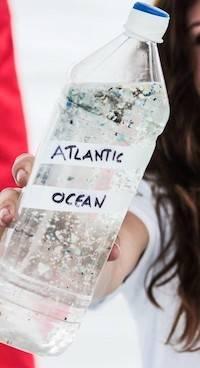
IMAGE
Share on FacebookShare on TwitterShare on LinkedinShare on RedditShare on Telegram

Scientists from the University of Michigan have developed an innovative way to use NASA satellite data to track the movement of tiny pieces of plastic in the ocean.

Microplastics form when plastic trash in the ocean breaks down from the sun’s rays and the motion of ocean waves. These small flecks of plastic are harmful to marine organisms and ecosystems. Microplastics can be carried hundreds or thousands of miles away from the source by ocean currents, making it difficult to track and remove them. Currently, the main source of information about the location of microplastics comes from fisher boat trawlers that use nets to catch plankton – and, unintentionally, microplastics.

The new technique relies on data from NASA’s Cyclone Global Navigation Satellite System (CYGNSS), a constellation of eight small satellites that measures wind speeds above Earth’s oceans and provides information about the strength of hurricanes. CYGNSS also uses radar to measure ocean roughness, which is affected by several factors including wind speed and debris floating in the water.

Working backward, the team looked for places where the ocean was smoother than expected given the wind speed, which they thought could indicate the presence of microplastics. Then they compared those areas to observations and model predictions of where microplastics congregate in the ocean. The scientists found that microplastics tended to be present in smoother waters, demonstrating that CYGNSS data can be used as a tool to track ocean microplastic from space.

###

The results were published online on June 9, 2021 in IEEE Transactions of Geoscience and Remote Sensing. The work was done by Chris Ruf, professor at the University of Michigan and principal investigator for CYGNSS, and undergraduate student Madeline C. Evans.

Media Contact
Sofie Bates
[email protected]

Original Source

https://cms.nasa.gov/feature/esnt2021/scientists-use-nasa-satellite-data-to-track-ocean-microplastics-from-space

Tags: Earth ScienceEcology/EnvironmentHydrology/Water ResourcesOceanographyPollution/Remediation
Share13Tweet8Share2ShareShareShare2

Related Posts

Natural Hallucinogens: Evolution’s Ecological Tools, Not Mere Chemical Byproducts

June 25, 2026

This Famous Butterfly Revealed: Three Distinct Species Hidden in One

June 25, 2026

Scientists Attack Soybean Cyst Nematode by Starving Its Food Source

June 25, 2026

Decoding the Secret Code of a Crucial Immune Sensor

June 24, 2026
Please login to join discussion

POPULAR NEWS

  • Saying Goodbye to PGY-6: Pediatric Fellowship Realities

    103 shares
    Share 41 Tweet 26
  • Multi-Hospital Study Reveals Long Covid Burden Is Twice as High as Current Estimates

    92 shares
    Share 36 Tweet 23
  • Detection of EDCs in Breast Milk and Infant Urine Up to Six Months Highlights Early Exposure Risks

    77 shares
    Share 31 Tweet 19
  • New Drug Candidate Developed at McMaster Shows Potential for Treating Brain Cancer

    58 shares
    Share 23 Tweet 15

About

We bring you the latest biotechnology news from best research centers and universities around the world. Check our website.

Follow us

Recent News

Tracking Lanthanide-Labeled Microplastics in Plants

POSTECH Researchers Slash Cost of Reconstituted Cell-Free Systems by 95%

AI and Physics Collaborate to Design Advanced Hydrogen Storage Materials

Subscribe to Blog via Email

Success! An email was just sent to confirm your subscription. Please find the email now and click 'Confirm' to start subscribing.

Join 82 other subscribers
  • Contact Us

Bioengineer.org © Copyright 2023 All Rights Reserved.

Welcome Back!

Login to your account below

Forgotten Password?

Retrieve your password

Please enter your username or email address to reset your password.

Log In
No Result
View All Result
  • Homepages
    • Home Page 1
    • Home Page 2
  • News
  • National
  • Business
  • Health
  • Lifestyle
  • Science

Bioengineer.org © Copyright 2023 All Rights Reserved.