

• HOME
  • NEWS
  • EXPLORE
    • CAREER
      • Companies
      • Jobs
    • EVENTS
    • iGEM
      • News
      • Team
    • PHOTOS
    • VIDEO
    • WIKI
  • BLOG
  • COMMUNITY
    • FACEBOOK
    • INSTAGRAM
    • TWITTER
Monday, April 6, 2026
BIOENGINEER.ORG
No Result
View All Result
  • Login
  • HOME
  • NEWS
  • EXPLORE
    • CAREER
      • Companies
      • Jobs
        • Lecturer
        • PhD Studentship
        • Postdoc
        • Research Assistant
    • EVENTS
    • iGEM
      • News
      • Team
    • PHOTOS
    • VIDEO
    • WIKI
  • BLOG
  • COMMUNITY
    • FACEBOOK
    • INSTAGRAM
    • TWITTER
  • HOME
  • NEWS
  • EXPLORE
    • CAREER
      • Companies
      • Jobs
        • Lecturer
        • PhD Studentship
        • Postdoc
        • Research Assistant
    • EVENTS
    • iGEM
      • News
      • Team
    • PHOTOS
    • VIDEO
    • WIKI
  • BLOG
  • COMMUNITY
    • FACEBOOK
    • INSTAGRAM
    • TWITTER
No Result
View All Result
Bioengineer.org
No Result
View All Result
Home NEWS Science News Health

Scientists unravel molecular mechanisms of Parkinson’s disease

Bioengineer by Bioengineer
June 12, 2018
in Health
Reading Time: 2 mins read
0
Share on FacebookShare on TwitterShare on LinkedinShare on RedditShare on Telegram
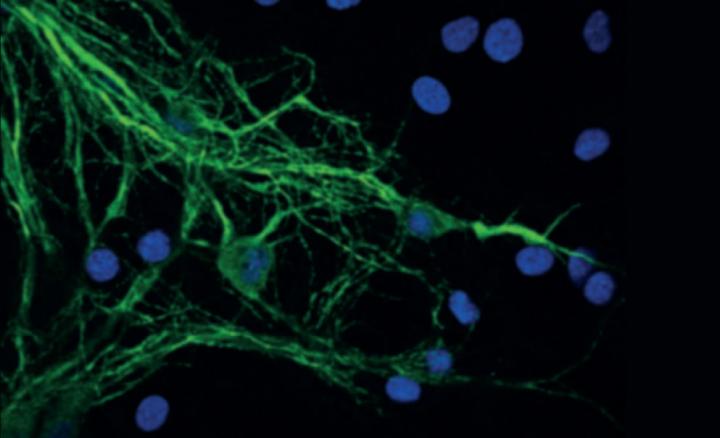
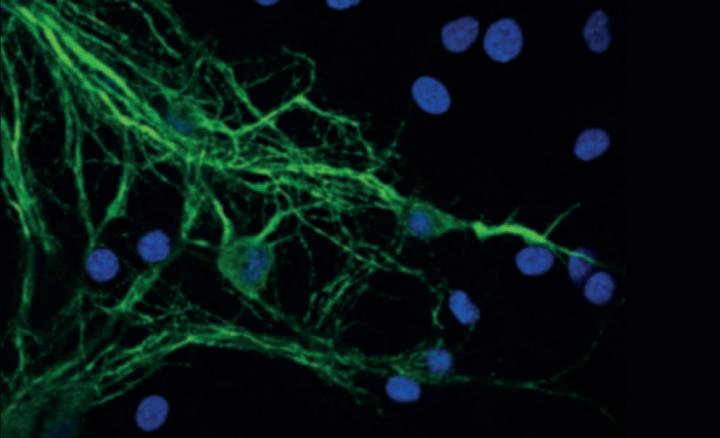
IMAGE

Credit: Mathew Horrocks

Detailed brain cell analysis has helped researchers uncover new mechanisms thought to underlie Parkinson's disease.

The study, published in Nature Communications, adds to our growing understanding of the causes of Parkinson's and other neurodegenerative diseases, and could influence drug design in the future.

For years, scientists have known that Parkinson's disease is associated with a build-up of alpha-synuclein protein inside brain cells. But how these protein clumps cause neurons to die was a mystery.

Using a combination of detailed cellular and molecular approaches to compare healthy and clumped forms of alpha-synuclein, a team of scientists at the Francis Crick Institute, UCL, UK Dementia Research Institute at the universities of Cambridge and Edinburgh, New York University and other collaborators have discovered how the protein clumps are toxic to neurons.

They found that clumps of alpha-synuclein moved to and damaged key proteins on the surface of mitochondria – the energy powerhouses of cells – making them less efficient at producing energy. It also triggered a channel on the surface of mitochondria to open, causing them to swell and burst, leaking out chemicals that tell the cell to die.

These findings were replicated in human brain cells, generated from skin cells of patients with a mutation in the alpha-synuclein gene, which causes early-onset Parkinson's disease. By turning patient skin cells into stem cells, they could chemically guide them into become brain cells that could be studied in the lab. This cutting-edge technique provides a valuable insight into the earliest stages of neurodegeneration – something that brain scans and post-mortem analysis cannot capture.

Sonia Gandhi, Group Leader at the Crick and UCL, and joint senior author of the study said: "Our findings give us huge insight into why protein clumping is so damaging in Parkinson's, and highlight the need to develop therapies against the toxic form of alpha-synuclein, not the healthy non-clumped form."

Andrey Abramov, joint senior author of the paper said: "This study was a complex collaboration at the interface of chemistry, biophysics and biology, bringing scientists from different disciplines together to investigate a longstanding problem in Parkinson's research."

###

Media Contact

Greta Keenan
[email protected]
44-203-796-3627
@thecrick

http://www.crick.ac.uk

Original Source

https://www.crick.ac.uk/news/science-news/2018/06/12/scientists-unravel-molecular-mechanisms-of-parkinson%E2%80%99s-disease/ http://dx.doi.org/10.1038/s41467-018-04422-2


Share12Tweet8Share2ShareShareShare2

Related Posts

Frailty, Nutrition, Depression Impact Elderly Quality of Life

April 5, 2026

Real-World Safety of Second-Line Diabetes Drugs in Elderly

April 4, 2026

Protein Monitoring Enhances EASO Obesity Care Timing

April 4, 2026

Measuring Fitness: Insights on Individual Phage Particles

April 4, 2026
Please login to join discussion

POPULAR NEWS

  • blank

    Revolutionary AI Model Enhances Precision in Detecting Food Contamination

    97 shares
    Share 39 Tweet 24
  • Promising Outcomes from First Clinical Trials of Gene Regulation in Epilepsy

    51 shares
    Share 20 Tweet 13
  • Imagine a Social Media Feed That Challenges Your Views Instead of Reinforcing Them

    1008 shares
    Share 398 Tweet 249
  • Popular Anti-Aging Compound Linked to Damage in Corpus Callosum, Study Finds

    44 shares
    Share 18 Tweet 11

About

We bring you the latest biotechnology news from best research centers and universities around the world. Check our website.

Follow us

Recent News

Japanese Health Promotion Questionnaire: Validity Confirmed

Frailty, Depression, Social Participation Linked in Older Adults

Seismic Impact on Integrated Slope Stabilization: Numerical Study

Subscribe to Blog via Email

Enter your email address to subscribe to this blog and receive notifications of new posts by email.

Join 78 other subscribers
  • Contact Us

Bioengineer.org © Copyright 2023 All Rights Reserved.

Welcome Back!

Login to your account below

Forgotten Password?

Retrieve your password

Please enter your username or email address to reset your password.

Log In
No Result
View All Result
  • Homepages
    • Home Page 1
    • Home Page 2
  • News
  • National
  • Business
  • Health
  • Lifestyle
  • Science

Bioengineer.org © Copyright 2023 All Rights Reserved.
