An international team of marine scientists has unveiled groundbreaking findings that enrich our understanding of coral reef ecosystems by revealing that each coral species hosts uniquely distinct communities of microbes. These microscopic partners, long overlooked in marine biology, are now recognized as crucial to the coral holobiont, exerting profound influence over coral health, resilience, and ecological function. This revelation not only deepens our insight into marine biodiversity but also positions coral microbiomes as treasure troves of bioactive compounds with transformational potential in medicine and biotechnology.
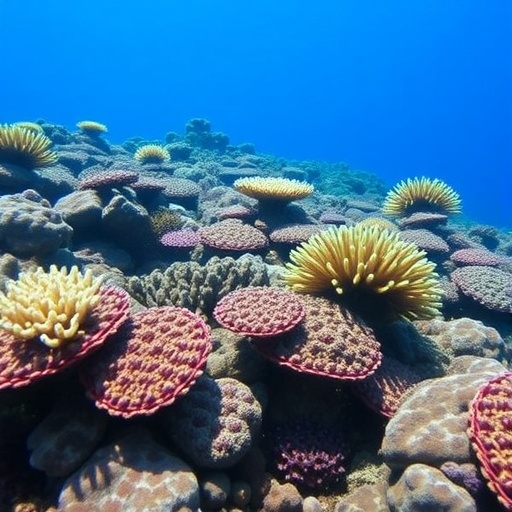
Coral reefs, often termed the “rainforests of the sea,” are renowned for their stunning biodiversity and vital ecological contributions. They sustain approximately one-third of all known marine macroscopic species and provide invaluable ecosystem services including nutrient cycling, coastal protection, and ecotourism revenue. Despite their ecological prominence, the intricate microbial networks woven within these reef systems have remained largely enigmatic until now. The recent research demonstrates that the true biological richness of corals lies in their associated microbiomes, invisible to the naked eye, yet integral to coral function and survival.
Using samples collected from 99 coral reefs spread over 32 islands throughout the vast Pacific Ocean, the international consortium, including researchers from the University of Galway’s Ryan Institute and the ETH Zurich, reconstructed the genomes of 645 microbial species. Strikingly, over 99 percent of these microbes had never been genomically characterized prior to this study, underscoring the profound knowledge gap in coral microbiology. These microbial communities are not merely passive residents; rather, they exhibit remarkable specialization, forming symbiotic relationships with their coral hosts and engaging in complex metabolic exchanges.
A particularly compelling aspect revealed through genomic analysis is the extraordinary biosynthetic capacity of coral-associated bacteria. These microbes possess a diverse array of biosynthetic gene clusters, the genetic blueprints responsible for synthesizing natural products, including many bioactive molecules. The diversity of these gene clusters in coral microbiomes exceeds that found in any other marine environment studied to date, suggesting that coral reefs harbor an unparalleled chemical diversity that remains largely untapped. These compounds could lead to new antibiotics, antivirals, and enzyme-based biotechnologies.
Dr. Maggie Reddy of the Ryan Institute emphasized the vast unknown that remains in coral microbiome research. Of the more than 4,000 microbial species identified, only about 10 percent have any genetic data available, and fewer than 1 percent of those discovered in the Tara Pacific samples have been previously studied in functional detail. This highlights a critical need for expanded biodiversity surveys, especially in underexplored regions where microbial diversity could be even more profound. Such efforts are essential not only for scientific knowledge but also for informed conservation strategies.
The conservation implications of this research are significant. Coral reef degradation, driven by climate change and anthropogenic pressures, results in loss extending beyond visible organisms to include these hidden microbial assemblages—the vast “molecular library” embedded within reefs. Loss of this microbial genetic reservoir represents a considerable diminishment of potential scientific and medical discoveries. Protecting coral reefs, therefore, emerges not solely as an ecological imperative but as a safeguard for future biotechnological innovation.
Professor Olivier Thomas noted that the biosynthetic prowess of coral microbiomes matches or surpasses that of traditionally studied natural product sources, such as sponges. His team uncovered previously unidentified microbial taxa, including members of the Acidobacteriota phylum, which produce novel enzymes with exciting prospects for industrial and pharmacological applications. These findings suggest coral-associated microbes could revolutionize biotechnological toolkits if properly studied and harnessed.
Funded and supported by the Tara Pacific consortium, this unprecedented microbiome mapping project leveraged observational methods to examine cellular and genomic data at an unparalleled scale. The meticulous collection during the Tara Pacific expedition from 2016 to 2018 allowed for comprehensive sampling across coral species and geographic locations representing 40 percent of global coral reefs. Such vast data sets enable researchers to draw novel hypotheses about microbial ecology, host-microbe coevolution, and the biochemical interactions underpinning reef resilience.
Beyond cataloguing diversity, the data reveal complex ecological roles microbes play within the coral holobiont. These include nutrient cycling, chemical defense against pathogens, and stress modulation, all essential for coral survival in increasingly hostile environmental conditions. The specialized biosynthetic gene clusters likely produce secondary metabolites that facilitate these functions, revealing a microbial basis for coral adaptability that could inform new conservation methodologies.
This research also lays the groundwork for the forthcoming Tara Coral expedition, slated for 2026-2027 in Papua New Guinea. With continued efforts, including field sampling and advanced genomic analyses, scientists aim to decode the mechanisms by which certain corals demonstrate resilience to climate-induced stressors such as ocean warming and acidification. Understanding microbial contributions to that resilience could open pathways to reef restoration and management strategies that leverage microbiome manipulation.
Finally, the study acts as an urgent call to the global scientific and conservation communities, emphasizing that the survival of coral reefs is inexorably linked to the preservation of their intimate microbial partners. Protecting this hidden biodiversity will be crucial to maintaining the biological and chemical complexity that sustains reef ecosystems and holds untold promise for humanity’s biotechnological future. As an invisible but vital dimension of coral reefs, the microbial world demands attention commensurate to its importance.
Subject of Research: Cells
Article Title: Coral microbiomes as reservoirs of unknown genomic and biosynthetic diversity
News Publication Date: 25-Feb-2026
Web References: https://fondationtaraocean.org/en/expedition/tara-coral/
References: DOI 10.1038/s41586-026-10159-6
Image Credits: Martina Regan
Keywords: Coral reefs, microbiome, biosynthetic gene clusters, marine biodiversity, biotechnology, coral conservation, microbial genomics
Tags: bioactive compounds from coral microbescoral holobiont healthcoral reef biodiversity significancecoral reef conservation strategiescoral resilience mechanismscoral species microbial diversitycoral-associated microbial communitiesecological role of coral microbiomesmarine biotechnology from coral reefsmarine microbial ecosystemsPacific coral reef microbiomesPacific Ocean coral research