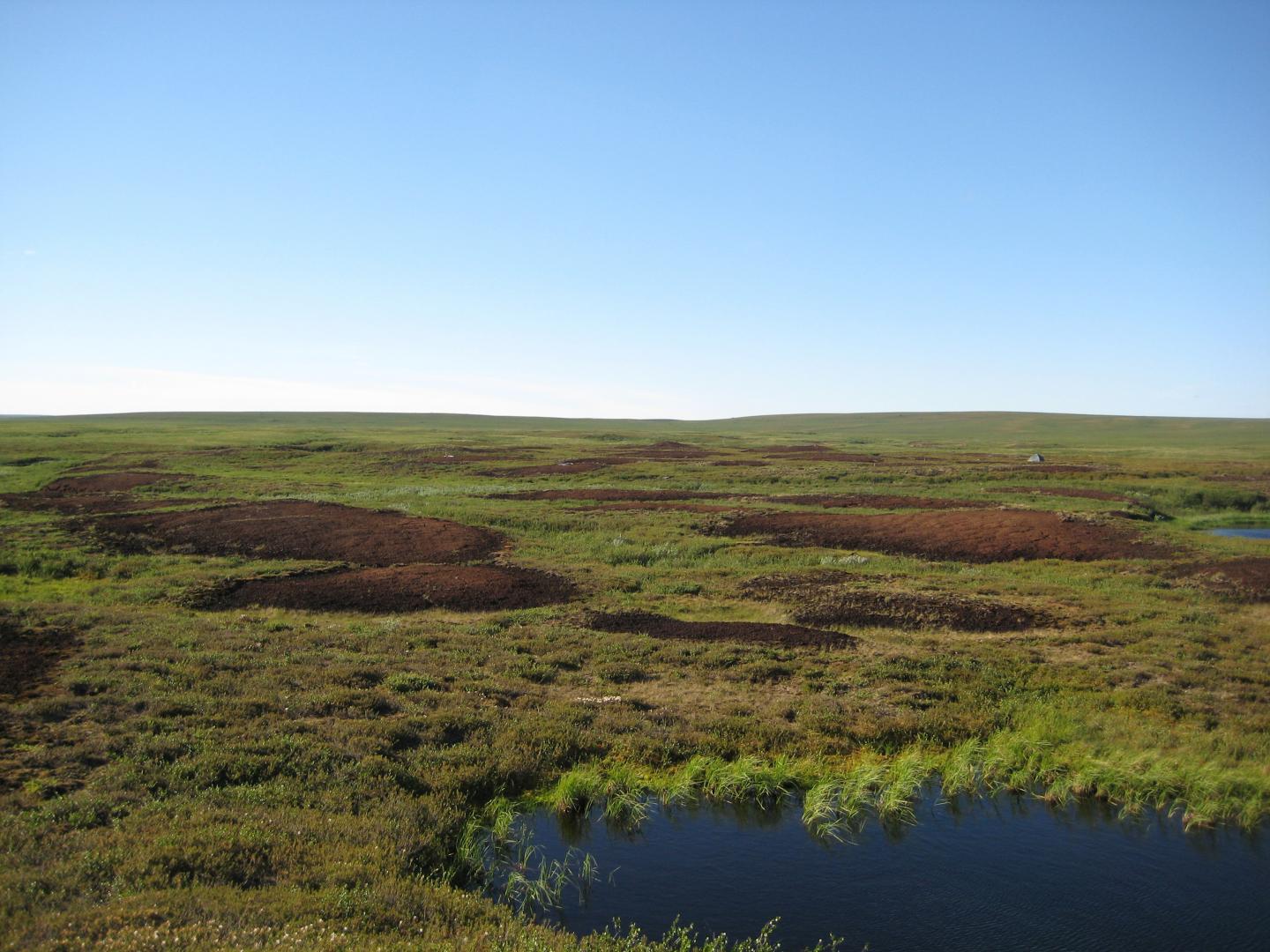
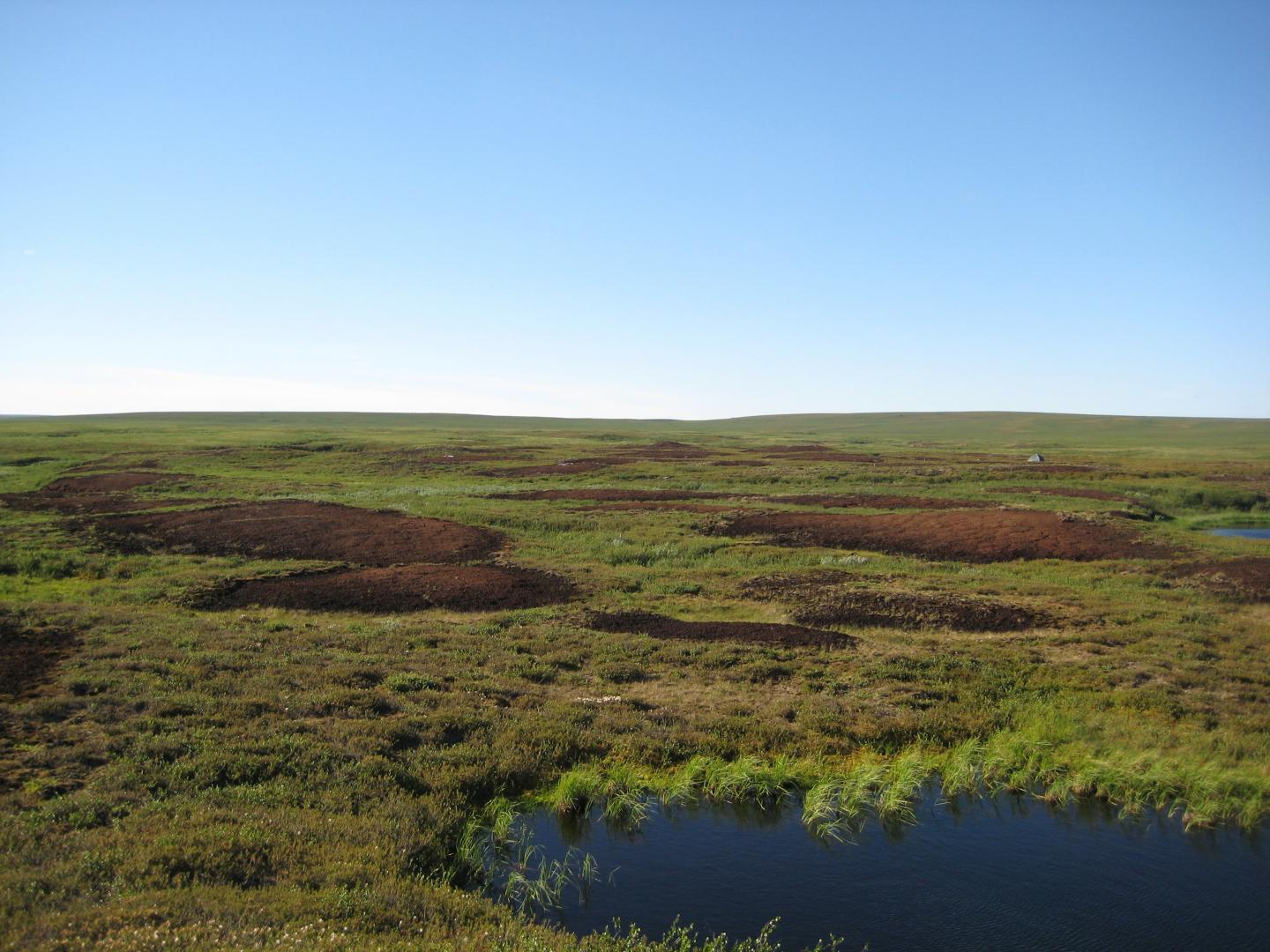
Credit: University of Eastern Finland Biogeochemistry Research Group
A new study from the University of Eastern Finland presents, for the first time, the isotopic fingerprint of nitrous oxide produced by Arctic soils. The finding opens new avenues for predicting future trends in atmospheric nitrous oxide as well as in identifying climate change mitigation actions in the Arctic, a region that is particularly sensitive to climate change.
Nitrous oxide (N2O) is a powerful greenhouse gas and also the second largest contributor to ozone depletion in the stratosphere. It is produced naturally by soils, with agricultural and tropical rain forest soils being the main sources of N2O to the atmosphere. Until recently, scientists assumed that nitrous oxide emissions were negligible in colder climate regions like the Arctic and sub-Arctic.
This assumption, however, was contradicted by scientists from the University of Eastern Finland a decade ago, when they discovered that bare peat surfaces in permafrost peatlands are releasing high amounts of N2O, despite the general nitrogen limitation of tundra ecosystems. Since then, N2O emissions and their underlying processes have been the object of plenty of research and, also, debate.
In a new study, researchers from the University of Eastern Finland, together with colleagues from the Venezuelan Institute for Scientific Research (IVIC) and the University of California, Berkeley, explore the isotopic composition and potential sources of nitrous oxide emitted by soils in the sub-Arctic tundra. The study explores new frontiers in polar science, and the approach used establishes a legacy of data and methodologies that have the potential to link the Arctic ecosystem with the global N2O cycle.
In the study, the researchers examined nitrogen and oxygen isotopes in N2O samples collected from permafrost peatland sites in northwestern Russia. Using "site preference" analysis, the scientists also identified the specific isotopes occupying the two different nitrogen sites within the nitrous oxide molecule. The study presents for the first time the isotopic fingerprint of N2O produced by soils of Arctic tundra, thereby contributing to an understanding of N2O production mechanisms in this understudied environment.
Since different microbial processes leave distinct isotopic fingerprints on nitrous oxide, the researchers also hoped to figure out the relative amounts of nitrous oxide emitted by different nitrogen-processing microbes in the tundra soils. The results suggest that the N2O emissions from bare tundra peat soils might be due to nitrifier denitrification, a microbial process that transforms ammonia (NH4) into N2 in a series of steps, one of which produces nitrous oxide. However, in the study year N2O emissions were low compared to previous years, and the reasons for the high emissions are still unclear. The isotope data was not conclusive enough, and even the sophisticated site preference technique did not provide enough information to tease out the relative roles of different microbes.
Nonetheless, the findings are valuable because isotopic nitrous oxide data from the Arctic and sub-Arctic are extremely rare. The findings could aid predictions of future trends in atmospheric nitrous oxide and help to identify mitigation actions in the Arctic, a region that is particularly sensitive to climate change. In the future, enhanced N2O emissions from natural soil such as sub-Arctic tundra might mask the isotope effect caused by mitigation actions derived from agriculture.
###
The findings were reported in Global Biogeochemical Cycles, and the article is featured as a Research Spotlight in the Eos magazine at https://eos.org/research-spotlights/high-arctic-emissions-of-a-strong-greenhouse-gas
For further information, please contact:
Researcher Jenie Gil, University of Eastern Finland, email: jenie.gillugo (a) uef.fi, tel. +358 40 3552111
Research article:
Gil, J., T. Pérez, K. Boering, P. J. Martikainen, and C. Biasi (2017), Mechanisms responsible for high N2O emissions from subarctic permafrost peatlands studied via stable isotope techniques, Global Biogeochem. Cycles, 31, 172-189, doi:10.1002/2015GB005370.
Media Contact
Jenie Gil
[email protected]
358-403-552-111
@UniEastFinland
http://www.uef.fi