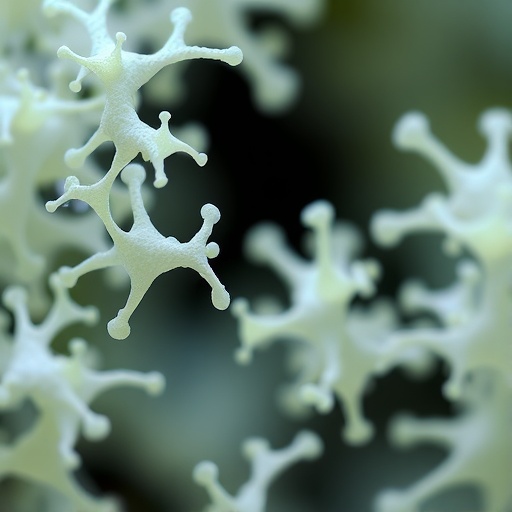
Scientists in Germany have unveiled a groundbreaking discovery in the battle against plastic pollution: a cooperative bacterial consortium capable of efficiently degrading phthalate ester plasticizers (PAEs). These plasticizers are pervasive additives found in myriad everyday products such as building materials, food packaging, and personal care items. Alarmingly, PAEs have been linked to a host of health problems, including hormonal imbalances, metabolic disorders, developmental issues, and certain cancers. This newly identified microbial community represents a promising biotechnological advance toward remediating these hazardous contaminants in the environment.
Plastic contamination has infested the planet’s most inaccessible and extreme habitats, reaching depths of the Mariana Trench and Everest’s summit. Conventional plastic-degrading microbes often struggle to break down plastics outside controlled laboratory conditions: microbial degradation usually requires elevated temperatures and efficient bioreactors to achieve meaningful results. Moreover, existing plastic-eating bacteria are generally limited to digesting a single type of polymer, limiting their applicability in natural ecosystems overwhelmed with diverse plastic wastes.
The German team, working within the Helmholtz Centre for Environmental Research’s FINEST project aimed at creating sustainable circular economy solutions, sought to overcome these challenges through microbial synergy. Their approach centers around harnessing a consortium of bacterial strains that work collectively—sharing metabolic tasks, compensating for individual limitations, and maintaining performance despite fluctuating environmental factors. This team-based strategy leverages the natural phenomenon of cross-feeding, where one microbe metabolizes a compound into intermediate products that its partners further consume, enabling complete degradation.
The origin of this novel consortium was serendipitously found right in the researchers’ laboratory. A biofilm thriving on polyurethane tubing inside a bioreactor was harvested and cultured with diethyl phthalate (DEP), a representative PAE, serving as the sole carbon and energy source. Subsequent serial transfers fine-tuned the community into a stable, resilient consortium capable of thriving in DEP concentrations up to 888 mg/L. Remarkably, at a moderate temperature of 30 °C, this microbial assembly could fully degrade DEP within 24 hours—a significant acceleration compared to single-strain systems.
Molecular analyses revealed that the consortium comprises three bacterial species: one each from the Pseudomonas putida and Pseudomonas fluorescens groups, alongside an unidentified Microbacterium strain. Intriguingly, none of these bacteria could break down PAEs individually, confirming the essential nature of their cooperation. Experimental evidence demonstrated that degradation occurs via a sequence of metabolites, notably monoethyl phthalate and phthalate, with the enzymatic machinery catalyzing these steps representing novel enzymes hitherto unknown to science.
This metabolic versatility is a notable advantage: the bacterial consortium was shown to degrade not only DEP but also related phthalate esters such as dimethyl phthalate, dipropyl phthalate, and dibutyl phthalate. This broad substrate scope significantly increases the potential for real-world applications across varied contaminated environments, where multiple PAEs frequently co-exist. Such adaptability distinguishes this consortium from previously described plastic-degrading microbes, which typically specialize in a single compound.
The consortium’s cross-feeding mechanism reflects an evolutionary adaptation driven by humanity’s mounting plastic pollution. Initially, the enzymatic pathways for ester bond cleavage likely evolved to process natural molecules but were repurposed under the persistent selective pressure from synthetic PAEs in the environment. This evolutionary trajectory illustrates how microbial communities can rapidly diversify metabolic capabilities in response to anthropogenic challenges, potentially unlocking biotechnological tools for environmental cleanup.
Despite the consortium’s success with PAEs, the team acknowledges its current limitations. It cannot yet degrade more recalcitrant plastics such as polyethylene and polypropylene, which are characterized by robust non-ester linkages impervious to natural enzymatic attack. Overcoming this hurdle remains a formidable challenge, requiring further exploration of novel enzymes or engineered microbial systems capable of tackling these abundant plastic polymers.
Looking forward, the researchers plan to assess the consortium’s practical utility in real-world conditions by introducing it into wastewater treatment facilities contaminated with microplastic debris. This bioaugmentation strategy aims to enhance the removal of PAEs directly within polluted environments without reliance on expensive, energy-intensive bioreactors. Demonstrating effective pollutant reduction in situ would mark a significant milestone in sustainable environmental biotechnology.
Overall, this study exemplifies how interdisciplinary research combining microbiology, environmental science, and bioengineering can create innovative solutions to global plastic pollution. Harnessing microbial cooperation and evolutionary ingenuity paves the way for environmentally viable, scalable methods to mitigate harmful plasticizer contamination and move toward a cleaner, circular economy. As these bacteria continue to evolve, the potential for broader plastic waste degradation may emerge, offering hope in the fight against the ever-growing plastic crisis.
This discovery also raises fundamental questions about how microbial communities interact and adapt metabolically within synthetic pollutant contexts. The identification of new enzymes involved in PAE degradation expands our biochemical understanding and could inspire enzymatic engineering to enhance or diversify substrate specificity. Ongoing research exploring the genomic and proteomic profiles of such consortia will be critical to unlocking the full potential of microbial plastic degradation technologies.
In summary, the German scientists’ work illuminates a promising path for bioremediation by exploiting synergistic bacterial relationships. This consortium’s rapid and efficient breakdown of harmful phthalate esters through cross-feeding sets a paradigm for future microbial solutions that might tackle a broader spectrum of plastic pollutants. While challenges remain, such biological innovations provide crucial tools in addressing one of the defining environmental issues of our time.
Subject of Research: Not applicable
Article Title: Cross-Feeding Drives Degradation of Phthalate Ester Plasticizers in a Bacterial Consortium
News Publication Date: 18-Mar-2026
Web References: Frontiers in Microbiology Article
References: DOI – 10.3389/fmicb.2025.1757196
Image Credits: Not specified
Keywords
Plastic degradation, bacterial consortium, phthalate esters, cross-feeding, microbial cooperation, plasticizers, bioremediation, Pseudomonas, Microbacterium, enzymatic degradation, plastic pollution, bioaugmentation
Tags: bacterial consortium for plastic degradationbioremediation of plastic additivesbiotechnology for plastic waste managementenvironmental impact of phthalateshealth risks of phthalate exposureHelmholtz Centre environmental researchmicrobial degradation of mixed plasticsmicrobial synergy in pollutant breakdownovercoming microbial plastic degradation limitsphthalate ester plasticizers biodegradationplastic pollution in extreme environmentssustainable circular economy solutions