In a technical report published in Nature Cell Biology, researchers establish a developmentally informed human stem cell model that reconstructs the emergence of the human chorion. To investigate this developmental trajectory, the authors demonstrated that targeted inhibition of LATS kinase directly initiates trophectoderm differentiation without requiring any exogenous morphogens.
To evaluate how closely the in vitro model mirrors natural developmental milestones, the researchers stage-matched the differentiation program against an integrated embryo–chorion single-cell reference atlas. This comprehensive single-cell comparison revealed a coordinated and ordered developmental progression advancing systematically from early trophectoderm cells to secondary chorionic lineages. Furthermore, detailed analyses of temporal gene expression dynamics downstream of LATS kinase inhibition confirmed that the induced differentiation program accurately tracks the natural embryonic trophoblast trajectory over time.
The investigation also provided comprehensive transcriptional and DNA methylome characterization of the differentiation program induced by Hippo pathway modulation. Whole-genome bisulfite sequencing revealed that cells undergo pronounced epigenetic remodeling during the transition, passing through a naive-like hypomethylated state that is subsequently followed by widespread remethylation. Crucially, despite this extensive global epigenetic reset, key known placenta-associated imprinted domains successfully retained their characteristic DNA methylation patterns as well as their parent-of-origin allelic bias.
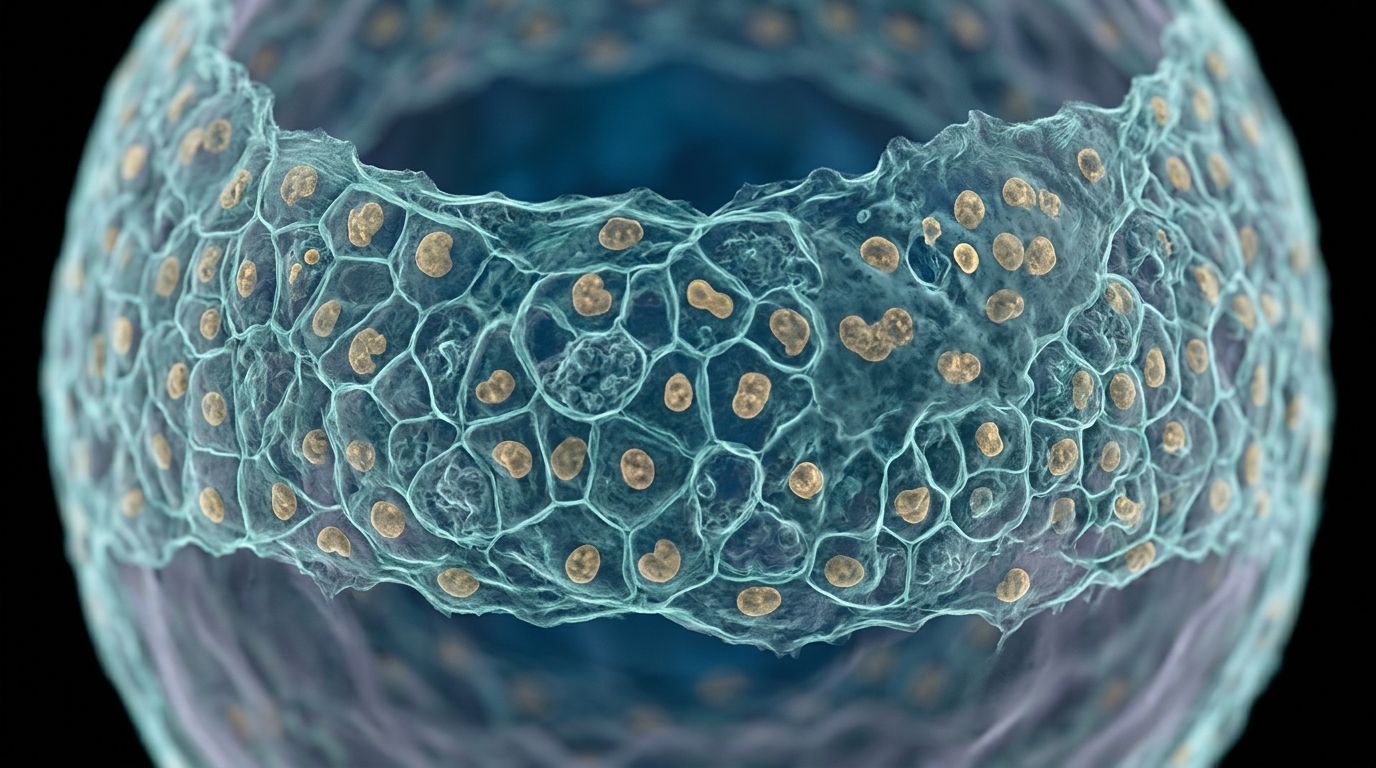
Moving beyond two-dimensional culture, the authors established a three-dimensional human chorion model by agitating induced-cell aggregates in suspension culture. Structural characterization showed that these aggregates developed an outward-facing trophoblast polarity along with an inside-out stromal–epithelial topology, effectively reproducing key architectural aspects of human chorion development.
Finally, the authors dissected downstream signalling pathways and transitional cell identities, determining that endogenous WNT signalling was dispensable for initial trophectoderm induction but critically regulated later chorionic lineage balance. In addition, prospective isolation of cells marked by the specific surface profile CLDN6+ITGA6− identified a distinct proEVT-like trophoblast intermediate. Lineage potential assays demonstrated that this intermediate retains both villous and extravillous trophoblast developmental potential. Taken together, this experimental framework directly connects human trophectoderm induction to three-dimensional chorion modelling, providing a tractable in vitro platform that enables future investigation of the mechanisms governing early human placental specification.
Subject of Research: Stem cell modeling of human trophectoderm induction and chorion self-organization
Article Title: Reconstructing the emergence of the human chorion via Hippo-mediated trophoblast induction
Article References: Zhang, M., Lim, R. L., Reis, A. H., Piszker, W., Boyd, W. W., Pagon, A., Mahajan, A., Wu, L., Zhao, C., Petropoulos, S., Ronda, C., & Simunovic, M. (2026). Reconstructing the emergence of the human chorion via Hippo-mediated trophoblast induction. Nature Cell Biology. https://doi.org/10.1038/s41556-026-02082-9
Image Credits: AI Generated
DOI: 10.1038/s41556-026-02082-9
Keywords: human chorion, trophectoderm, Hippo signalling, LATS kinase, trophoblast induction, stem cell model, DNA methylation, WNT signalling, Reconstructing, emergence, human, chorion
News Source: Scienmag.