

• HOME
  • NEWS
  • EXPLORE
    • CAREER
      • Companies
      • Jobs
    • EVENTS
    • iGEM
      • News
      • Team
    • PHOTOS
    • VIDEO
    • WIKI
  • BLOG
  • COMMUNITY
    • FACEBOOK
    • INSTAGRAM
    • TWITTER
Wednesday, April 8, 2026
BIOENGINEER.ORG
No Result
View All Result
  • Login
  • HOME
  • NEWS
  • EXPLORE
    • CAREER
      • Companies
      • Jobs
        • Lecturer
        • PhD Studentship
        • Postdoc
        • Research Assistant
    • EVENTS
    • iGEM
      • News
      • Team
    • PHOTOS
    • VIDEO
    • WIKI
  • BLOG
  • COMMUNITY
    • FACEBOOK
    • INSTAGRAM
    • TWITTER
  • HOME
  • NEWS
  • EXPLORE
    • CAREER
      • Companies
      • Jobs
        • Lecturer
        • PhD Studentship
        • Postdoc
        • Research Assistant
    • EVENTS
    • iGEM
      • News
      • Team
    • PHOTOS
    • VIDEO
    • WIKI
  • BLOG
  • COMMUNITY
    • FACEBOOK
    • INSTAGRAM
    • TWITTER
No Result
View All Result
Bioengineer.org
No Result
View All Result
Home NEWS Science News Health

Scientists identify two hormones that burn fat faster, prevent and reverse diabetes in mice

Bioengineer by Bioengineer
May 1, 2018
in Health
Reading Time: 2 mins read
0
Share on FacebookShare on TwitterShare on LinkedinShare on RedditShare on Telegram
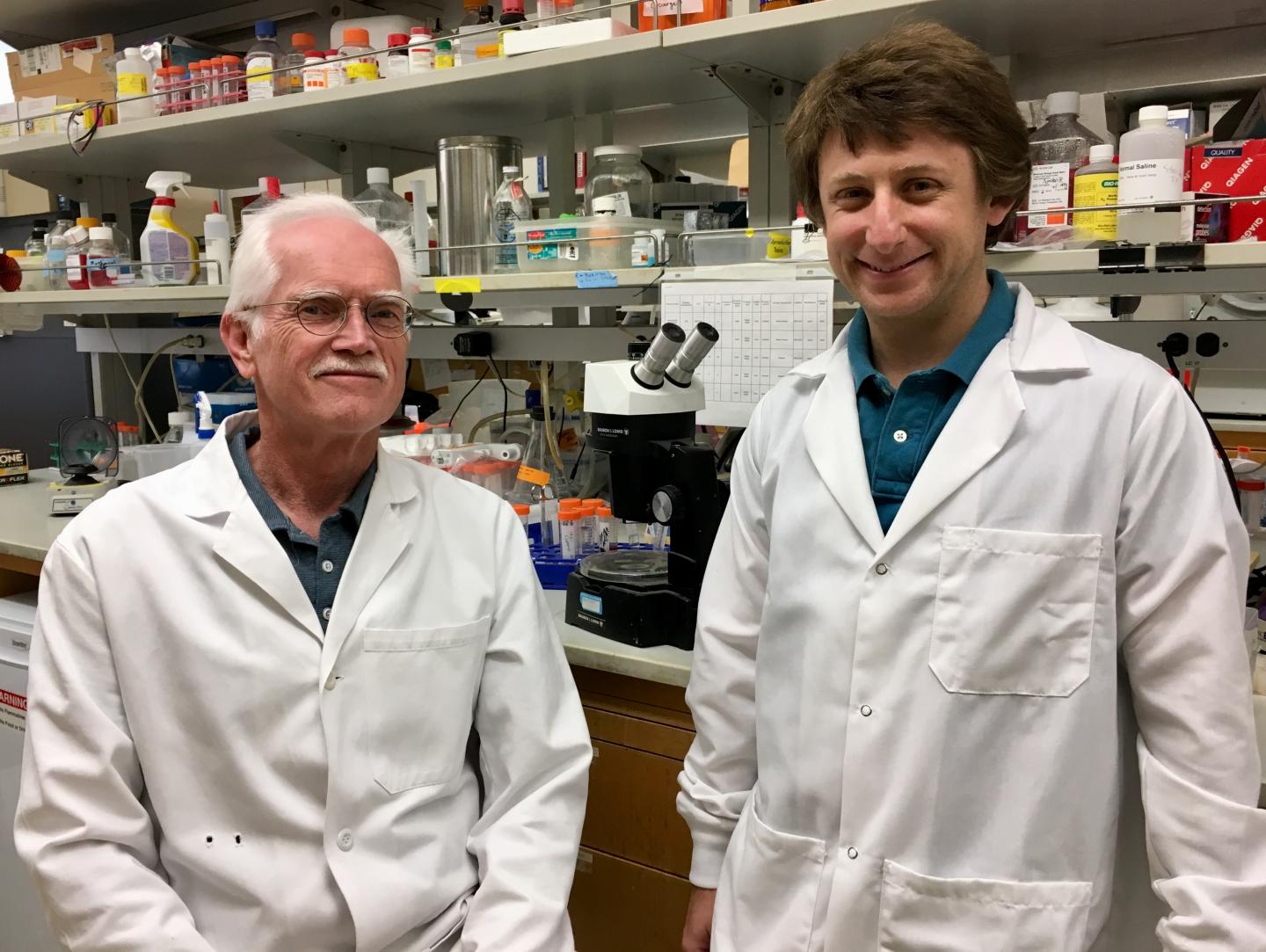
IMAGE

Credit: Elaine Schmidt/UCLA Health

FINDINGS

UCLA geneticists have created a new technique to hunt for hormones that influence how organs and tissues communicate with each other. The method enabled them to find naturally occurring molecules that play major roles in Type 2 diabetes, obesity and cardiovascular disease.

In particular, they discovered:

  • Two hormones called "notum" and "lipocalin-5" that speed up the body's ability to burn fat.
  • Lipocalin-5 protected mice from developing diabetes — or cured the disease after they developed it.
  • Lipocalin-5 also enhanced muscle tissue's ability to metabolize and absorb dietary nutrients, reducing the risk of obesity and diabetes.

The findings could deepen scientists' understanding of the mechanisms behind obesity and common risk factors for heart disease and diabetes.

BACKGROUND

Diseases such as obesity and diabetes disrupt how individual tissues and organs communicate with one another. The technique developed by the UCLA researchers reverses this disruption by pursuing alternate routes of tissue-to-tissue communication.

METHOD

The researchers developed a data-driven approach to unravel the wide array of functions for hormones that circulate in the bloodstream. They initially identified and studied the hormonal networks in mice. Next they tested whether the functions they assigned to the hormones remained consistent in humans. The team discovered a strong overlap between these hormones' functions in mice and humans. By studying how hormonal functions change in people with diabetes and cardiovascular disease, the scientists were able to identify new ways that tissues signal each other and restore normal communication.

IMPACT

Future studies will address how the newly identified hormones in humans communicate between unrelated types of tissue. The investigators will also apply the new method to evaluate tissue-to-tissue communication across different ethnicities and diseases. The hope is to use these hormones as the basis for drug development — specifically to halt development of obesity and Type 2 diabetes.

###

AUTHORS

Authors include Jake Lusis, a professor of human genetics at the David Geffen School of Medicine at UCLA, and Marcus Seldin, a postdoctoral fellow in Lusis' lab. They are available for interviews.

JOURNAL

Cell Metabolism published the findings on May 1.

FUNDING

The research was supported by grants from the National Heart, Lung and Blood Institute and the Leducq Foundation.

Media Contact

Elaine Schmidt
[email protected]
310-267-8323
@uclahealth

http://www.uclahealth.org/

Original Source

http://newsroom.ucla.edu/releases/scientists-identify-new-hormones-that-burn-fat-faster-prevent-and-reverse-diabetes-in-mice

Share12Tweet7Share2ShareShareShare1

Related Posts

How Fungal Ear Infections in Dogs Evade Treatment Reveals New Insights for Veterinary Drug Stewardship

April 8, 2026

Low-Field MRI Revolutionizes Global Dementia Care

April 7, 2026

Nasir Bashir Awarded 2026 IADR John Clarkson Fellowship

April 7, 2026

AI-Powered Nomogram Predicts Frailty in Elderly COPD

April 7, 2026
Please login to join discussion

POPULAR NEWS

  • blank

    Revolutionary AI Model Enhances Precision in Detecting Food Contamination

    98 shares
    Share 39 Tweet 25
  • Imagine a Social Media Feed That Challenges Your Views Instead of Reinforcing Them

    1010 shares
    Share 399 Tweet 250
  • Popular Anti-Aging Compound Linked to Damage in Corpus Callosum, Study Finds

    44 shares
    Share 18 Tweet 11
  • Promising Outcomes from First Clinical Trials of Gene Regulation in Epilepsy

    51 shares
    Share 20 Tweet 13

About

We bring you the latest biotechnology news from best research centers and universities around the world. Check our website.

Follow us

Recent News

Breakthrough in Precise Synthesis of Chiral Cyclic Imine Esters via Transient Binary Copper Co-Catalysis

How Fungal Ear Infections in Dogs Evade Treatment Reveals New Insights for Veterinary Drug Stewardship

Scans Reveal ‘Oldest Octopus’ Fossil Is Not an Octopus After All

Subscribe to Blog via Email

Enter your email address to subscribe to this blog and receive notifications of new posts by email.

Join 78 other subscribers
  • Contact Us

Bioengineer.org © Copyright 2023 All Rights Reserved.

Welcome Back!

Login to your account below

Forgotten Password?

Retrieve your password

Please enter your username or email address to reset your password.

Log In
No Result
View All Result
  • Homepages
    • Home Page 1
    • Home Page 2
  • News
  • National
  • Business
  • Health
  • Lifestyle
  • Science

Bioengineer.org © Copyright 2023 All Rights Reserved.
