Brussels / Saarbrücken / Kaiserslautern, March 10, 2026 — In a groundbreaking study published in Nature Chemical Biology, scientists from VIB, Vrije Universiteit Brussel, Saarland University, and RPTU University Kaiserslautern-Landau have revealed that peroxiredoxins—a crucial family of antioxidant enzymes—exhibit far greater structural versatility than previously recognized. Challenging the longstanding dogma that these enzymes exclusively form homomeric decameric ring complexes, their research uncovers the ability of peroxiredoxin isoforms to assemble into heterooligomeric complexes, fundamentally transforming our understanding of cellular redox regulation.
Peroxiredoxins have long been recognized as abundant and vital components of the cellular oxidative stress response network. They function primarily by regulating intracellular peroxide concentrations, notably hydrogen peroxide, which acts as a signaling molecule but is harmful in excess. Additionally, these enzymes serve a chaperone-like role, protecting other proteins from oxidative damage during cellular stress. Previously, it was assumed that peroxiredoxins assemble solely as decamers composed of identical subunits, forming donut-shaped structures. This study, however, systematically dismantles that assumption, showing that peroxiredoxin complexes are far more heterogeneous at the molecular level.
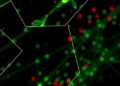
Employing a multidisciplinary approach encompassing biochemical reconstitution, native mass photometry, electron microscopy, and live-cell imaging, the research team demonstrated that peroxiredoxin variants could intermix to form heterooligomeric assemblies. These mixed complexes include different isoforms of peroxiredoxins, allowing cells to fine-tune the enzymes’ biochemical properties dynamically. This structural plasticity signifies a sophisticated molecular mechanism by which cells expand their functional repertoire without the need to evolve entirely new proteins.
Bruce Morgan of Saarland University elaborates on this discovery’s significance, highlighting the molecular “mix-and-match” behavior of peroxiredoxins. “The heterooligomerization of peroxiredoxin subunits introduces a new paradigm in redox signaling complexity. It’s akin to molecular Lego®, where a limited set of building blocks creates extensive functional diversity,” Morgan notes. This analogy reflects the evolutionary advantage of modular protein assembly as a strategy to diversify enzyme function efficiently while economizing on genomic resources.
Remarkably, the researchers identified this heterooligomerization capacity as a conserved mechanism spanning a broad phylogenetic spectrum, from unicellular yeast to humans, plants, and protozoan parasites. Such evolutionary conservation underscores the fundamental importance of this structural plasticity in adaptation to oxidative stress across species. The ability to generate heterooligomeric configurations offers an exquisite level of control over enzymatic activity tailored to the unique oxidative environment of various cell types and organisms.
Marcel Deponte from RPTU University Kaiserslautern-Landau explains how heterooligomer assembly affects enzyme behavior. “Each peroxiredoxin isoform possesses distinct kinetic and redox properties. By combining these isoforms into mixed oligomers, cells effectively blend those traits, creating enzyme complexes with finely tuned activities. This biochemical blending enables a nuanced regulation of redox signaling pathways that is both dynamic and context-dependent,” Deponte states. This nuanced modulation is critical in enabling cells to rapidly respond to fluctuating oxidative conditions without resorting to wholesale changes in protein expression.
The discovery also broadens the structural landscape of peroxiredoxins dramatically. As Joris Messens from the VIB-VUB Center for Structural Biology highlights, “If two different subunits can assemble into a decamer and the ratio and positioning of each subunit vary, the combinatorial possibilities multiply exponentially, theoretically generating over a hundred distinct complexes.” This intricate structural heterogeneity implies an unprecedented versatility in peroxiredoxin function, intimately linking protein assembly patterns to cellular redox adaptability.
Beyond the sheer complexity of assembly, the findings necessitate revisiting how redox signaling is understood at the molecular level. Traditional models based on uniform enzyme complexes must be expanded to accommodate the presence of heterogeneous peroxiredoxin populations. This reframing poses new challenges: identifying which heterooligomer compositions predominate under physiological versus pathological stress conditions, and elucidating the cellular machinery governing their selective formation and turnover.
The implications of this research extend into medical science realms concerned with diseases characterized by disrupted redox homeostasis. Oxidative stress is a hallmark of cancer, aging-related degeneration, and metabolic disorders. Understanding the modular dynamics of peroxiredoxin complexes opens new avenues for therapeutic interventions that target or mimic specific heterooligomeric forms to restore redox balance or sensitize diseased cells to oxidative damage.
Further investigations are anticipated to dissect the regulatory signals and post-translational modifications that influence peroxiredoxin heterooligomerization in live cells. Additionally, exploring whether similar heterooligomerization principles apply to other enzyme families involved in redox biology will be a promising research frontier informed by these findings.
This transformative study redefines the structural and functional paradigms of one of the cell’s most essential antioxidant enzyme families, illustrating how molecular diversity can be crafted from a limited proteomic toolkit. The elucidation of peroxiredoxin heterooligomerization not only enriches the fundamental understanding of redox biology but also sets the stage for innovative approaches to diagnose and treat oxidative stress-related ailments.
Subject of Research: Cells
Article Title: Heterooligomerization drives structural plasticity of eukaryotic peroxiredoxins
News Publication Date: 10 March 2026
Web References: 10.1038/s41589-026-02157-6
Keywords: Molecular biology, Biochemistry, Biophysics, Cell biology
Tags: antioxidant enzymes in cellular diversitybiochemical reconstitution of enzymescellular redox regulation mechanismschaperone-like functions of peroxiredoxinselectron microscopy of protein complexesheterooligomeric enzyme complexeshydrogen peroxide signaling in cellslive-cell imaging of antioxidant proteinsnative mass photometry in enzyme analysisoxidative stress response enzymesperoxiredoxin isoform interactionsperoxiredoxin structural versatility