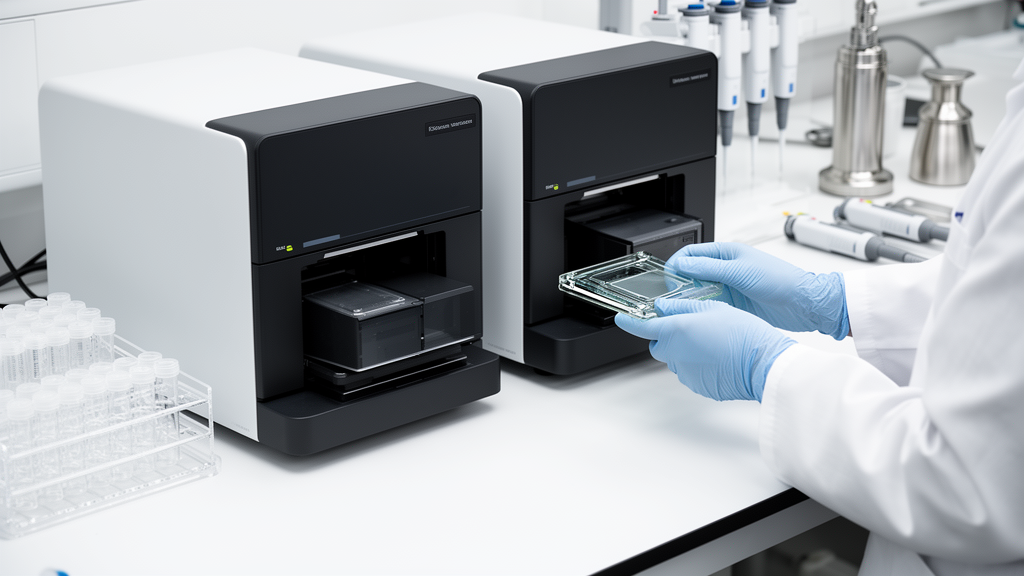
In a parallel cross-platform evaluation, the emerging Salus Pro sequencing instrument demonstrated clinical performance comparable to the established Illumina NextSeq 550Dx across targeted diagnostic panels. High-throughput sequencing provides a critical foundation for molecular diagnostics in clinical care, yet widespread implementation of established systems has often been constrained by high capital costs and proprietary reagent dependencies. By directly testing patient-derived libraries on both systems, researchers evaluated whether an alternative platform offering broad library compatibility and operational flexibility could satisfy demanding diagnostic standards.
The comparative investigation utilized a head-to-head parallel testing design based on clinical specimens from cholangiocarcinoma patients. Investigators re-sequenced a cohort of 242 DNA libraries and 274 RNA libraries on the Salus Pro that had originally undergone sequencing on the Illumina NextSeq 550Dx. Comprehensive downstream bioinformatic analyses systematically assessed key sequencing performance parameters, including quality score thresholds, read alignment, on-target capture efficiency, sequencing depth, and variant detection concordance across platforms.
Across its initial benchmark runs, the Salus Pro exceeded its manufacturer specifications while displaying consistent performance across operational batches. The platform achieved quality scores above 93 percent for Q30 bases, reflecting high base-calling accuracy during testing runs. Total sequencing output surpassed standard chip specifications by 20 to 60 percent, while the instrument maintained a sample index recognition rate exceeding 97 percent across the evaluated library sets.
Direct statistical comparisons between the two instruments revealed measurable improvements in base quality and capture metrics on the Salus Pro. In head-to-head testing, the Salus Pro produced higher Q30 scores than the NextSeq 550Dx, demonstrating a mean paired difference of 4.15 percent with a 95 percent confidence interval of 3.90 percent to 4.40 percent for DNA libraries. For RNA libraries, the platform showed an average paired difference of 4.72 percent with a 95 percent confidence interval of 4.51 percent to 4.94 percent.
Target enrichment metrics further showed distinct quantitative advantages on the Salus Pro for DNA samples. The platform achieved a higher on-target capture rate, yielding a mean paired difference of 4.58 percent with a 95 percent confidence interval ranging from 4.35 percent to 4.80 percent over the Illumina comparator. Sequencing depth across targeted DNA regions was also significantly higher, reflecting a mean paired increase of 44.56-fold with a 95 percent confidence interval between 23.77-fold and 65.35-fold.
At the clinical endpoint, the two sequencing systems showed close concordance in identifying genomic alterations. Variant allele frequencies for DNA targets correlated strongly between platforms, yielding a Spearman correlation coefficient of 0.9501 with a significance level below 1e-20. For RNA fusion transcripts, supporting read counts demonstrated a Spearman correlation of 0.8536 with a p-value of 4.45e-20, while additional positive and negative percent agreements confirmed variant-level agreement across representative hotspot positions.
Beyond oncology profiles, the evaluation examined hereditary disease specimens to assess performance consistency across distinct clinical contexts. In these hereditary disease samples, the Salus Pro achieved an average alignment rate of 100 percent, an average paired-end rate of 98.86 percent, and an average Q30 quality rate of 94.61 percent, confirming dependable operation across different targeted library types.
The study concluded that the Salus Pro fulfilled all clinical quality control requirements and surpassed its baseline engineering specifications across key operational metrics. Within the scope of the examined disease cohorts and targeted panel frameworks, the platform provided analytical results comparable to the NextSeq 550Dx alongside gains in selected sequencing parameters, providing experimental evidence to support its ongoing evaluation in diagnostic genetic testing.
Subject of Research: Cross-platform comparative evaluation of Salus Pro and Illumina NextSeq 550Dx for clinical targeted sequencing
Article Title: Cross-platform comparison of salus pro and illumina NextSeq 550Dx for clinical targeted sequencing
Article References: Chen, W., Si, Y., Liang, K., Cao, Y., Chen, L., Jiang, Z., Yang, J., & Ji, Y. (2026). Cross-platform comparison of salus pro and illumina NextSeq 550Dx for clinical targeted sequencing. BMC Genomics. https://doi.org/10.1186/s12864-026-13525-w
Image Credits: AI Generated
DOI: 10.1186/s12864-026-13525-w
Keywords: Salus Pro, Illumina NextSeq 550Dx, high-throughput sequencing, targeted sequencing, clinical diagnostics, cholangiocarcinoma, Q30 quality score, sequencing depth, on-target rate, variant allele frequency, RNA fusions, hereditary disease, bioinformatic analysis, cross-platform comparison, molecular diagnosis, paired-end sequencing
News Source: Drew Townsend. (November 13, 2026). Salus Pro Matches Illumina Platform in Targeted Clinical Sequencing Validation Study. Scienmag.