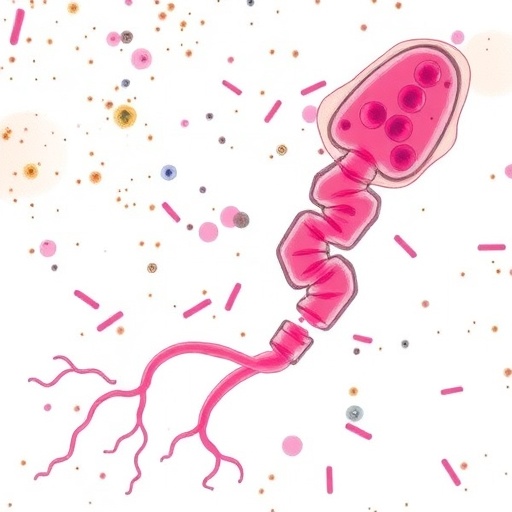
In a groundbreaking study that could redefine therapeutic strategies against cancer, researchers have engineered a novel strain of Salmonella typhimurium capable of simultaneously expressing cytolysin A and hyaluronidase, demonstrating potent suppression of tumor growth and metastatic spread. This innovative approach capitalizes on the bacterium’s inherent tumor-targeting ability coupled with the synergistic action of two bioactive molecules, cytolysin A and hyaluronidase, to dismantle tumor microenvironments and impede cancer progression.
Tumors, notoriously complex and resistant to conventional treatments, often harbor dense extracellular matrices and immunosuppressive niches that shield malignant cells from immune surveillance and therapeutic agents. The researchers tackled these challenges by designing a dual-functional bacterial vector: cytolysin A, a pore-forming toxin, disrupts tumor cell membranes triggering cell lysis, while hyaluronidase enzymatically degrades hyaluronic acid, a major component of the extracellular matrix. This degradation facilitates deeper penetration of therapeutic agents and immune cells, effectively breaking down tumor defenses.
One of the most compelling aspects of this study lies in the sophisticated genetic engineering of Salmonella typhimurium strains that maintain stability and controlled expression of both cytolysin A and hyaluronidase in the tumor microenvironment. The researchers employed tightly regulated promoters to ensure that these pro-apoptotic and matrix-degrading agents are produced selectively within tumors, thereby minimizing systemic toxicity and off-target effects. This precision in expression underpins the clinical potential of this biologically derived therapy.
Extensive in vivo analyses revealed that mice bearing aggressive tumors treated with this modified Salmonella exhibited significantly reduced tumor volumes compared to controls. Furthermore, the metastatic burden in organs commonly affected by secondary tumor spread was markedly diminished. These outcomes highlight not only the direct cytotoxicity imposed on cancer cells but also suggest a disruption of the metastatic niche, likely mediated by hyaluronidase’s remodeling of the supportive matrix and facilitation of immune infiltration.
Central to the mechanism of tumor suppression is cytolysin A, a member of the pore-forming toxin family known for its ability to disrupt lipid bilayers of targeted cells. When expressed within the tumor microenvironment, cytolysin A inserts into malignant cell membranes, forming channels that disturb ion gradients and cellular homeostasis. This initiates apoptotic pathways and rapid tumor cell death, which may also amplify the release of tumor antigens, enhancing subsequent immune recognition.
Hyaluronidase complements this action by enzymatically degrading hyaluronic acid, a glycosaminoglycan abundant in many solid tumors. Excessive hyaluronic acid contributes to tumor stiffness and elevated interstitial pressure, which restricts drug delivery and immune cell access. By breaking down these barriers, hyaluronidase alleviates physical constraints, effectively “softening” the tumor and allowing cytolysin A and other immune effectors optimal access to malignant cells.
The choice of Salmonella typhimurium as a delivery vehicle is strategic; this facultative anaerobic bacterium demonstrates intrinsic tumor tropism, preferentially accumulating within hypoxic and necrotic tumor regions where traditional therapies often fail. Enhancing this natural homing ability with engineered gene expression modules enables the direct on-site synthesis of therapeutic molecules, elevating the bacterium beyond a simple carrier to a potent anti-cancer agent.
Addressing safety concerns, the research incorporates attenuation strategies to mitigate pathogenicity of Salmonella typhimurium. Through successive genetic modifications, the strain lacks various virulence factors, thus reducing risks of systemic infection while preserving tumor-targeting capabilities. Moreover, the bacterial vectors exhibit auxotrophy, relying on specific nutrients only available within tumors, further confining their proliferation to malignant tissues.
The implications of this dual-expressing bacterial approach extend beyond localized tumor ablation. The induction of immunogenic cell death via cytolysin A-induced apoptosis, combined with extracellular matrix remodeling by hyaluronidase, may potentiate anti-tumor immunity. This synergy could break immune tolerance within tumor microenvironments, triggering durable systemic responses capable of controlling micrometastases and preventing relapse.
Researchers also underscore the advantage of this technique in overcoming multidrug resistance (MDR) — a central obstacle in contemporary oncology. The distinct biochemical modalities employed diverge from conventional chemotherapeutics, reducing the likelihood of cross-resistance. Tumor suppression was achieved even in models characterized by robust chemoresistance, indicating that bacterial-mediated delivery of cytolysin A and hyaluronidase can bypass or directly counteract MDR mechanisms.
Moreover, the study’s methodology involved meticulous histopathological evaluations and molecular profiling to map alterations in tumor architecture, vasculature, and immune cell infiltration post-treatment. These analyses revealed diminished stromal density correlating with hyaluronidase activity and increased infiltration of cytotoxic T lymphocytes, suggesting that the intervention not only physically disrupts tumors but also reprograms the immune microenvironment toward an anti-tumor phenotype.
The researchers’ incorporation of real-time imaging and biodistribution studies provided critical insights into the in vivo kinetics of the bacterial vectors and their secreted factors. The modified Salmonella selectively accumulated in tumor tissues with minimal presence in healthy organs, and gene expression levels were modulated dynamically, ensuring therapeutic activity corresponded with bacterial tumor colonization patterns. These findings emphasize the robustness of the engineered system for clinical translation.
Importantly, the use of bacteria to deliver therapeutic agents directly into tumors addresses a fundamental limitation in oncology: targeted delivery. Conventional systemic therapies often result in suboptimal intra-tumoral concentrations and high systemic toxicity. By leveraging Salmonella typhimurium as a “living drug factory,” localized, sustained delivery of anti-cancer proteins circumvents these issues, offering a promising paradigm for safer, more effective treatments.
The translational potential is vast, especially in managing solid tumors notoriously resistant to surgery and chemotherapy, such as pancreatic, breast, and metastatic melanoma. Coupling bacterial therapy with immune checkpoint inhibitors or other immunomodulatory agents could amplify therapeutic efficacy, ushering a new era of combination treatments harnessing both biological engineering and immunotherapy.
While challenges remain, including scaling-up bacterial manufacturing, refining regulatory controls, and ensuring safety in human subjects, this pioneering study sets a compelling precedent. The strategic expression of cytolysin A and hyaluronidase by tumor-targeting Salmonella typhimurium substantially inhibits tumor growth and metastatic dissemination, embodying a paradigm shift toward multi-modal microbial therapies in oncology.
As cancer research increasingly embraces synthetic biology, the fusion of pathogen biology with therapeutic innovation exemplified here illuminates fertile ground for breakthrough treatments. Continued exploration, clinical trials, and optimization of such bacterial-based therapeutics may soon translate into life-saving interventions, bringing hope to millions affected by intractable cancers worldwide.
This landmark study, published in Cell Death Discovery, underscores the fusion of microbiology, oncology, and genetic engineering—a triumvirate catalyzing the next frontier in cancer therapy. The successful co-expression of cytolysin A and hyaluronidase within a tumor-homing bacterial platform opens not only new therapeutic vistas but also revolutionary strategies to harness microbial allies in the fight against one of humanity’s deadliest diseases.
Subject of Research: Novel bacterial therapy utilizing Salmonella typhimurium engineered to co-express cytolysin A and hyaluronidase for suppression of tumor growth and metastasis.
Article Title: Salmonella typhimurium co-expressing cytolysin A and hyaluronidase suppresses tumor growth and metastasis.
Article References:
Nguyen, K.V., Nguyen, D.H., Ngo, H.T.T., et al. Salmonella typhimurium co-expressing cytolysin A and hyaluronidase suppresses tumor growth and metastasis. Cell Death Discov. (2026). https://doi.org/10.1038/s41420-025-02897-9
Image Credits: AI Generated
DOI: https://doi.org/10.1038/s41420-025-02897-9
Tags: bacterial immunotherapy for tumorscytolysin A and hyaluronidase synergydual-functional bacteria for tumorsengineered bacterial vectors for cancerextracellular matrix degradation in tumorsgenetic engineering in cancer treatmentmetastatic cancer suppression strategiesnovel approaches to tumor treatmentSalmonella typhimurium cancer therapytargeted cancer therapies using bacteriatumor microenvironment disruptiontumor-targeting bioactive molecules