A case report published in the African Journal of Urology describes the successful use of sacral neuromodulation to manage complex bladder dysfunction in a patient with long-standing multiple sclerosis. The study details the clinical course of a 46-year-old male with primary progressive multiple sclerosis who experienced severe lower urinary tract symptoms, including urgency, incontinence, and urinary retention. After conventional treatments failed to provide adequate relief, the patient underwent a two-stage implantation of a sacral neuromodulation device, which ultimately allowed for the removal of a suprapubic catheter and the restoration of spontaneous voiding.
Multiple sclerosis is a chronic autoimmune disease characterized by inflammation and degeneration within the central nervous system. It is a leading cause of non-traumatic disability in young adults, with an estimated prevalence of approximately 44 per 100,000 by 2020. Lower urinary tract symptoms are common among patients with multiple sclerosis, often appearing six to eight years after the initial neurological symptoms. These symptoms can significantly impact quality of life and are frequently characterized by a mix of storage issues, such as urgency and frequency, and voiding problems, including hesitancy and incomplete bladder emptying.
The patient in this report had a history of primary progressive multiple sclerosis, first diagnosed in 2015, although neurological symptoms such as peripheral paresthesias were reported as early as 2006. Urological symptoms emerged even earlier, in 2004, presenting as urinary frequency, nocturia, and recurrent urinary tract infections. Over time, these symptoms progressed to include hesitancy, urgency urinary incontinence, and difficulty with bladder emptying. By 2015, the patient experienced impaired sexual function and bladder outlet obstruction, including an episode of complete urinary retention, which necessitated long-term catheterization and the placement of a suprapubic cystostomy.
Urodynamic assessments revealed a complex pattern of neurogenic lower urinary tract dysfunction. The initial studies demonstrated normal bladder capacity and compliance but showed low-pressure detrusor overactivity during the filling phase, associated with urgency. During the voiding phase, the patient exhibited detrusor underactivity and straining without urine flow. An electromyogram indicated consistently elevated pelvic floor muscle tension. These findings led to a diagnosis of detrusor sphincter dyssynergia with detrusor overactivity during filling and detrusor underactivity during voiding, prompting consideration for off-label sacral neuromodulation therapy.
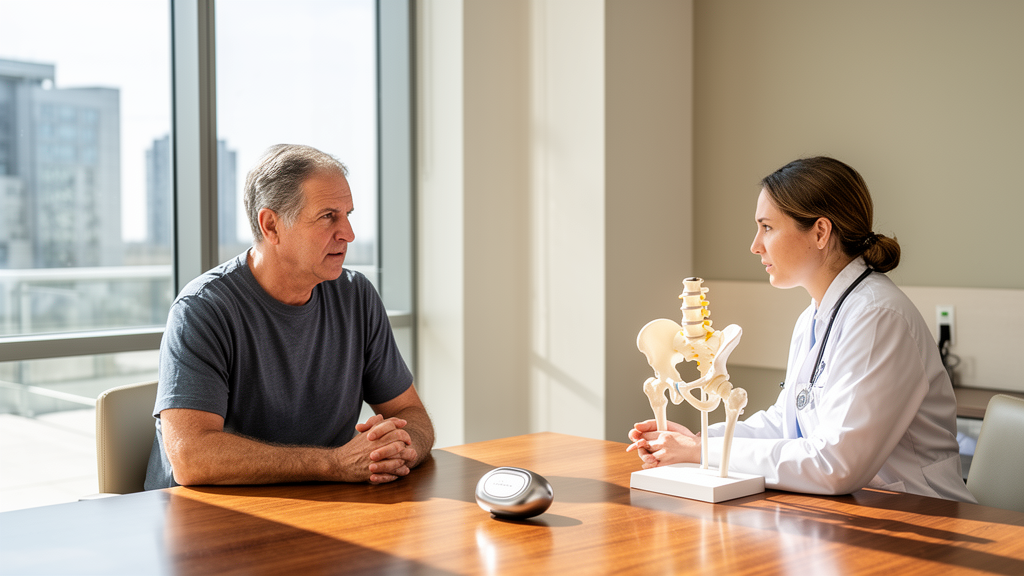
Sacral neuromodulation is a minimally invasive intervention that involves the placement of a stimulation electrode in the S3 sacral foramen, connected to a battery typically located in the upper buttock. The exact mechanism of action remains unknown, but it is believed to operate via afferent pathways, modulating spinal reflexes and brain networks to inhibit detrusor overactivity and reduce symptoms. In March 2022, the patient underwent the first stage of the procedure, involving the implantation of a Sure Scan Electrode with an external impulse generator. The procedure was uneventful, and the patient was discharged without early complications.
During the four-week testing period, the patient reported a significant reduction of more than 50% in urgency urinary incontinence episodes. The post-void residual volume decreased to around 200 mL, indicating improved bladder emptying. Given these favorable outcomes, the patient was qualified for the permanent implantation of an InterStim II device in August 2022. Three weeks later, the suprapubic cystostomy was removed due to sustained improvement in spontaneous voiding. The device continued to function effectively in subsequent follow-ups, with reprogramming performed to optimize its efficacy.
However, the patient’s neurological condition deteriorated over time, with his Eastern Cooperative Oncology Group performance status score rising from 1 to 3. By January 2024, the patient was bedridden, and he reported erosion at the neuromodulator implantation site. The erosion likely developed due to chronic pressure at the site as the patient spent more time bedridden. The device was removed, and bladder function worsened, requiring the re-establishment of a suprapubic cystostomy. Once the erosion site had healed, the patient was qualified for a one-stage re-implantation of an InterStim X device in February 2024.
To mitigate the risk of secondary erosion from chronic pressure associated with prolonged immobility, the generator was implanted in the abdominal subcutaneous tissue instead of the standard gluteal region. Both the device and the lead were MRI-compatible, accommodating the patient’s need for regular magnetic resonance imaging monitoring of his primary disease. A follow-up urodynamic study in September 2024 revealed detrusor overactivity with urgency but no incontinence. The patient was able to void independently, with a post-void residual volume below 100 mL, leading to the removal of the suprapubic catheter.
Although bladder function was not fully restored, the sacral neuromodulation allowed for safe catheter removal and independent voiding. The patient expressed satisfaction with the treatment, rating his quality of life as “much improved” on the Global Response Assessment. This case highlights the potential role of sacral neuromodulation in alleviating lower urinary tract symptoms associated with detrusor underactivity in patients with multiple sclerosis. It underscores the importance of careful patient selection, multidisciplinary management, and strategies for mitigating complications in long-term use.
The study acknowledges several limitations, primarily that it describes a single patient, which limits the generalizability of the findings. The observed clinical improvement may partially reflect individual disease characteristics or the natural variability of neurological symptoms in multiple sclerosis. Long-term outcomes of sacral neuromodulation in patients with progressive multiple sclerosis remain uncertain and require evaluation in larger prospective studies. Nevertheless, this case contributes to the growing body of evidence supporting the use of sacral neuromodulation in neurogenic lower urinary tract dysfunction due to multiple sclerosis when conventional therapies fail.
Sacral neuromodulation is a minimally invasive intervention designed for patients with urinary and bowel disorders. The procedure involves placing a stimulation electrode in the S3 sacral foramen, which is connected to a battery typically located in the upper buttock. While the exact mechanism of action remains unknown, the therapy likely operates via afferent pathways. This process modulates spinal reflexes and brain networks, disrupting or blocking nerve signaling to inhibit detrusor overactivity and reduce lower urinary tract symptoms. Multiple studies support the efficacy of this approach, although research specifically addressing its application in patients with multiple sclerosis and lower urinary tract symptoms remains limited.
The treatment strategy for lower urinary tract symptoms is individually tailored according to each patient’s specific symptoms. First-line options typically involve fluid management, pelvic floor muscle training, and pharmacotherapy, primarily using anticholinergics. When these initial measures are insufficient, second-line treatments include botulinum toxin injections, intravesical therapies, catheterization, surgery, and sacral neuromodulation. In the reported case, the patient had already undergone various treatments, including antibiotics for recurrent infections, alpha-1 adrenergic receptor antagonists, multiple catheterizations, and cystostomy. Despite these interventions, the patient continued to experience debilitating symptoms, which led to the consideration of sacral neuromodulation as an off-label therapy.
There is growing evidence, including randomized controlled trials, supporting the use of sacral neuromodulation for treating neuro-urological symptoms. However, due to the paucity of disease-specific studies, it remains unclear which neurological patients are most suitable for this intervention. Sacral neuromodulation appears to be an effective and safe therapeutic option for treating lower urinary tract symptoms in patients with multiple sclerosis, especially in cases of overactive bladder symptoms. The development of MRI-compatible pulse generators and leads has further facilitated this procedure, meaning it no longer needs to be avoided in patients requiring regular magnetic resonance imaging monitoring during follow-up.
The mechanism by which sacral neuromodulation alleviates symptoms in patients with multiple sclerosis is not fully elucidated but seems to involve the modulation of spinal cord reflexes and brain networks by peripheral afferents. In the acute phase of the treatment, changes in brain areas responsible for sensorimotor learning were observed. These included a decrease in blood flow in the medial cerebellum and an increase in blood flow in the right postcentral gyrus cortex, right insular cortex, and ventromedial orbitofrontal cortex. In the chronic phase, changes in areas important for alertness and awareness were detected. This included a decrease in blood flow in the middle part of the cingulate gyrus, ventromedial orbitofrontal cortex, midbrain, and adjacent midline thalamus, alongside an increase in blood flow in the dorsolateral prefrontal cortex.
These physiological changes suggest that sacral neuromodulation causes alterations in brain activity responsible for detrusor overactivity, bladder filling sensation, urge, and micturition timing. The patient’s initial response to the therapy was positive, with a notable reduction in lower urinary tract symptoms and improved bladder control. This illustrates the potential effectiveness of the intervention as a therapeutic option. However, the procedure is not devoid of complications. The most common complication related to sacral neuromodulation, present in 15 to 42 percent of patients, is discomfort at the implant site. Pain at the ipsilateral site of lead placement, ranging from 5.4 to 19.1 percent, discomfort in the leg at 18 percent, and the development of an infection at 5.7 to 6.1 percent are also reported.
Implantable pulse generator site discomfort has become less common since the decision to change the preferential site for implanting the neurostimulator from the anterior abdominal wall to the currently preferred upper buttock location. However, this placement site should be reconsidered in unusual cases, such as in bedridden patients. The complication of neuromodulator infection and erosion that occurred in this patient highlights the importance of careful patient selection, appropriate generator placement, monitoring, and management of potential adverse events in the long-term use of the device. Bedridden or non-ambulant patients may be more likely to benefit from alternate placement of the modulator, such as in abdominal subcutaneous tissue instead of the lower lumbar region, once the benefits outweigh the risks.
Multiple risk factors have been linked to potential device infection, including prolonged percutaneous testing in the two-stage procedure, choice of preoperative antibiotic, and non-obstructive urinary retention. Methods of infection prevention have also been studied recently, highlighting the importance of perioperative antibiotic prophylaxis, meticulous skin preparation, and other strategies aimed at reducing device-related infection. Additionally, the case emphasizes the significance of a multidisciplinary approach in managing complex multiple sclerosis cases. Coordination between urologists, neurologists, and rehabilitation specialists is crucial for the optimization of patient outcomes. Regular follow-ups and patient education on device management and potential complications are essential components of care.
Subject of Research: Sacral neuromodulation for neurogenic bladder disorder in a patient with multiple sclerosis
Article Title: Sacral neuromodulation success in a long-term multiple sclerosis patient with neurogenic bladder disorder and detrusor underactivity: a case report
Article References: Garbas, K., Żuk-Łapan, A., Mucha, M., Piecha, T., Zapała, Ł., & Radziszewski, P. (2026). Sacral neuromodulation success in a long-term multiple sclerosis patient with neurogenic bladder disorder and detrusor underactivity: a case report. African Journal of Urology, 32(1), Article 41. https://doi.org/10.1186/s12301-026-00586-2
Image Credits: AI Generated
DOI: 10.1186/s12301-026-00586-2
Keywords: sacral neuromodulation, multiple sclerosis, neurogenic bladder, detrusor underactivity, urodynamics, case report, urinary incontinence, medical device, Sacral, neuromodulation, success, long-term
News Source: Ophelia Keating. (November 10, 2026). Sacral Neuromodulation Restores Voiding in Multiple Sclerosis Patient. Scienmag.