• HOME
  • NEWS
  • EXPLORE
    • CAREER
      • Companies
      • Jobs
    • EVENTS
    • iGEM
      • News
      • Team
    • PHOTOS
    • VIDEO
    • WIKI
  • BLOG
  • COMMUNITY
    • FACEBOOK
    • INSTAGRAM
    • TWITTER
Wednesday, April 1, 2026
BIOENGINEER.ORG
No Result
View All Result
  • Login
  • HOME
  • NEWS
  • EXPLORE
    • CAREER
      • Companies
      • Jobs
        • Lecturer
        • PhD Studentship
        • Postdoc
        • Research Assistant
    • EVENTS
    • iGEM
      • News
      • Team
    • PHOTOS
    • VIDEO
    • WIKI
  • BLOG
  • COMMUNITY
    • FACEBOOK
    • INSTAGRAM
    • TWITTER
  • HOME
  • NEWS
  • EXPLORE
    • CAREER
      • Companies
      • Jobs
        • Lecturer
        • PhD Studentship
        • Postdoc
        • Research Assistant
    • EVENTS
    • iGEM
      • News
      • Team
    • PHOTOS
    • VIDEO
    • WIKI
  • BLOG
  • COMMUNITY
    • FACEBOOK
    • INSTAGRAM
    • TWITTER
No Result
View All Result
Bioengineer.org
No Result
View All Result
Home NEWS Science News

Running group helps half its graduates quit smoking

Bioengineer by Bioengineer
September 12, 2017
in Science News
Reading Time: 2 mins read
0
Share on FacebookShare on TwitterShare on LinkedinShare on RedditShare on Telegram
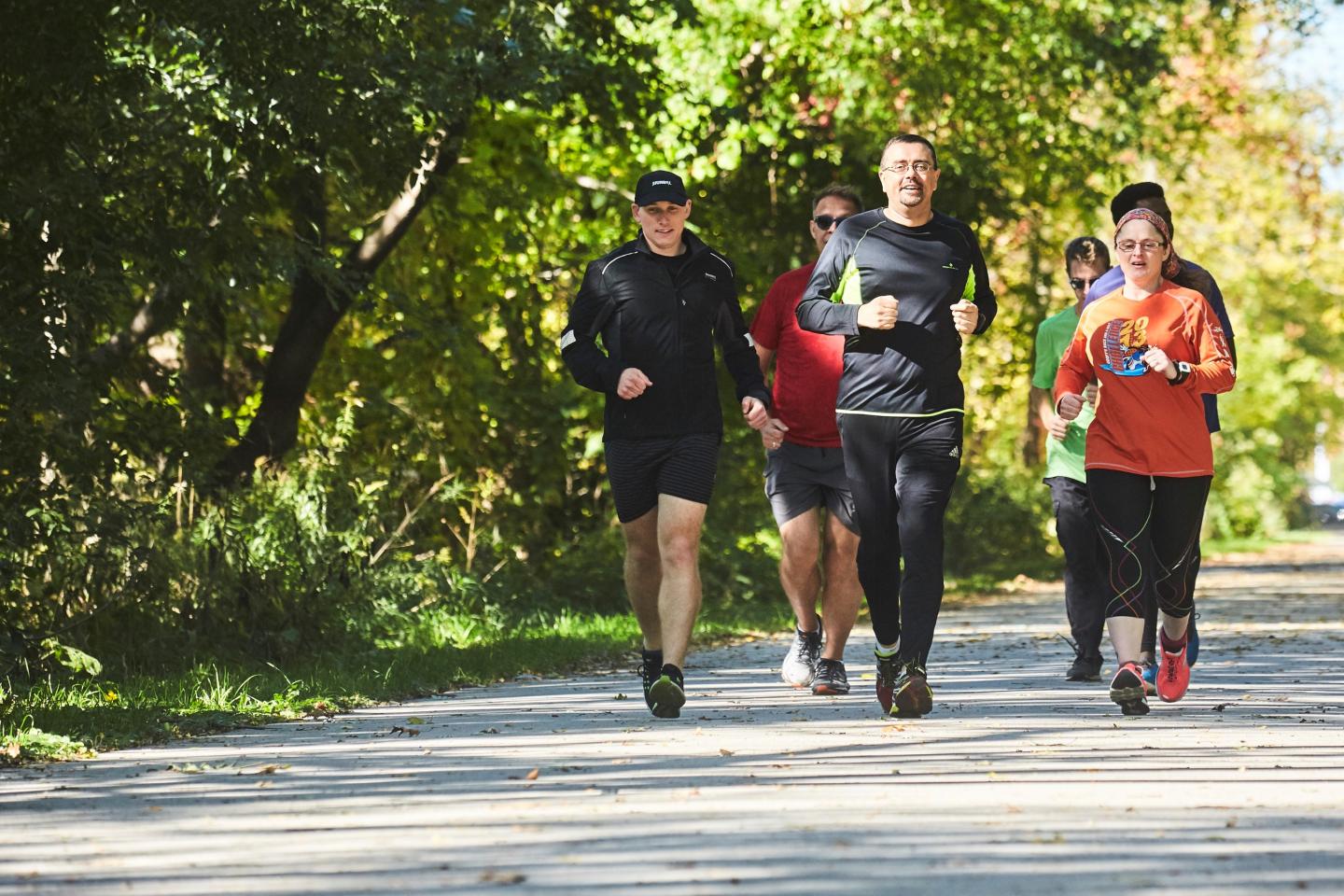
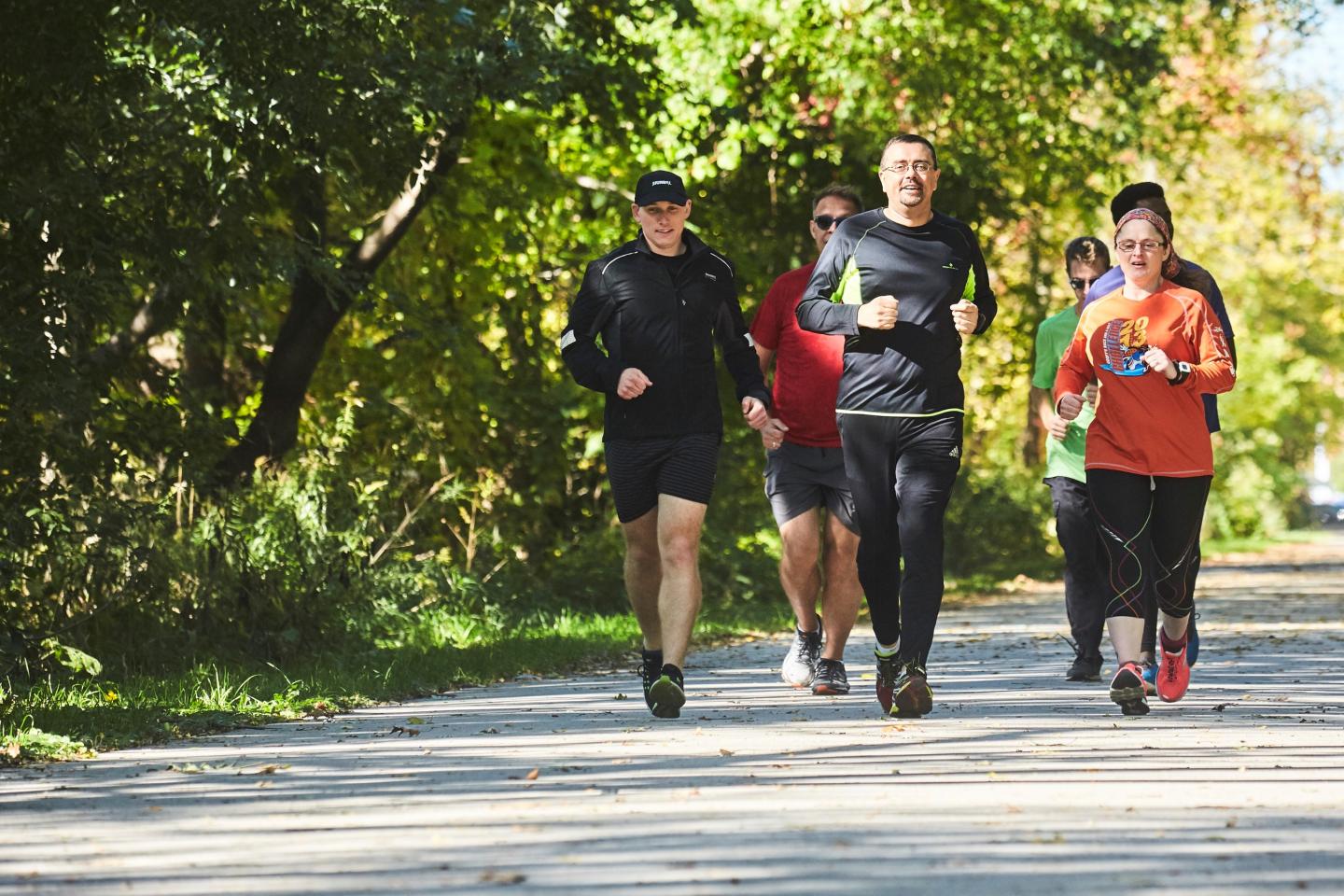
IMAGE

Credit: Run to Quit

Joining a running group can help you quit smoking. That's the conclusion of a new UBC study that found that half the people who completed a 10-week program were able to successfully quit smoking.

"This shows that physical activity can be a successful smoking-cessation aid and that a community-based program might offer that. Because doing it on your own is very difficult," said Carly Priebe, postdoctoral fellow in UBC's school of kinesiology and lead author of the study.

One hundred and sixty-eight smokers from across Canada registered for the 2016 Run to Quit program at Running Room stores, and 72 of them stuck it out until the final week, when 37 participants had their claims of quitting verified by carbon-monoxide testing. The number of successful quitters held up during follow-up interviews six months later. The group that finished the program also included 91 per cent who reported reducing their smoking.

The weekly sessions included classroom time divided between running instruction and strategies for quitting smoking, plus an outdoor walking/running component that progressed toward a five-kilometre run. Participants had access throughout the program to one-on-one phone counselling via the national quit-smoking line.

Coaches from the Running Room and the Canadian Cancer Society received training from UBC researchers in administering questionnaires and using a tool called the Smokerlyzer to measure carbon monoxide in participants' breath. Questionnaire responses indicated significant improvement in participants' mental health during the program, and Smokerlyzer readings revealed that their average carbon monoxide level decreased by about one-third.

"Even if someone wasn't able to fully quit, reducing their smoking is great," Priebe said. "But it's also about just being active. Most of our sample was new to running, and if it's something that can become part of their lifestyle then there are health benefits that may counteract some of their smoking behaviours."

Run to Quit operated in 21 Running Room locations in 2016 and is up to 50 locations this year. Attrition was fairly high, with a noticeable drop in attendance following the designated "quit week" in week five. Researchers want to address that as the program expands to 100 locations in 2018. Fall clinics begin this month around the country.

"In the future what we're really trying to stress to participants is to just keep coming — even if you don't quit on your first attempt, keep attending the sessions with the group and keep learning," Priebe said.

###

Run to Quit is a partnership between Running Room and the Canadian Cancer Society, and is funded by the Public Health Agency of Canada. UBC kinesiology professor Guy Faulkner led the research team and co-authored the study, along with John Atkinson of the Canadian Cancer Society.

The study will be published in the October 2017 issue of Mental Health and Physical Activity.

Media Contact

Erik Rolfsen
[email protected]
604-822-2644
@UBCnews

http://www.ubc.ca

Related Journal Article

http://dx.doi.org/10.1016/j.mhpa.2017.08.001

Share12Tweet7Share2ShareShareShare1

Related Posts

Kennesaw State University Launches AI-Powered Chatbot Project to Train Educators

Kennesaw State University Launches AI-Powered Chatbot Project to Train Educators

April 1, 2026
Long-Term Swine Study Reveals Health Benefits of Natural Compounds: Oregano, Rosemary, and Thyme

Long-Term Swine Study Reveals Health Benefits of Natural Compounds: Oregano, Rosemary, and Thyme

April 1, 2026

Targeted Therapies Enhance Long-Term Survival in Lung Cancer Patients with Rare Genetic Mutations

April 1, 2026

Johns Hopkins Team Develops Nasal DNA Vaccine as New Therapeutic Approach for Tuberculosis

April 1, 2026
Please login to join discussion

POPULAR NEWS

  • blank

    Revolutionary AI Model Enhances Precision in Detecting Food Contamination

    96 shares
    Share 38 Tweet 24
  • Imagine a Social Media Feed That Challenges Your Views Instead of Reinforcing Them

    1006 shares
    Share 398 Tweet 249
  • Promising Outcomes from First Clinical Trials of Gene Regulation in Epilepsy

    51 shares
    Share 20 Tweet 13
  • Popular Anti-Aging Compound Linked to Damage in Corpus Callosum, Study Finds

    43 shares
    Share 17 Tweet 11

About

We bring you the latest biotechnology news from best research centers and universities around the world. Check our website.

Follow us

Recent News

Kennesaw State University Launches AI-Powered Chatbot Project to Train Educators

Long-Term Swine Study Reveals Health Benefits of Natural Compounds: Oregano, Rosemary, and Thyme

Targeted Therapies Enhance Long-Term Survival in Lung Cancer Patients with Rare Genetic Mutations

Subscribe to Blog via Email

Enter your email address to subscribe to this blog and receive notifications of new posts by email.

Join 78 other subscribers
  • Contact Us

Bioengineer.org © Copyright 2023 All Rights Reserved.

Welcome Back!

Login to your account below

Forgotten Password?

Retrieve your password

Please enter your username or email address to reset your password.

Log In
No Result
View All Result
  • Homepages
    • Home Page 1
    • Home Page 2
  • News
  • National
  • Business
  • Health
  • Lifestyle
  • Science

Bioengineer.org © Copyright 2023 All Rights Reserved.