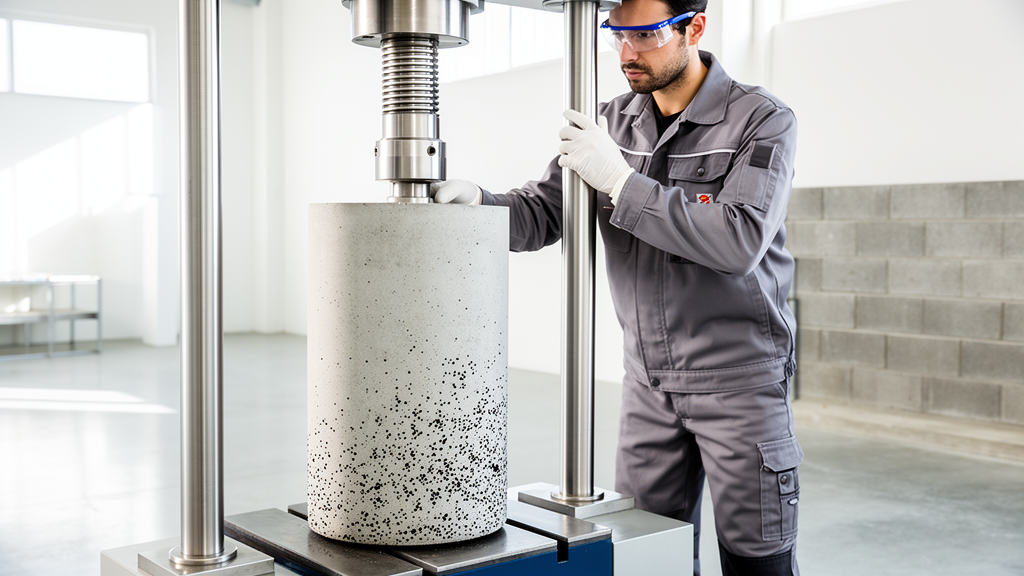
The study, published in Discover Concrete and Cement, investigated twenty distinct concrete mixtures to evaluate the combined effects of crumb rubber, shredded rubber, fly ash, silica fume, and marble slurry powder. By integrating mechanical testing, durability assessments, and advanced microstructural analysis, the team provided a comprehensive framework for understanding how waste-derived materials interact within a unified cementitious system.
The primary motivation for this research stems from the dual environmental challenges posed by the construction industry. Concrete is the most widely used construction material globally, yet its production is heavily reliant on cement, which accounts for approximately 7–8% of total global CO₂ emissions. Simultaneously, the disposal of construction and demolition waste, including end-of-life tires and stone processing residues, places a significant burden on landfills. The study aimed to address these issues by incorporating circular economy principles, utilizing industrial byproducts as partial replacements for conventional cement and aggregates to reduce carbon emissions and conserve natural resources.
The experimental design involved a systematic variation of binder and aggregate constituents while maintaining a constant water-to-binder ratio of 0.35. The reference mixture, designated C0F0A0, consisted of 100% Ordinary Portland Cement with natural river sand and crushed basalt aggregates. In subsequent phases, the researchers introduced supplementary cementitious materials (SCMs) at fixed replacement levels: 15% fly ash, 5% silica fume, and 10% marble slurry powder. These were applied individually and in combination to assess their individual and synergistic effects on the concrete matrix.
Rubber-based aggregates were incorporated in later stages to evaluate their impact on mechanical behavior and durability. Crumb rubber, processed from end-of-life tires, was used as a 12.5% replacement for fine aggregate, while shredded rubber served as a 10% replacement for coarse aggregate. The specific gravity of the crumb rubber was measured at 1.12, and the shredded rubber at 1.18, both significantly lower than natural aggregates. These moderate replacement levels were selected to enable comparative performance evaluation rather than mix-design optimization, ensuring that the effects of material substitution could be isolated from other variables.
Mechanical testing revealed that the incorporation of rubber generally reduced compressive and split tensile strength compared to the control mix. This reduction is attributed to the hydrophobic and deformable nature of rubber particles, which weakens the bond between the rubber and the cement paste and introduces low-stiffness inclusions that interrupt stress transfer. However, the study found that the addition of SCMs partially offset these strength losses. Compared to rubber-modified reference mixes without SCMs, the modified mixtures showed strength recovery of up to 12% in compressive strength, 8% in split tensile strength, and 10% in flexural strength. This recovery was linked to the pozzolanic activity of the mineral additions, which promoted the formation of secondary calcium silicate hydrate and refined the pore structure.
Flexural strength exhibited a more complex response than compressive or tensile strength. While some rubber-containing mixes showed lower values, others, such as C0F1A0 and C0F0A1, achieved flexural strengths of 15.66 MPa and 16.12 MPa respectively, surpassing the control mix’s 14.00 MPa at 28 days. This counterintuitive result is explained by the deformable nature of rubber particles, which contribute to crack deflection and strain accommodation under flexural loading. The failure behavior of these mixes was also more gradual, with visible crack deflection and distributed cracking, indicating a shift toward a less brittle response despite the reduction in overall stiffness.
Durability assessments indicated that rubber incorporation without adequate binder refinement increased susceptibility to water absorption, chloride migration, and carbonation. The irregular morphology and hydrophobic surface of rubber particles can create localized voids and weaken the interfacial transition zone, facilitating fluid ingress. However, the addition of silica fume and marble slurry powder significantly improved durability performance. SF-modified mixes showed approximately 15–20% reduction in water absorption and chloride migration indicators. This improvement is attributed to the ultrafine particle size and high pozzolanic reactivity of silica fume, which promotes matrix densification and restricts the movement of chloride ions through the concrete.
Microstructural characterisation using field emission scanning electron microscopy (FE-SEM) and energy-dispersive spectroscopy (EDS) provided qualitative support for the observed mechanical and durability trends. The control mix exhibited a heterogeneous microstructure with loosely packed hydration products and a porous interfacial transition zone. In contrast, the fully modified mix C4F1A1 displayed a denser and more cohesive matrix with a greater prevalence of gel-rich regions. EDS analysis revealed higher and more uniformly distributed silicon and aluminium intensities in the modified mix, indicating enhanced pozzolanic activity and the formation of secondary hydration phases. These microstructural refinements helped explain the improved resistance to fluid ingress and carbonation in the SCM-modified systems.
Regression-based analysis of variance (ANOVA) was employed to quantify the influence of selected variables on strength-related responses. The analysis identified crumb rubber content as the dominant factor affecting mechanical performance, with a strong negative linear influence across all strength models. The coefficients of determination (R²) for the fitted models were 0.81 for compressive strength, 0.91 for split tensile strength, and 0.97 for flexural strength. These values indicate that the models captured the principal trends within the tested experimental domain, although the researchers cautioned that the equations should not be used for prediction outside the specific parameter space investigated.
The study concludes that carefully proportioned SCM systems combined with controlled rubber incorporation can produce durable and resource-efficient concrete suitable for non-structural and lightly loaded components. Applications such as paver blocks, kerbs, and utility channels could benefit from these mixtures, which offer a practical balance between sustainability and acceptable mechanical performance. The findings highlight the importance of integrated material design, where the adverse effects of rubber on strength are mitigated by the matrix-densifying properties of industrial byproducts. Future research should focus on long-term field exposure, surface treatment of rubber particles to improve bonding, and life-cycle assessments to fully evaluate the environmental benefits of these sustainable concrete systems.
Detailed characterisation and physical preparation of the raw constituents formed the foundation of the experimental testing regime. The coarse aggregate framework consisted of crushed basalt stones in 10-millimetre and 20-millimetre sizes, blended in a rigid 60-to-40 proportion, while natural Zone II river sand from the Narmada River provided a fine aggregate matrix with a fineness modulus of 2.87. Sourced from local industrial cutting operations, the marble slurry powder was air-dried under ambient conditions and screened through a 90-micrometre sieve, addressing regional waste where stone processing frequently discards up to 80 percent of quarried rock. The Class F fly ash exhibited 82 percent passing through a 45-micrometre mesh, whereas the silica fume featured more than 99 percent passing the same threshold. Tyre-derived aggregates displayed distinct physical gradations: crumb rubber possessed a fineness modulus of 4.48 and a bulk density of 560 kilograms per cubic metre across a 0.6-to-2.36-millimetre size range, whereas shredded rubber exhibited a bulk density of 1280 kilograms per cubic metre in particles measuring 4.75 to 19 millimetres. To maintain consistent paste rheology, the dosage of the polycarboxylate ether high-range water reducer was varied between 0.8 percent and 1.4 percent of binder mass.
Fresh concrete behaviour demonstrated noticeable sensitivity to both aggregate morphology and binder dispersion during slump testing. Across the investigation, mixture workability was targeted at 160 plus or minus 20 millimetres, with the plain control mix achieving an initial slump of 135 millimetres. Substituting cement with mineral byproducts improved mix fluidity; spherical fly ash particles and fine marble slurry powder provided internal lubrication that promoted interparticle movement. Conversely, replacing natural sand with angular crumb rubber generally produced modest reductions in slump. Because recycled rubber exhibits negligible moisture absorption, this slump decrease was driven by particle roughness, irregular geometric contours, and low stiffness that raised internal frictional resistance and entrapped air. The highest fluidity appeared in mixes containing shredded coarse rubber alongside mineral additions, where slump values reached 172 millimetres in mix C3F0A1 and 179 millimetres in mix C4F0A1. These high-workability outcomes confirmed that coarse rubber particles and well-dispersed mineral fines could move freely within the fresh cementitious paste without causing visible segregation or loss of mix cohesion.
Evaluation of hardened characteristics followed standardized curing schedules and rigorous transport-testing protocols. All specimens were cast in steel moulds and maintained at 27 plus or minus 2 degrees Celsius and 95 percent relative humidity, with strength evolution recorded across curing ages of 7, 14, 28, and 90 days across triplicate test specimens. To quantify environmental resilience, rapid chloride migration testing under NT Build 492 directly established chloride migration coefficients, avoiding the secondary electrical charge proxies of traditional penetration tests. Carbonation resistance was evaluated under an accelerated 4 percent carbon dioxide concentration in a dedicated exposure chamber, highlighting elevated carbonation depths in mixes like C0F0A0, C3F0A0, and C3F0A1 where interconnected pore structures persisted. In the regression-based ANOVA framework following Snedecor and Cochran, coded factors C and D designated fly ash and crumb rubber, respectively, accompanied by their interaction term CD and squared terms C squared and D squared. While crumb rubber content exerted the principal negative linear effect, nonlinear contributions varied across mechanical responses: the quadratic term D squared proved statistically significant for compressive strength, C squared proved significant for split tensile strength, and the interaction CD significantly governed flexural performance.
Subject of Research: Experimental evaluation of sustainable concrete mixtures incorporating crumb rubber and ternary supplementary cementitious materials.
Article Title: Sustainable high-performance concrete with crumb rubber and ternary supplementary cementitious materials via experimental microstructural and statistical analysis
Article References: Moolchandani, K. (2026). Sustainable high-performance concrete with crumb rubber and ternary supplementary cementitious materials via experimental microstructural and statistical analysis. Discover Concrete and Cement, 2(1), Article 57. https://doi.org/10.1007/s44416-026-00098-w
Image Credits: AI Generated
DOI: 10.1007/s44416-026-00098-w
Keywords: sustainable concrete, crumb rubber, supplementary cementitious materials, microstructural analysis, durability, waste valorisation, cementitious systems, mechanical properties, Sustainable, high-performance, concrete, crumb
News Source: Denise Maddox. (November 11, 2026). Rubber and Waste Additives Improve Concrete Durability. Scienmag.