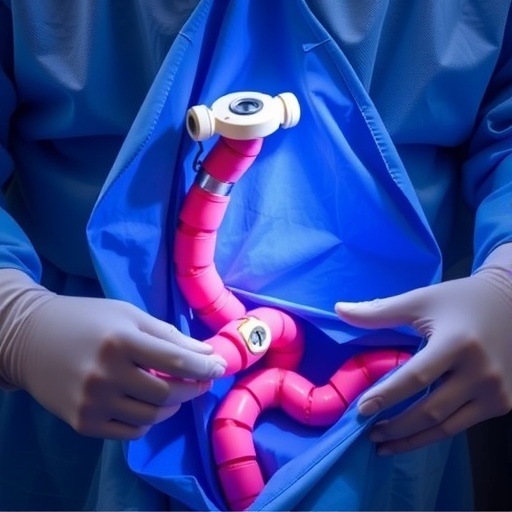
A recent communication in the scientific community caught the attention of many researchers and medical professionals alike. The study, originally published in Scientific Reports, was centered around a groundbreaking approach to treat ureteral strictures—a medical condition where the ureters, the tubes that carry urine from the kidneys to the bladder, become narrowed. The innovative technique presented was a minimally invasive robotic ureteral reconstruction, utilizing an endoscopic submucosal dissection method to harvest colorectal mucosa grafts. This has been viewed as a significant advancement in urological procedures, particularly given the critical nature of ureteral health to overall kidney function.
However, a surprising twist unfolded as a retraction note was published. Retractions in the scientific literature are not uncommon; they often arise due to various factors, including concerns about study methodology, data integrity, or ethical considerations. In this instance, the note raises questions regarding the validity of the original findings. Retractions can have substantial implications for the scientific community, prompting a reevaluation of previously accepted methodologies and conclusions. The thorough vetting and credibility of research are paramount to ensure innovations in medicine are both effective and safe for patients.
Ureteral strictures can result from a range of underlying causes, including surgical trauma, malignancies, or inflammatory diseases. Traditionally, the treatment options have included procedures such as ureteral stenting or open surgical repair, which can carry significant risks and longer recovery times. However, the introduction of minimally invasive techniques represents a paradigm shift, promising to reduce patient discomfort and hospital stays, while also promoting quicker recoveries. The original paper proposed that the use of robotic assistance could enhance precision in performing these delicate operations, significantly minimizing tissue damage and enhancing the healing process.
The methodology involved in the original research focused heavily on the employment of endoscopic submucosal dissection (ESD), a technique that has garnered attention in various fields of surgery, particularly for its application in gastrointestinal surgery. ESD permits the removal of lesions in a more controlled manner than traditional excision techniques, offering enhanced outcomes in terms of preserving surrounding healthy tissue. This method’s adaptation for ureteral reconstruction demonstrates the potential to push surgical boundaries while providing a novel solution to a challenging clinical issue.
Despite the enthusiasm surrounding the potential of these techniques, the retraction note called attention to critical issues that warranted further investigation. Retractions serve as a necessary mechanism for maintaining the integrity of scientific literature, as they help to correct potential misinformation that could lead to improper medical practices. By reevaluating the findings, the scientific community can ensure that only robust and reproducible studies guide clinical practice. The retraction also underscores the importance of transparency in research, ensuring that any concerns are addressed openly and thoughtfully.
As with any major shift in surgical practice, it is crucial that the medical community reflects on the implications of such research. The lessons learned from this retracted study extend beyond the findings themselves; they reinforce the importance of rigorous peer review and the ethical standards that govern scientific exploration. The dialogue sparked by this retraction can foster a greater awareness among researchers about the necessity of comprehensive validation and replication studies. It’s a reminder that innovation in medicine must always be coupled with due diligence and a commitment to evidence-based practices.
The complexities involved in robotic-assisted surgeries, combined with the nuances of ureteral reconstruction, require a high degree of surgical skill and knowledge. Surgeons must be adept not only in the technical aspects of the procedures but also in the preoperative evaluations and postoperative management. These elements are critical in achieving successful outcomes, particularly when navigating the potential complications that can arise during these sensitive procedures. Thus, the retraction prompts further reflection on the training and certification processes for surgeons engaging in such advanced techniques.
The retraction note also serves as a catalyst for future research in the field. It may prompt further exploration into the feasibility and effectiveness of using different graft materials or techniques for ureteral reconstruction. The medical community should leverage this opportunity to pursue additional studies that could validate or enhance the initial findings while ensuring a thorough exploration of alternative approaches. This can stimulate a renewed focus on patient outcomes and safety, contributing positively to the broader scope of urology.
In summary, while the original research presented a compelling avenue for treating ureteral strictures through innovative surgical techniques, the resulting retraction highlights the complex landscape of medical research. It serves as both a caution and a call to action for continued progress. To further advance the intersection of technology and medicine, the scientific community must uphold the highest standards of research integrity and rigor. Only through continuous learning and adherence to ethical practices can the promise of innovation truly be realized in patient care.
In conclusion, as we navigate the delicate realm of surgical practices and the introduction of novel methodologies, it remains essential to maintain a vigilant and skeptical outlook. Each study, groundbreaking or otherwise, contributes to the collective knowledge of the medical field. The retraction does not negate the potential for future advancements in minimally invasive surgical techniques; instead, it underscores the importance of stringent scientific inquiry. This ongoing dialogue within the field ensures that developments are firmly rooted in solid evidence, paving the way for innovations that prioritize patient well-being above all else.
Subject of Research: Ureteral reconstruction using minimally invasive robotic techniques.
Article Title: Retraction Note: Minimally invasive robotic ureteral reconstruction using endoscopic submucosal dissection harvested colorectal mucosa graft for ureteral stricture.
Article References:
Nie, H., Yu, Y., Chen, X. et al. Retraction Note: Minimally invasive robotic ureteral reconstruction using endoscopic submucosal dissection harvested colorectal mucosa graft for ureteral stricture.
Sci Rep 16, 651 (2026). https://doi.org/10.1038/s41598-025-34580-5
Image Credits: AI Generated
DOI:
Keywords: Minimally invasive surgery, robotic technique, ureteral reconstruction, endoscopic submucosal dissection, colorectal mucosa graft, ureteral stricture, retraction.
Tags: advancements in urological procedurescolorectal mucosa graftsconcerns in medical ethicsendoscopic submucosal dissectionimplications of scientific retractionsimportance of research credibilitykidney function and ureteral healthmethodology in scientific studiesminimally invasive surgical techniquesrobotic ureteral reconstructionureteral stricture treatmentvalidity of medical research findings