• HOME
  • NEWS
  • EXPLORE
    • CAREER
      • Companies
      • Jobs
    • EVENTS
    • iGEM
      • News
      • Team
    • PHOTOS
    • VIDEO
    • WIKI
  • BLOG
  • COMMUNITY
    • FACEBOOK
    • INSTAGRAM
    • TWITTER
Wednesday, November 18, 2026
BIOENGINEER.ORG
No Result
View All Result
  • Login
  • HOME
  • NEWS
  • EXPLORE
    • CAREER
      • Companies
      • Jobs
        • Lecturer
        • PhD Studentship
        • Postdoc
        • Research Assistant
    • EVENTS
    • iGEM
      • News
      • Team
    • PHOTOS
    • VIDEO
    • WIKI
  • BLOG
  • COMMUNITY
    • FACEBOOK
    • INSTAGRAM
    • TWITTER
No Result
View All Result
Bioengineer.org
No Result
View All Result
Home NEWS Science News Health

Robotic System Successfully Performs Intracranial Bypass Surgery in Clinical Case

by
November 18, 2026
in Health
Reading Time: 2 mins read
0
Robotic System Successfully Performs Intracranial Bypass Surgery in Clinical Case

Robotic System Successfully Performs Intracranial Bypass Surgery in Clinical Case

Share on FacebookShare on TwitterShare on LinkedinShare on RedditShare on Telegram

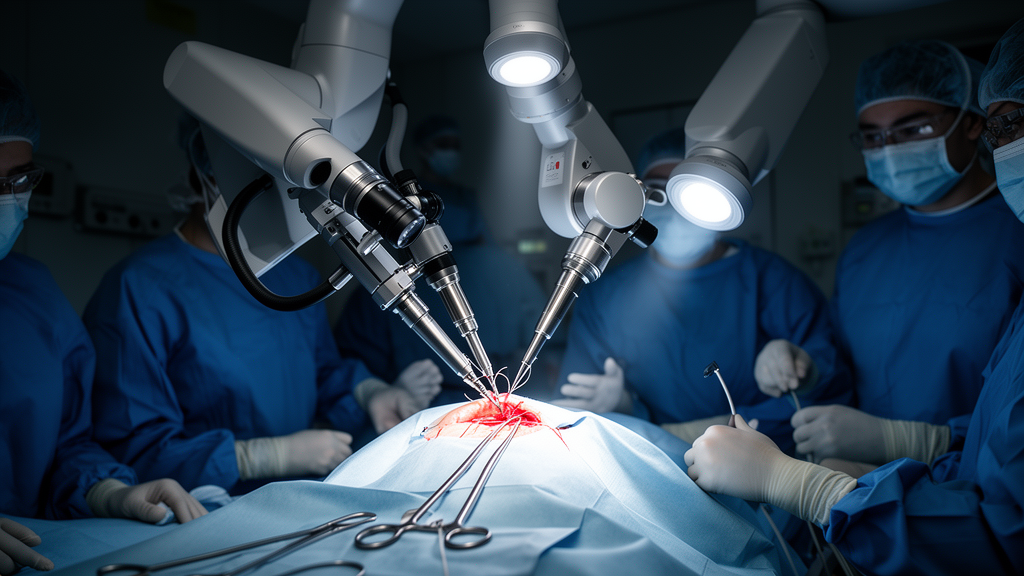
Researchers have demonstrated the technical feasibility of using a robotic system to perform intracranial anastomosis during a superficial temporal artery–middle cerebral artery (STA-MCA) bypass. The study, published in Acta Neurochirurgica, reports that surgeons utilized the Symani Surgical System to execute the intracranial anastomosis, a procedure typically performed through traditional manual techniques. The surgical team aimed to evaluate the potential for extending the use of this robotic platform, which is already CE-marked for extracranial surgery, into the complex environment of the intracranial surgical field.

The procedure was performed on a 49-year-old woman with a left intracranial internal carotid artery occlusion. The patient presented with recurrent transient ischemic attacks of increasing frequency and evidence of compromised cerebrovascular reserve. During the operation, the robotic system was employed for both the preparation of the donor vessel and the execution of the intracranial anastomosis. Surgeons operated within the same surgical field, leveraging the system’s motion scaling and tremor-filtering capabilities, which are designed to assist with the high-precision requirements of neurovascular microsurgery.

The surgical team successfully completed the anastomosis without encountering any technical complications, and the patient’s postoperative course was described as uneventful. Following the surgery, both immediate and follow-up angiographic and perfusion studies were conducted to assess the success of the intervention. These imaging results confirmed that the bypass was patent and revealed a more symmetric cerebral perfusion pattern compared to the preoperative baseline, suggesting a measurable improvement in the patient’s cerebral blood flow.

The authors conclude that extending the use of the robotic system to the intracranial compartment is technically feasible for selected cases, particularly those involving superficial bypass. While the tool design appears well-suited for the technical demands of STA-MCA procedures, the researchers note that their report is limited to a single case. They emphasize that larger, multicenter case series are required to systematically evaluate the clinical advantages and limitations of robotic-assisted neurovascular bypass before it can be broadly integrated into standard practice.

Subject of Research: Robotic-assisted neurovascular surgery

Article Title: Robotic-assisted intracranial STA-MCA bypass

Article References: Cenzato, M., Petrella, G., Capelli, F., Colistra, D., Lleshi, E., Vatavu, O., & Boeris, D. (2026). Robotic-assisted intracranial STA-MCA bypass. Acta Neurochirurgica. https://doi.org/10.1007/s00701-026-07090-0

Image Credits: AI Generated

DOI: 10.1007/s00701-026-07090-0

Keywords: neurosurgery, robotic surgery, STA-MCA bypass, intracranial anastomosis, cerebrovascular disease, Symani Surgical System, cerebral revascularization, ischemic stroke prevention, surgical innovation, minimally invasive, transient ischemic attack, internal carotid artery occlusion, surgical robotics, neurovascular bypass, vascular anastomosis

News Source: Ophelia Keating. (November 18, 2026). Robotic System Successfully Performs Intracranial Bypass Surgery in Clinical Case. Scienmag.


Tags: cerebral revascularizationcerebrovascular diseaseinternal carotid artery occlusionintracranial anastomosisischemic stroke preventionminimally invasiveneurosurgeryneurovascular bypassrobotic surgerySTA-MCA bypassSurgical innovationsurgical robotics**Symani Surgical Systemtransient ischemic attackvascular anastomosis
Share12Tweet7Share2ShareShareShare1

Related Posts

Extracellular Vesicles Link Systemic Comorbidities to Vascular Dysfunction in Atherogenesis

Extracellular Vesicles Link Systemic Comorbidities to Vascular Dysfunction in Atherogenesis

November 18, 2026
Endothelial and Pericyte Crosstalk Shapes Barrier Integrity and Repair in Ischemic Stroke

Endothelial and Pericyte Crosstalk Shapes Barrier Integrity and Repair in Ischemic Stroke

November 18, 2026

Sierra Leone Child Immunization Exceeded 100 Percent Following 2023 Big Catch-Up

November 18, 2026

Red Cell Albumin Ratio Associated With Mortality in Geriatric Femoral Fracture Surgery

November 18, 2026

POPULAR NEWS

  • Coal Gangue Aggregates Can Replace Natural Stone in Concrete Applications

    Coal Gangue Aggregates Can Replace Natural Stone in Concrete Applications

    29 shares
    Share 12 Tweet 7
  • Cluster-Based Training Selection Outperforms Active Learning for Material Property Prediction

    29 shares
    Share 12 Tweet 7
  • Cesarean Section Rates Reached Forty Percent Among Surveyed Mothers in Njombe Region

    29 shares
    Share 12 Tweet 7
  • Testosterone Injections Exacerbate Pre-Neoplastic Prostate Lesions in NKX3.1-Deficient Mice

    29 shares
    Share 12 Tweet 7

About

We bring you the latest biotechnology news from best research centers and universities around the world. Check our website.

Follow us

Recent News

Histone Lactylation and USP33 Drive Scleral Remodeling in Experimental Myopia Models

Extracellular Vesicles Link Systemic Comorbidities to Vascular Dysfunction in Atherogenesis

Endothelial and Pericyte Crosstalk Shapes Barrier Integrity and Repair in Ischemic Stroke

Subscribe to Blog via Email

Enter your email address to subscribe to this blog and receive notifications of new posts by email.

Join 88 other subscribers
  • Contact Us

Bioengineer.org © Copyright 2023 All Rights Reserved.

Welcome Back!

Login to your account below

Forgotten Password?

Retrieve your password

Please enter your username or email address to reset your password.

Log In
No Result
View All Result
  • Homepages
    • Home Page 1
    • Home Page 2
  • News
  • National
  • Business
  • Health
  • Lifestyle
  • Science

Bioengineer.org © Copyright 2023 All Rights Reserved.