In freshwater ecosystems, bacterial cell dimensions correspond directly to fundamental differences in community structure, ecological niche breadth, and environmental assembly mechanisms, according to a field study conducted along a tributary near China’s Danjiangkou Reservoir. Researchers examining microbial populations separated by cellular dimensions discovered that ultramicrobacteria and large-sized bacteria establish distinct environmental distributions, displaying divergent taxonomic compositions and specialized ecological functions. The investigation demonstrated that larger bacterial cells maintain substantially higher overall community diversity and wider ecological niche breadths, whereas the ultramicrobacteria fraction exhibits lower diversity and a narrower range of occupied niches. Despite their smaller size, these diminutive organisms maintain critical biological roles in aquatic nutrient cycling and community turnover. By combining membrane filtration with flow cytometric cell counting and high-throughput sequencing, the team revealed that morphological dimensions serve as an effective indicator of underlying microbial ecological dynamics. These findings establish a direct empirical link between bacterial morphology, metabolic specialization, and the ecological assembly rules governing freshwater microbial ecosystems.
To evaluate how bacterial cell dimensions shape microbial communities in natural flowing waters, the investigators designed a comprehensive field sampling campaign executed during January 2025. The research team selected ten distinct sampling stations positioned systematically along a tributary near the Danjiangkou Reservoir to capture environmental gradients across the river system. At each designated collection site, field personnel harvested five liters of surface water under controlled conditions and transported the biological materials immediately to the laboratory under strict low-temperature preservation to maintain structural integrity and prevent community shifts. The physical and chemical properties of the water column were measured systematically across all ten sampling stations to evaluate environmental variables, including water temperature, dissolved oxygen levels, total phosphorus, and total nitrogen concentrations. These detailed physicochemical measurements provided the essential baseline parameters needed to analyze how changing environmental factors correlate with the abundance, relative proportions, and taxonomic distributions of bacterial groups categorized by cellular morphology along the sampled freshwater corridor.
Separating and quantifying the distinct bacterial size fractions required an integrated methodology combining optical flow cytometry with targeted differential membrane filtration. The research team determined total cell concentrations by treating 0.5-milliliter water aliquots with SYBR Green I nucleic acid dye after a five-minute incubation at thirty-seven degrees Celsius, followed by ten minutes of dark incubation. Flow cytometric counting was conducted with the green fluorescence channel threshold set at one thousand to eliminate background optical interference, while forward scatter signals provided size discrimination. Total bacterial concentrations across the river sites ranged from 3.3 × 10^7 to 1.1 × 10^8 cells per milliliter. To physically isolate the size fractions, water samples ranging between ten and four thousand milliliters were passed through 0.45-micrometer Durapore membrane filters to capture large-sized bacteria, while 0.1-micrometer Durapore membranes captured the ultramicrobacteria from the resulting filtrate. Statistical correlation analyses revealed that large-sized bacterial counts correlated negatively with ambient water temperature, whereas ultramicrobacteria counts exhibited a significant negative correlation with water pH.
To profile the taxonomic structures of the separated size fractions, the authors extracted environmental genomic DNA from both filters using specialized isolation kits and amplified the 16S ribosomal RNA V3-V4 hypervariable region using universal primers 338F and 806R. High-throughput paired-end sequencing on the Illumina PE300 platform yielded comprehensive sequence datasets that were clustered into 1,971 operational taxonomic units at a ninety-seven percent sequence similarity threshold after bioinformatic curation and singleton removal. Sequencing depth was normalized across all biological samples by rarefying each library to 20,000 reads, achieving an average Good’s coverage of 99.09 percent. Major bacterial classes present across both morphological groups included Gammaproteobacteria, Actinobacteria, Acidimicrobiia, Alphaproteobacteria, and Bacteroidia. However, principal component analysis demonstrated significant compositional separation between large-sized bacteria and ultramicrobacteria, confirmed by adonis statistical testing with a p-value of 0.002. Furthermore, quantitative assessments revealed that both community dissimilarity and the Shannon diversity index were significantly higher in the large-sized bacterial communities than in their ultramicrocellular counterparts across the river system.
A detailed examination of operational taxonomic unit distribution showed structural overlap alongside pronounced taxonomic divergence between the two morphological fractions. Across all river samples, 821 operational taxonomic units, representing 41.65 percent of the total detected units and carrying relative abundances between 75.63 and 99.9 percent, were shared between both size classes. In contrast, 869 taxonomic units accounting for 44.09 percent were identified exclusively within the large-sized fraction, while 281 taxonomic units representing 14.26 percent appeared exclusively in the ultramicrobacteria pool. When classified into temporal detection categories, most units in both fractions were intermittent species, representing 64.11 percent of large bacteria and 54.64 percent of ultramicrobacteria. Persistent species accounted for 68.93 percent of total abundance in large bacteria and 92.63 percent in ultramicrobacteria. The relative abundance of several lineages differed markedly between fractions, with Actinobacteria and genera such as Candidatus Methylopumilus and Polynucleobacter, alongside the hgcI clade, displaying significantly higher relative abundances within the ultramicrobacteria fraction.
Quantifying ecological niche characteristics demonstrated that morphological dimensions correlate strongly with environmental resource utilization and metabolic plasticity. Niche width calculations revealed that the ultramicrobacteria community occupied a significantly narrower niche breadth compared to the large-sized bacterial assemblage, reflecting distinct habitat adaptation strategies. Categorizing microbial units into environmental specialists and generalists revealed contrasting community structures between the two fractions. In the large-sized bacterial community, generalist taxa possessing broad ecological niches accounted for 42.37 percent of operational units with an average relative abundance of 0.915, while specialized taxa represented 41.66 percent with an average abundance of 0.041. Conversely, the ultramicrobacteria community was dominated by environmental specialists, which comprised 49.41 percent of detected units with an average relative abundance of 0.119, compared to generalists accounting for 31.21 percent with an abundance of 0.832. These distributions indicate that large bacteria maintain broader physiological tolerance, whereas ultramicrobacteria demonstrate specialized habitat requirements and higher ecological variability during succession.
Null model analyses using the beta nearest taxonomic unit index and Raup-Crick dissimilarity metrics demonstrated that different ecological assembly rules govern the two size-fractionated bacterial communities. In the large-sized bacterial community, deterministic environmental filtering was the primary driver, with heterogeneous selection accounting for 50 percent of community assembly, followed by dispersal limitation at 34 percent and ecological drift at 16 percent. In contrast, stochastic ecological processes dominated the ultramicrobacteria community, where ecological drift served as the primary structuring force at 46 percent, followed by heterogeneous selection at 38 percent and homogeneous dispersal at 12 percent. Mantel tests indicated that total phosphorus and total nitrogen concentrations were significantly associated with community variation in large-sized bacteria, while total phosphorus and dissolved oxygen correlated significantly with ultramicrobacteria community structure. Neutral community model evaluations further supported these distinctions, demonstrating higher species dispersal capacity among large-sized bacteria, with an estimated dispersal parameter of 0.1311 compared to 0.1206 observed in the ultramicrobacteria fraction.
Interspecific interaction patterns evaluated through co-occurrence network analysis highlighted striking structural differences in community complexity and topological connectivity between the size fractions. The empirical co-occurrence network constructed for large-sized bacteria incorporated 364 nodes and 594 edges, whereas the corresponding ultramicrobacteria network comprised 178 nodes and 384 edges. Network nodes accounted for 19 percent of total operational taxonomic units in the large bacterial community compared to 14 percent in the ultramicrobacteria community, demonstrating greater interconnectedness and topological complexity among larger cells. In both networks, positive correlations substantially outnumbered negative interactions, reflecting widespread cooperative interactions, mutualistic dependencies, or shared environmental preferences rather than competitive exclusion. Topological role categorization based on connectivity scores identified putative keystone species, although peripheral nodes dominated both structural networks. Researchers noted that the broader niche breadth and structural connectivity of large bacteria provide buffered network stability against environmental disruptions, whereas the lower connectivity of ultramicrobacteria makes their networks comparatively vulnerable to structural breakdown under environmental fluctuations.
Metagenomic sequencing of 500-base-pair fragmented DNA libraries on high-throughput platforms provided functional insight into the biogeochemical cycling capabilities encoded within each size fraction. Predicted genes aligned against reference databases revealed significant differences between large and ultramicrobacteria across carbon, nitrogen, phosphorus, and sulfur metabolic pathways, supported by statistical testing yielding a significance value of p equals 0.001. Pathways exhibiting significant divergence included carbon fixation, methanogenesis, fermentation, ethanol oxidation, dissimilatory nitrate reduction, assimilatory nitrate reduction, organic nitrogen metabolism, polyphosphate synthesis, polyphosphate degradation, and multiple sulfur transformation cascades. The total relative abundance of functional genes associated with carbon, nitrogen, and phosphorus metabolic cycles was significantly elevated in the ultramicrobacteria fraction compared to the large-sized bacterial community.
The study authors articulated several critical methodological considerations and ecological caveats regarding the interpretation of these size-fractionated river metagenomes. Although the relative abundance of carbon, nitrogen, and phosphorus cycling genes was higher in the ultramicrobacteria metagenome, this metric reflects compositional proportions within the isolated gene pool rather than verified in situ biogeochemical transformation rates. Consequently, researchers cannot conclude that ultramicrobacteria carry greater functional significance in river element cycling than larger bacteria without genome-resolved metagenomics and normalized absolute gene quantification. Methodological constraints also include membrane filtration artifacts, where flexible large bacteria deform under vacuum pressure to pass through 0.45-micrometer pores, or particle-associated ultramicrobacteria are retained on upstream filters. Furthermore, because water sampling was restricted to a single winter campaign in January 2025, seasonal community shifts and dynamic phenotype transitions could not be tracked across annual cycles. Despite these limitations, the investigation confirms that river ultramicrobacteria represent ecologically active, highly specialized taxonomic assemblages rather than dormant or degraded cells within freshwater ecosystems.
Subject of Research: Freshwater bacterial community assembly, diversity, and metabolic functions across cell size classes
Article Title: The community, assembly process and potential functions of bacteria with different cell size in a river
Article References: Yang, P., Duan, X., Wu, Q., Liu, H., Ren, S., Zhang, K., Song, Y., Liu, J., Mao, G., Yang, J., & Hu, W. (2026). The community, assembly process and potential functions of bacteria with different cell size in a river. Environmental Microbiome, 21(1), Article 124. https://doi.org/10.1186/s40793-026-00944-1
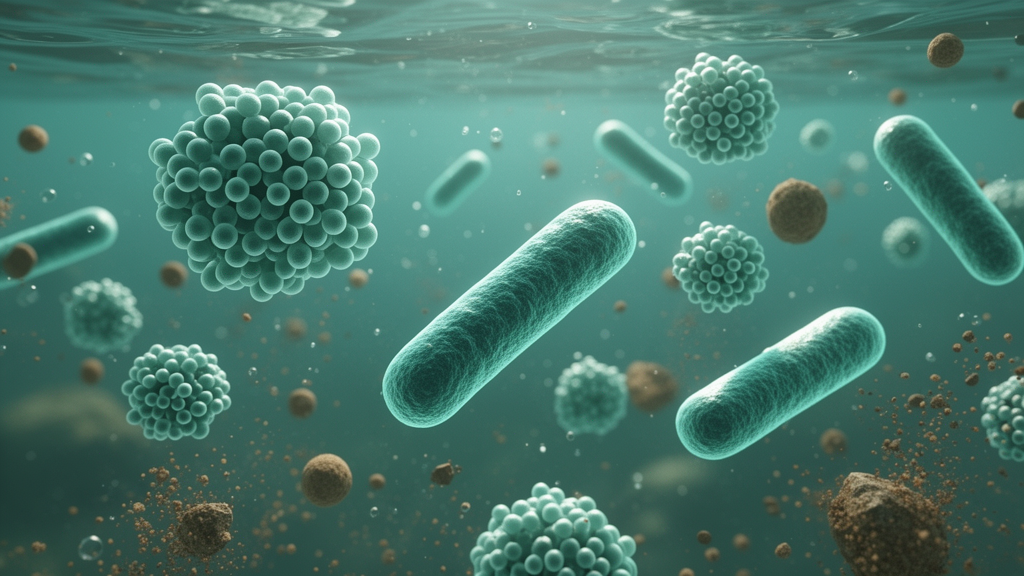
Image Credits: AI Generated
DOI: 10.1186/s40793-026-00944-1
Keywords: ultramicrobacteria, bacterial cell size, Danjiangkou Reservoir, freshwater microbiome, flow cytometry, community assembly, ecological niche breadth, heterogeneous selection, ecological drift, co-occurrence networks, metagenomic sequencing, biogeochemical cycles, Actinobacteria, 16S rRNA sequencing, operational taxonomic units, membrane filtration, partial least squares path modeling, keystone taxa
News Source: Violet Maxwell. (November 11, 2026). River Bacteria Display Distinct Community Assembly and Functions by Cell Size. Scienmag.