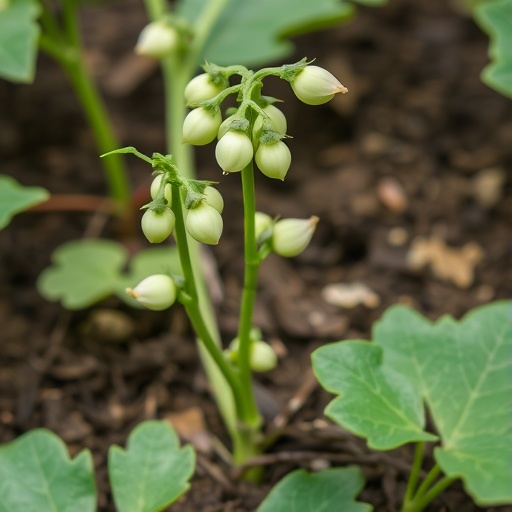
Research focusing on agricultural practices and sustainability has become increasingly essential in the face of global challenges related to food security, environmental degradation, and climate change. One area that has garnered considerable attention is the interaction between legumes and Rhizobium species. A recent investigation into this relationship has revealed critical insights into the nodulation effects of Rhizobium on Vigna unguiculata, commonly known as cowpea, and how these interactions can enhance soil fertility. Conducted in southwestern Nigeria, this ground-breaking study unfolds the revolutionary potential of harnessing biological processes to enhance agricultural productivity and sustainability.
In agriculture, the process of nodulation is crucial. It involves the formation of nodules on the roots of legumes, where symbiotic bacteria, specifically Rhizobium species, facilitate the biological fixation of atmospheric nitrogen. This process is vital because it enhances the nitrogen content of the soil, promoting better plant growth and increasing soil fertility. The significance of Rhizobium in agricultural systems cannot be overstated, particularly in regions like southwestern Nigeria, where soil nutrient depletion poses a significant challenge to crop yields. This study meticulously explores the symbiotic relationship between Rhizobium and cowpea, with implications for improved agricultural productivity and sustainability.
Cowpea is a staple crop that is not only a vital source of protein for millions but also plays a crucial role in the agricultural systems of West Africa. Its importance is further amplified by its ability to thrive in drought-stricken areas, making it an essential food security crop. The interactions between cowpea and Rhizobium are particularly noteworthy, as they have been shown to enhance the plant’s nutritional profile and growth in nitrogen-deficient soils. This dynamic relationship fosters a thriving ecosystem in the soil, ultimately leading to improved yields for farmers.
The research conducted by Popoola et al. involved a rigorous examination of various strains of Rhizobium and their effects on cowpea nodulation. Farmers in southwestern Nigeria often struggle with poor soil health due to continuous cultivation and inadequate soil replenishment practices. By assessing how different Rhizobium strains influence the quantity and quality of nodulation in cowpea, the researchers aimed to provide evidence-based recommendations to farmers looking to enhance their crop yields sustainably.
The findings were compelling. The study revealed that specific strains of Rhizobium significantly increased both the number and effectiveness of nodules formed on cowpea roots. This nodulation not only led to improved nitrogen fixation capabilities but also contributed to broader benefits, including increased biomass production and enhanced soil structure. The implications of these findings are substantial, as they point towards more targeted and effective agricultural practices that could greatly improve the livelihoods of farmers in the region.
Another critical aspect of this research was the assessment of the impact of nodulation on soil fertility. By increasing the nitrogen available in the soil, the symbiotic relationship between cowpea and Rhizobium directly contributes to soil health. This aspect is particularly crucial in a world grappling with the consequences of chemical fertilizers that often lead to long-term soil degradation. The study presents an alternative narrative: one where biological inputs become a viable solution for enhancing soil fertility and reducing dependency on chemical fertilizers.
Moreover, the data collected during the study highlighted significant correlations between the extent of nodulation and various soil health indicators. Indicators such as soil organic matter, pH, and moisture levels were found to improve in plots where effective Rhizobium strains were introduced. This reinforces the argument that promoting biological processes in agriculture is not merely beneficial but essential for sustainable farming practices.
The overarching aim of the study aligns with a global movement towards agricultural sustainability. Researchers are increasingly advocating for practices that not only improve crop yields but also contribute to ecological balance and environmental preservation. As more studies like this emerge, they pave the way for policies that support agro-ecological practices, encourage the adoption of sustainable agricultural technologies, and ultimately enhance food security.
The implications of this study extend beyond local boundaries, resonating within the global agricultural community. The increasing emphasis on regenerative agriculture calls for a reevaluation of traditional crops, and cowpea, allied with Rhizobium, offers a promising avenue to pursue. Countries facing similar agricultural challenges can look toward this research as a model for integrating beneficial microbes into their crop production systems.
Educating farmers and agricultural practitioners about the benefits of these microbial relationships is vital. Extension services should leverage such research findings to enhance farmers’ understanding and adoption of legume-based crop rotations and intercropping systems that utilize Rhizobium effectively. This educational endeavor could catalyze a paradigm shift in how smallholder farmers view and utilize legumes in their production systems.
On a practical level, the study underscores the importance of selecting the right strain of Rhizobium for specific soil and environmental conditions. Customized approaches that consider local soil types and climatic conditions can lead to optimized results, ultimately driving productivity and sustainability. From the application of effective bio-inoculants to the need for local trials to discover the most efficacious strains, the possibilities for enhancement are vast.
Ultimately, the research illustrates a pivotal point in agricultural science: the necessity of marrying technological advancements with natural processes. As we navigate the complexities of future agricultural demands, fostering the symbiotic relationships between plants and microbes will hold immense potential to reshape agricultural landscapes. The insights gained from the impact of Rhizobium on cowpea not only bridge the gap between science and practice but also create a roadmap for sustainable agricultural futures globally.
The exploration of the impacts of biotic interactions in agriculture, particularly in developing countries, will require an ongoing commitment to research and education. Continuous evaluation of these practices, coupled with farmer engagement, will be essential in fostering an ecosystem that supports food security while maintaining ecological integrity.
In conclusion, the alliance between Rhizobium and cowpea demonstrates the transformative power of nature in agriculture. As the world faces numerous challenges, studies like this provide optimism and direction for cultivating sustainable agricultural practices that can enhance productivity while promoting environmental stewardship. The journey toward a more sustainable agricultural future is complex, but the insights from this research serve as a beacon of possibility.
Subject of Research: The impact of Rhizobium species on nodulation and soil fertility of cowpea.
Article Title: Impact of Rhizobium spp. on nodulation of cultivated (Vigna unguiculata) cowpea and soil fertility in southwestern Nigeria.
Article References:
Popoola, B.M., Oyatokun, O.S., Ezeoma, C.M. et al. Impact of Rhizobium spp. on nodulation of cultivated (Vigna unguiculata) cowpea and soil fertility in southwestern Nigeria.
Discov Agric 4, 9 (2026). https://doi.org/10.1007/s44279-026-00484-9
Image Credits: AI Generated
DOI: https://doi.org/10.1007/s44279-026-00484-9
Keywords: Rhizobium, Vigna unguiculata, cowpea, nodulation, soil fertility, agricultural sustainability, food security, biological nitrogen fixation.
Tags: agricultural sustainability practicesbiological nitrogen fixation in cropscowpea cultivation techniquesenhancing soil fertility with Rhizobiumenvironmental impact of legume cultivation.improving crop yields in Nigerianodulation process in legumesRhizobium and cowpea interactionsoil nutrient management strategiessustainable agricultural productivitysymbiotic relationships in agricultureVigna unguiculata benefits