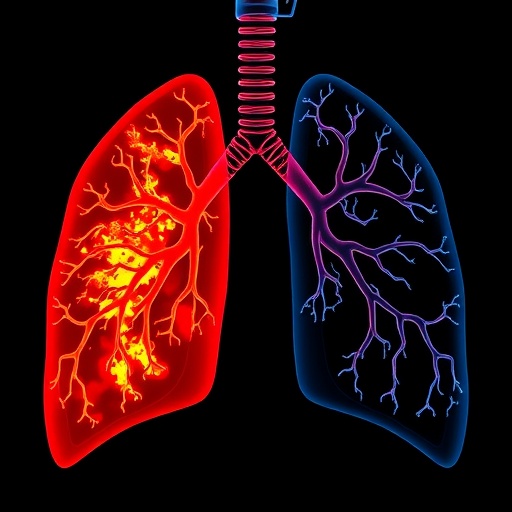
In a groundbreaking study published in “Discover Artificial Intelligence,” researchers Sunil, M., Marzuqha, N., and Prusty, M.R. unveil a pioneering approach that combines advanced deep reinforcement learning with explainable artificial intelligence (AI) to significantly enhance the detection of pulmonary diseases. This research represents a vital stride in leveraging artificial intelligence for medical diagnoses, promising to not only improve accuracy but also help medical professionals understand the rationale behind AI-driven recommendations.
Pulmonary diseases, including conditions such as chronic obstructive pulmonary disease (COPD), asthma, and various forms of lung cancer, rank among the leading causes of mortality worldwide. Early detection of these diseases is crucial in improving patient outcomes, and traditionally, this process has heavily relied on imaging techniques like CT scans and radiological evaluations. However, the conventional methods often face challenges such as variability in interpretation and the inherent subjectivity associated with human analysis. This new solution aims to address those issues by harnessing the capabilities of deep reinforcement learning to analyze complex medical imaging data.
Deep reinforcement learning is a subset of machine learning that optimizes the decision-making process through trial and error. In this research, the authors developed a sophisticated model capable of learning from vast datasets of lung images, allowing the AI to make increasingly accurate predictions on disease presence over time through a continuous learning mechanism. Such capabilities greatly enhance the predictive power of AI models, making them valuable allies for healthcare practitioners in diagnosing pulmonary conditions.
What sets this research apart is its emphasis on explainable AI—a crucial element often overlooked in the AI landscape. While machine learning models can achieve high accuracy, their black-box nature poses a significant challenge in clinical settings, where understanding the reasoning behind a diagnosis can influence treatment plans. The authors integrated explainable AI techniques that provide insights into the decision-making processes of the model. This feature can empower physicians with the information required to make informed decisions, ultimately fostering a collaborative atmosphere where human expertise and AI capabilities complement each other.
Throughout the study, the researchers tested their model against various datasets, including different demographics and disease profiles, to ensure its robustness and adaptability. Striking a balance between model accuracy and interpretability was no small feat, yet the findings demonstrated that the AI was not only proficient in identifying problematic imaging but also transparent in its reasoning. The model’s user-friendly interface allowed clinicians to visualize which features influenced predictions, bridging the gap between complex AI machinery and human understanding.
The implications of this research stretch beyond mere diagnostics; the potential for deploying these AI tools in real-world clinical settings is enormous. As healthcare systems worldwide grapple with shortages of specialist radiologists and the growing demand for efficient diagnostics, integrating AI-driven tools can alleviate pressure on healthcare providers. By enabling faster and more reliable detection of pulmonary diseases, these technologies could lead to timely interventions, thereby improving patient care and reducing healthcare costs.
Furthermore, the research has significant ramifications for future studies in AI applications within medicine. The methodologies established reveal critical pathways for developing AI systems that not only perform well statistically but also adhere to ethical standards by providing explanations for their outputs. As the integration of AI in healthcare advances, it becomes increasingly necessary to uphold transparency, so practitioners can maintain trust in these revolutionary technologies.
An essential aspect highlighted in the study is the ethical considerations surrounding the implementation of AI in medicine. The researchers emphasize the importance of establishing guidelines that prioritize patient rights and data privacy. As AI systems often require large amounts of sensitive health data, ensuring compliance with data protection regulations becomes paramount in fostering social acceptance of these innovative technologies.
To further validate the model’s efficacy, the researchers conducted extensive comparative analyses with existing diagnostic methods, showcasing the enhanced performance of their approach. The results underscored a significant reduction in false negatives, which is critical in the context of pulmonary diseases—where missing a diagnosis could have severe consequences. By employing this AI-assisted methodology, healthcare professionals can enhance their diagnostic precision and improve patient outcomes.
In addition to its clinical applications, this research opens up new frontier possibilities for research into AI-driven healthcare solutions. The adaptive nature of the deep reinforcement learning model creates avenues for continuous learning. As new data becomes available, the model could integrate this information, potentially leading to improvements in diagnostic capabilities over time.
Ultimately, the fusion of advanced deep reinforcement learning with explainable AI is a promising development in the fight against pulmonary diseases. By harnessing state-of-the-art technology, researchers are forging a path toward smarter diagnostics and more effective patient care practices. The integration of this technology into standard clinical workflows could signal a transformative shift in how pulmonary diseases are diagnosed and treated, ensuring that both patients and healthcare providers benefit from optimized AI solutions.
As the healthcare industry continues to evolve, the findings presented in this study provide a valuable template for future innovations. Emphasizing the importance of combining cutting-edge technology with transparency and ethics will undoubtedly set the groundwork for the next generation of AI solutions in medicine. This study is not just a testament to the power of AI; it is an invitation to rethink our approach to healthcare in the age of technology, where collaboration between human expertise and artificial intelligence will shape the future of diagnosis and treatment.
The intersection of technology and medicine raises exciting prospects for improving health outcomes, and research like this exemplifies the potential that lies in the thoughtful application of AI in sensitive and critical fields. As we look ahead, this study inspires optimism about the role of artificial intelligence in enhancing human health—ensuring that the future of medicine is bright, informed, and profoundly more efficient.
Subject of Research: Integration of advanced deep reinforcement learning and explainable AI for pulmonary disease detection.
Article Title: Integrating advanced deep reinforcement learning and explainable AI for enhanced pulmonary disease detection.
Article References: Sunil, M., Marzuqha, N., Prusty, M.R. et al. Integrating advanced deep reinforcement learning and explainable AI for enhanced pulmonary disease detection. Discov Artif Intell 5, 372 (2025). https://doi.org/10.1007/s44163-025-00560-x
Image Credits: AI Generated
DOI: https://doi.org/10.1007/s44163-025-00560-x
Keywords: AI, deep reinforcement learning, pulmonary disease detection, explainable AI, healthcare technology.
Tags: advanced imaging analysis in healthcareAI in pulmonary disease detectionAI-driven recommendations in pulmonary carechronic obstructive pulmonary disease AI solutionsdeep reinforcement learning in healthcareearly detection of lung diseasesexplainable artificial intelligence in medicineimproving accuracy in medical diagnosesinnovative approaches to lung disease diagnosislung cancer detection technologymachine learning for respiratory healthovercoming challenges in medical imaging interpretation