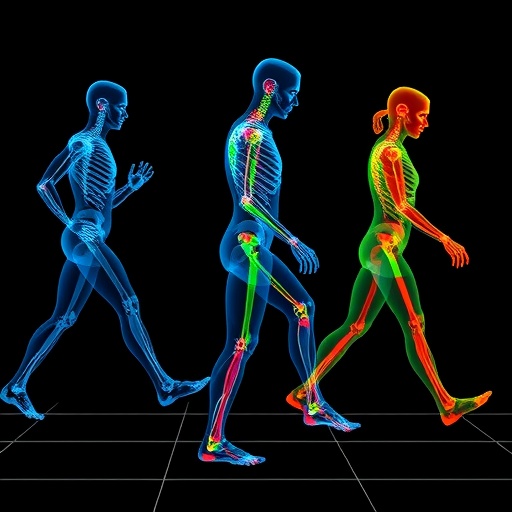
In recent years, the analysis of human gait has become a crucial field of study, especially with the increasing focus on mobility enhancement and the rehabilitation of patients with locomotor disorders. Understanding how humans walk and run is not merely an academic interest; it has significant implications for injury prevention, rehabilitation strategies, and performance optimization in sports. While traditional laboratory methods for studying gait can be resource-intensive and expensive, advances in technology have paved the way for more efficient approaches utilizing deep learning models. However, the prevailing models have largely been limited by small datasets that typically cater to homogeneous demographic groups and restrict output predictions to singular aspects of gait dynamics.
Recognizing the need for a more robust solution, researchers have developed GaitDynamics, a generative foundation model trained on a large and diverse dataset encompassing a wide variety of gait patterns. This model represents a significant leap forward in the study of human locomotion, addressing the limitations of previous systems by accommodating flexible inputs and outputs that are vital for a myriad of clinical applications. GaitDynamics is poised to become an essential tool in both research and clinical settings, thanks to its multifaceted capabilities and its commitment to inclusivity in data representation.
One of the most impressive features of GaitDynamics is its ability to estimate ground reaction forces from kinematic data with an accuracy that rivals that of traditional laboratory experiments. Ground reaction forces are critical in determining how forces transmitted to the body can affect joint loading and overall biomechanics during movement. The model demonstrates robust performance even in situations where kinematic data may be incomplete or missing. This characteristic is especially valuable for clinicians who often encounter scenarios where patients may be unable to provide comprehensive movement data due to injury or discomfort.
Beyond mere estimation, GaitDynamics also promises to revolutionize the way we understand knee loading under different conditions. By predicting the effects of gait modifications on knee loading, the model effectively equips healthcare professionals with the insights necessary to tailor rehabilitation programs to individual patient needs. Resource-intensive experiments that previously required extensive time and financial investment can now be simulated, providing clinicians and researchers with a powerful tool to examine how even slight adjustments in gait mechanics can yield significant benefits for patient outcomes.
Another fascinating application of the GaitDynamics model lies in its ability to analyze the intricate changes that occur during various running speeds. Understanding how kinematics and ground reaction forces fluctuate with increasing pace is vital for athletes and coaches seeking optimal performance. Traditional training methodologies often rely on trial and error, but by utilizing the predictive capabilities of GaitDynamics, athletes can make data-informed decisions about their training regimens. This enhanced understanding of force and motion dynamics can lead to improved performance while also minimizing the risk of injuries commonly associated with overexertion.
The architecture of GaitDynamics is underpinned by advanced deep learning techniques that allow for efficient processing of large datasets. By leveraging these computational tools, the researchers have created a model that not only excels at learning from diverse data sources but also generalizes well to unseen patterns. This adaptability is crucial in the field of biomechanics, where variability in gait patterns can arise from a multitude of factors, including individual anatomy, injury status, and even environmental conditions.
To further enhance the model’s usability, the researchers have made the data, code, and trained model publicly accessible. This commitment to open science is commendable; it democratizes access to cutting-edge technology and enables researchers across the globe to integrate GaitDynamics into their own work. By fostering an open collaborative environment, the creators are not just enhancing their own research but are simultaneously empowering others to explore the vast horizons of gait analysis.
In the realm of potential applications, GaitDynamics is not merely a tool for researchers. It holds significant promise for practitioners in various fields, including sports science, physical therapy, and orthopedics. For sports scientists working to enhance athletic performance, the ability to predict how modifications in gait affect mechanical loading can lead to training programs that maximize efficiency while minimizing injury risk. For physical therapists, the insights provided by the model can inform rehabilitation strategies tailored to individual progress, ensuring that patients receive care best suited to their specific paths to recovery.
Moreover, the GaitDynamics model’s innovative design suggests its potential applicability in wearable technology. As we transition toward a future increasingly dominated by smart devices, integrating this model into wearable gait analysis tools could revolutionize personal training and rehabilitation programs. Athletes could receive real-time feedback on their running mechanics, allowing for on-the-go adjustments that can optimize performance. Similarly, patients recovering from injuries could rely on wearables that monitor progress and provide actionable insights to guide their recovery journey.
Despite these promising directions, challenges remain in the widespread adoption of GaitDynamics and similar technologies. The field of biomechanics, while advancing rapidly, must navigate issues related to data privacy, ethical considerations, and the need for continuous validation of predictive models. As with any innovative technology, ensuring that the insights gleaned from GaitDynamics are applied wisely in clinical settings is paramount to prevent potential misapplication that could adversely affect patients or athletes.
Ultimately, GaitDynamics stands as a remarkable contribution to the field of gait analysis, bridging the gap between advanced computational models and practical clinical applications. Its versatility and accuracy hold the potential to transform the way we understand and optimize human movement, providing researchers and practitioners alike with invaluable tools to enhance mobility and performance. By addressing the limitations of previous methods and prioritizing inclusivity in datasets, the researchers have laid the groundwork for future innovations that can extract deeper insights from our understanding of human locomotion.
In conclusion, GaitDynamics is not just another model in the ever-expanding landscape of artificial intelligence; it is a paradigm shift in how we analyze and respond to human gait. By leveraging modern computational power and embracing a diverse array of data, this generative foundation model is setting a new standard for gait analysis that promises to enhance both clinical outcomes and athletic performance. As we look toward the future of movement science, GaitDynamics stands ready to lead the charge, with the potential to significantly improve the quality of life for individuals across the globe.
Subject of Research: Human gait dynamics and analysis
Article Title: GaitDynamics: a generative foundation model for analyzing human walking and running
Article References:
Tan, T., Van Wouwe, T., Werling, K.F. et al. GaitDynamics: a generative foundation model for analyzing human walking and running.
Nat. Biomed. Eng (2026). https://doi.org/10.1038/s41551-025-01565-8
Image Credits: AI Generated
DOI: https://doi.org/10.1038/s41551-025-01565-8
Keywords: Gait dynamics, generative model, biomechanics, deep learning, gait analysis, human movement, performance optimization, injury prevention, rehabilitation, public access.
Tags: advanced mobility enhancementclinical applications of gait analysisdeep learning in gait studiesdiverse gait pattern analysisflexible input-output systemsGaitDynamics modelgenerative foundation modelshuman gait analysisinclusive research in human locomotioninjury prevention strategiesperformance optimization in sportsrehabilitation of locomotor disorders