


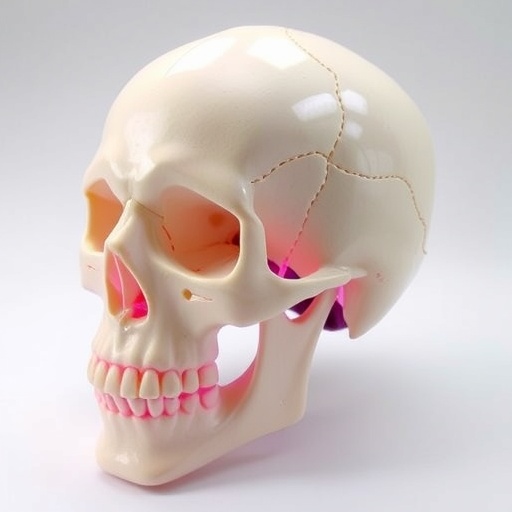
In the rapidly advancing field of medical education, innovative approaches are constantly being explored to enhance training and improve outcomes for patients. Among the latest breakthroughs is the development of a 3D-printed skull model designed specifically for simulating procedures related to external ventricular drainage (EVD). This model has been meticulously crafted to replicate human anatomy and provides a comprehensive training platform for medical students, residents, and professionals alike. By employing cutting-edge 3D printing technology, the creators have provided a resource that enables hands-on practice, thereby boosting confidence and skill in a critical area of neurosurgery.
External ventricular drainage is a procedure that involves the insertion of a catheter into the ventricles of the brain to relieve pressure caused by accumulated cerebrospinal fluid. Given the complexity of the human brain and the significance of precision in this procedure, it is essential that medical practitioners receive adequate training. Traditional methods of teaching, which often rely on lectures or anatomical models, do not allow for the necessary tactile experience that practitioners need. This is where the 3D-printed skull model becomes invaluable.
The process of creating this 3D-printed skull model begins with advanced imaging techniques such as magnetic resonance imaging (MRI) or computed tomography (CT) scans. These imaging modalities capture the intricate structures of the human skull and brain with remarkable detail. The data is then converted into a digital format that can be manipulated to create a three-dimensional representation of the anatomical features relevant to EVD. The precision afforded by this technology allows for the seamless integration of variations in human anatomy into the model.
Once the digital model is finalized, it is transferred to a 3D printer capable of producing high-quality replicas. The selection of materials used in the printing process is also crucial. The model is typically printed with biocompatible materials that mimic the physical properties of human bone and tissue, providing an authentic experience for users. This realistic construction is essential; it allows trainees to gain a deeper understanding of how instruments will interact with actual human anatomy.
The advent of 3D printing has allowed for the production of customized models tailored to individual patients. This capability is particularly useful in neurosurgery, where anatomical variations can significantly impact the approach and technique used in procedures. A personalized 3D skull model can assist surgeons in preoperative planning, thereby improving efficiency and outcomes in the operating room.
One of the most significant advantages of the 3D-printed skull model is its role in fostering an environment of active learning. Traditional textbooks and lectures may provide fundamental knowledge, but they cannot replace the hands-on experience garnered from practicing on a realistic model. Medical students and residents who utilize the 3D skull model can engage in simulated EVD procedures, taking their knowledge from theoretical to practical application. This experiential learning accelerates skill acquisition and confidence, which are crucial for success in high-stakes medical practices.
Furthermore, the implications of using 3D-printed models extend beyond mere practice. The availability of these resources in educational settings can inspire collaborative learning among medical teams. Trainees can come together to discuss strategies, share tips, and practice alongside one another, fostering a sense of camaraderie and teamwork that is essential in a clinical environment. The societal shift towards group-based learning has shown that collaborative training environments can lead to improved job readiness and ultimately better patient care.
Assessments of this innovative model suggest that it not only enhances the technical skills of practitioners but also contributes to improved patient safety. By allowing medical professionals to train extensively on a simulation before they perform live procedures, there is a marked reduction in errors. Proficiency gained through repeated practice can lead to more confident decision-making during actual surgical scenarios, directly impacting patient outcomes.
The versatility of the 3D-printed skull model does not end with external ventricular drainage. Its carefully designed architecture can be adapted for a variety of neurosurgical training scenarios and can represent a wide array of conditions and anatomies. The ability to modify the model for different cases makes it an essential asset not just for EVD, but for a broader spectrum of neurosurgical education and practice.
As the integration of 3D printing technology into the field of medical education continues to evolve, the implications for surgical training are quite promising. This technology stands at the intersection of education, innovation, and patient care, underpinning a future where medical professionals are better prepared for real-world challenges. By capitalizing on the efficacy of 3D-printed models, institutions can revolutionize their teaching methods, ensuring that the next generation of surgeons is not only knowledgeable but also adept and confident in their skills.
In conclusion, the introduction of a 3D-printed skull model for training in external ventricular drainage marks a significant advancement in medical education. This innovative approach offers unparalleled opportunities for experiential learning, collaborative training, and enhanced patient safety. As such, it represents a noteworthy step forward in the quest for excellence in surgical education, ultimately leading to better outcomes in neurosurgical practices.
By bridging the gap between theory and practice through tactile learning experiences, the 3D-printed skull model emerges as an essential tool in the evolution of medical training. As we continue to embrace innovation in healthcare education, models like this demonstrate the potential of technology to reshape pedagogy and improve the proficiency of future medical professionals in a crucial area of practice.
Subject of Research: 3D-printed skull model for enhancing training in external ventricular drainage
Article Title: 3D-printed skull model for enhancing training in external ventricular drainage within medical education.
Article References:
Scheidt, K., Kropla, F., Winkler, D. et al. 3D-printed skull model for enhancing training in external ventricular drainage within medical education.
3D Print Med 11, 16 (2025). https://doi.org/10.1186/s41205-025-00263-0
Image Credits: AI Generated
DOI: https://doi.org/10.1186/s41205-025-00263-0
Keywords: 3D printing, medical education, external ventricular drainage, neurosurgery, training model, patient safety, experiential learning.
Tags: 3D-printed skull modeladvanced imaging techniques in medicineanatomical accuracy in training toolsconfidence-building in medical studentsenhancing medical training outcomesexternal ventricular drainage traininghands-on neurosurgery practicemedical education innovationsneurosurgery education resourcesprecision in brain surgery techniquesrevolutionary medical training technologiessimulation in surgical procedures



