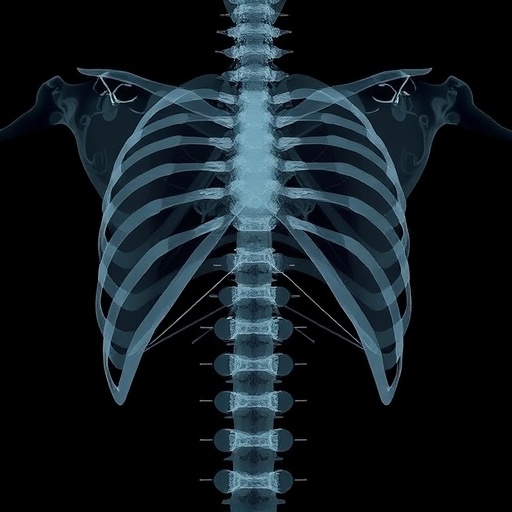
In a groundbreaking study released in the journal Scientific Reports, researchers led by Simon Jecklin, alongside colleagues Aigul Massalimova and Ru Zha, are changing the paradigms of intraoperative imaging with their innovative approach to three-dimensional (3D) reconstruction from sparse, arbitrarily posed real X-rays. This development promises to push the boundaries of imaging techniques used in surgical environments, potentially transforming how surgeons visualize and navigate complex anatomical structures during procedures.
Traditional intraoperative imaging techniques have heavily relied on advanced imaging modalities such as computed tomography (CT) and magnetic resonance imaging (MRI). While these methods are highly effective, they often require laborious preparation, significant time commitments, and extensive resources that can detract from the critical timing needed in surgical settings. The researchers aim to bridge the gap between complex imaging techniques and the streamlined demands of modern surgery, providing a framework that utilizes readily available X-ray images. This could enable surgeons to make real-time decisions based on accurate anatomical visualizations derived from these images.
The core of Jecklin et al.’s research centers around the concept of using sparse X-ray data, which refers to limited or less frequent X-ray snapshots, rather than comprehensive imaging sequences. The team utilized advanced algorithms to synthesize these limited views into a robust 3D reconstruction. This approach not only enhances visualization but also reduces the radiation exposure typically associated with extensive radiographic procedures. By minimizing both the time and number of images required during surgery, this technique holds the potential to significantly mitigate risks for patients.
Additionally, the technological breakthroughs stemming from this research could broaden the accessibility of such imaging methods across a variety of medical specialties. Intraoperative imaging is not solely confined to high-resource surgical environments; with these advancements, it could be implemented in settings that previously lacked access to sophisticated imaging technologies. This democratization of medical imaging could lead to improved surgical outcomes on a global scale, particularly in under-resourced regions.
At the heart of this innovative approach is an advanced computational framework that relies on deep learning and computer vision techniques. By analyzing the available X-ray data, the algorithms can extrapolate data points and reconstruct a 3D model that represents the patient’s anatomy. This process enables surgeons to interact with a dynamic 3D environment instead of relying solely on 2D images. The incorporation of 3D imaging allows for greater anatomical insight, facilitating more precise planning and execution during complex surgeries.
In the study, the researchers conducted multiple tests to validate their method against traditional imaging techniques. They found that their technique not only matched but, in certain scenarios, surpassed the accuracy of existing 3D imaging solutions. One of the most compelling aspects of their findings is the reported reduction in procedure time, which can directly benefit both patient outcomes and operating room efficiencies.
Furthermore, the researchers addressed the challenge of integrating this technology into existing surgical practices. Training and adaptation are crucial for any new technology to be embraced by the surgical community. Jecklin and his team have outlined a structured workflow that aims to ease the transition into surgical settings, including the creation of user-friendly interfaces for surgeons to interact seamlessly with the 3D models during operations. This foresight highlights not only the technological advancement but also the awareness of the practical application of their findings.
Importantly, the team emphasized the need for continuous evaluation and improvement of their methods to keep pace with the growing demands of modern surgical practices. As surgery becomes increasingly minimally invasive and reliant on imaging technologies, ongoing research in this area will be vital. This study marks a significant first step in a journey toward creating a standard of care in intraoperative imaging that harnesses existing technologies in unprecedented ways.
Their work also opens the door for future research that could explore other applications of similar imaging techniques outside the surgical realm. For instance, these methods might be adapted for use in emergency medicine, where rapid decision-making is essential, or in outpatient settings where traditional imaging facilities are not available. The implications of this research could extend well beyond the operating room, influencing the broader medical community and potentially reshaping clinical practices across multiple disciplines.
The advent of this technology could also spark interest from the medical technology industry, which is consistently on the lookout for innovations that enhance surgical efficiency and patient safety. Partnerships with medical equipment manufacturers could lead to more refined versions of the technology that are easier to implement and integrate into workflows. This collaboration could play a key role in translating research findings into clinical practice and ensuring that surgeons are equipped with the best tools available.
The overall impact of Jecklin et al.’s research cannot be overstated. By challenging the existing paradigms of intraoperative imaging and leveraging the power of sparse data, the team is paving the way for a new era of surgical precision. Their insights may inspire further exploration of innovative imaging solutions that prioritize not only accuracy but also efficiency and accessibility in surgical care.
In conclusion, the innovative approach to intraoperative 3D reconstruction from sparse X-rays introduced by Jecklin and his team represents a significant leap forward in the field of medical imaging. As this technology continues to evolve, it holds the promise of transforming surgical practices worldwide, ultimately benefiting millions of patients who rely on precise and effective surgical interventions. This study is not just an academic achievement; it is a testament to the power of innovation in medical science and its potential to create tangible advancements in patient care.
Subject of Research: Intraoperative 3D reconstruction from sparse arbitrarily posed real X-rays.
Article Title: Intraoperative 3D reconstruction from sparse arbitrarily posed real X-rays.
Article References:
Jecklin, S., Massalimova, A., Zha, R. et al. Intraoperative 3D reconstruction from sparse arbitrarily posed real X-rays.
Sci Rep (2025). https://doi.org/10.1038/s41598-025-27784-2
Image Credits: AI Generated
DOI: 10.1038/s41598-025-27784-2
Keywords: Intraoperative imaging, 3D reconstruction, X-ray technology, surgical innovation, deep learning, medical imaging.
Tags: 3D reconstruction from X-ray imagesadvanced imaging algorithmsanatomical structure visualization in surgerybridging imaging gaps in surgeryeffective surgical decision-making toolsgroundbreaking medical imaging researchinnovative intraoperative imaging techniquesovercoming limitations of CT and MRIreal-time surgical visualizationsparse X-ray data utilizationstreamlined imaging for modern surgerytransforming surgical navigation