• HOME
  • NEWS
  • EXPLORE
    • CAREER
      • Companies
      • Jobs
    • EVENTS
    • iGEM
      • News
      • Team
    • PHOTOS
    • VIDEO
    • WIKI
  • BLOG
  • COMMUNITY
    • FACEBOOK
    • INSTAGRAM
    • TWITTER
Thursday, November 19, 2026
BIOENGINEER.ORG
No Result
View All Result
  • Login
  • HOME
  • NEWS
  • EXPLORE
    • CAREER
      • Companies
      • Jobs
        • Lecturer
        • PhD Studentship
        • Postdoc
        • Research Assistant
    • EVENTS
    • iGEM
      • News
      • Team
    • PHOTOS
    • VIDEO
    • WIKI
  • BLOG
  • COMMUNITY
    • FACEBOOK
    • INSTAGRAM
    • TWITTER
No Result
View All Result
Bioengineer.org
No Result
View All Result
Home NEWS Science News Technology

Review Explores Polymer Functionalization Advances for Tunable Bioinks in Bioprinting

by
November 19, 2026
in Technology
Reading Time: 2 mins read
0
Review Explores Polymer Functionalization Advances for Tunable Bioinks in Bioprinting

Review Explores Polymer Functionalization Advances for Tunable Bioinks in Bioprinting

Share on FacebookShare on TwitterShare on LinkedinShare on RedditShare on Telegram

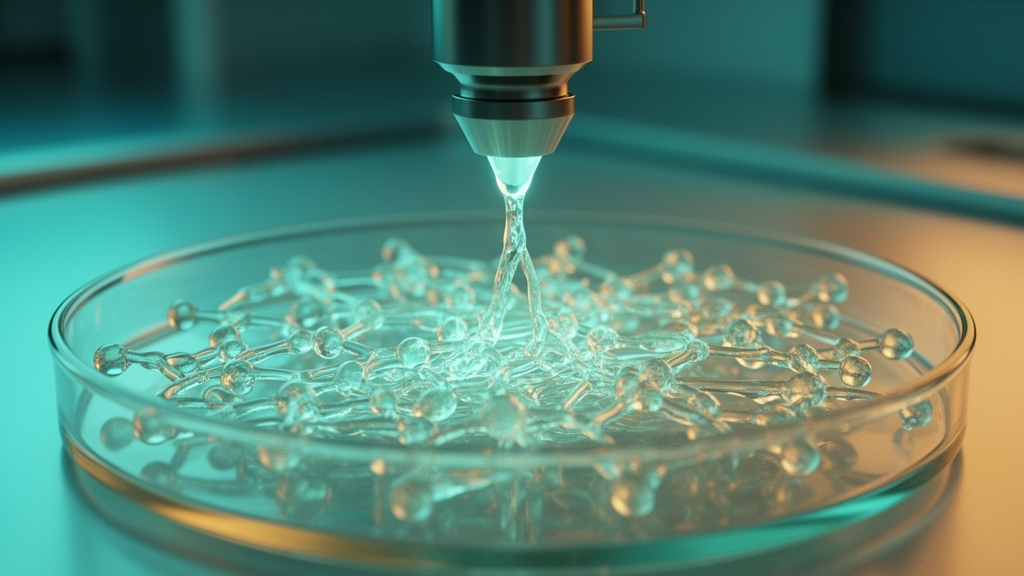
Chemical modification of polymers has emerged as a central approach to creating bioinks with tunable physicochemical and biological characteristics for tissue engineering and regenerative medicine applications. According to a review published in the Journal of Materials Science, functionalizing polymer networks enables researchers to tailor material properties to meet the precise technical requirements of bioprinting workflows. The authors synthesize recent advances showing how targeted chemical modifications directly enhance crosslinking efficiency, structural fidelity, mechanical stability, and rheological behavior during construct fabrication.

Special emphasis is placed on modifications that improve bioactivity. Such modifications include the incorporation of cell-adhesive ligands. They also include the incorporation of degradation-controlling moieties. The authors also highlight the development of stimuli-responsive polymers that introduce dynamic features into bioprinted systems, enabling constructs to actively adapt to environmental cues including pH variations, ambient temperature shifts, and light exposure.

To assess current bioprinting strategies, the review provides a comparative evaluation of widely adopted modified polymers, specifically focusing on gelatin methacrylate, alginate derivatives, and polyethylene glycol-based systems. This comparative analysis examines the distinct functional strengths and application-specific constraints of each chemical platform.

Despite significant technical progress, the authors report that translational hurdles persist in the widespread adoption of chemically modified bioinks. Practical deployment requires addressing fundamental biocompatibility issues, navigation of regulatory frameworks, and the establishment of scalable manufacturing processes for clinical applications. Looking forward, the review identifies machine learning-guided polymer design and smart material integration as key prospective methods to optimize polymer functionalization and advance patient-specific therapies.

Collectively, this work delivers a comprehensive overview tracing the evolution of polymer functionalization in bioprinting from foundational chemistry to intelligent bioinks.

Subject of Research: Chemical functionalization of polymers for advanced bioprinting bioinks

Article Title: Evolution of polymer functionalization in bioprinting: from foundational chemistry to intelligent bioinks

Article References: Farghaly, T. A., Masaret, G. S., Ebrahim, N. A. A., & Soliman, S. M. A. (2026). Evolution of polymer functionalization in bioprinting: from foundational chemistry to intelligent bioinks. Journal of Materials Science. https://doi.org/10.1007/s10853-026-14107-7

Image Credits: AI Generated

DOI: 10.1007/s10853-026-14107-7

Keywords: bioprinting, bioinks, polymer functionalization, tissue engineering, regenerative medicine, gelatin methacrylate, alginate derivatives, polyethylene glycol, stimuli-responsive polymers, crosslinking efficiency, rheological behavior, mechanical stability, biocompatibility, smart materials, materials science, cell-adhesive ligands

News Source: Gregory Coleman. (November 19, 2026). Review Explores Polymer Functionalization Advances for Tunable Bioinks in Bioprinting. Scienmag.


Tags: alginate derivativesbiocompatibilitybioinksbioprintingcell-adhesive ligandscrosslinking efficiencygelatin methacrylatematerials scienceMechanical stabilitypolyethylene glycolpolymer functionalizationRegenerative Medicinerheological behaviorsmart materialsstimuli-responsive polymersTissue Engineering
Share12Tweet7Share2ShareShareShare1

Related Posts

Soccer Soleplate Grooves and Conical Studs Reduce Lateral Foot Stress in Simulation

Soccer Soleplate Grooves and Conical Studs Reduce Lateral Foot Stress in Simulation

November 19, 2026
Dan M. Frangopol Awarded Sixth Honorary Doctorate by Luleå University of Technology

Dan M. Frangopol Awarded Sixth Honorary Doctorate by Luleå University of Technology

November 19, 2026

Open Weight AI Improves Biomedical Reproducibility but Requires Complete Computational Archiving

November 19, 2026

Step Channel Transistor Model Enables Sensitive Detection of Breast Cancer Cells

November 19, 2026

POPULAR NEWS

  • Study Reveals Outflow of Early-Career Japanese Pharmacists From Hospitals to Pharmacies

    Study Reveals Outflow of Early-Career Japanese Pharmacists From Hospitals to Pharmacies

    29 shares
    Share 12 Tweet 7
  • Mouse and Human Studies Show GATA2 Actively Maintains Müllerian Ducts

    29 shares
    Share 12 Tweet 7
  • Study Identifies Factors Linked to Women’s Health Decision Autonomy in Zambia

    29 shares
    Share 12 Tweet 7
  • Dual-Network Decomposition Model Improves Carbon Price Prediction Intervals Across Chinese Markets

    29 shares
    Share 12 Tweet 7

About

We bring you the latest biotechnology news from best research centers and universities around the world. Check our website.

Follow us

Recent News

Urogenital Microbiota Shifts Link to Cancer Progression and Immunotherapy Outcomes

Upadacitinib Modulates NLRP3 Inflammasome Signaling Through Incompletely Defined Molecular Mechanisms

South African Master of Public Health Degrees Transition Alumni into Health Leadership

Subscribe to Blog via Email

Enter your email address to subscribe to this blog and receive notifications of new posts by email.

Join 89 other subscribers
  • Contact Us

Bioengineer.org © Copyright 2023 All Rights Reserved.

Welcome Back!

Login to your account below

Forgotten Password?

Retrieve your password

Please enter your username or email address to reset your password.

Log In
No Result
View All Result
  • Homepages
    • Home Page 1
    • Home Page 2
  • News
  • National
  • Business
  • Health
  • Lifestyle
  • Science

Bioengineer.org © Copyright 2023 All Rights Reserved.