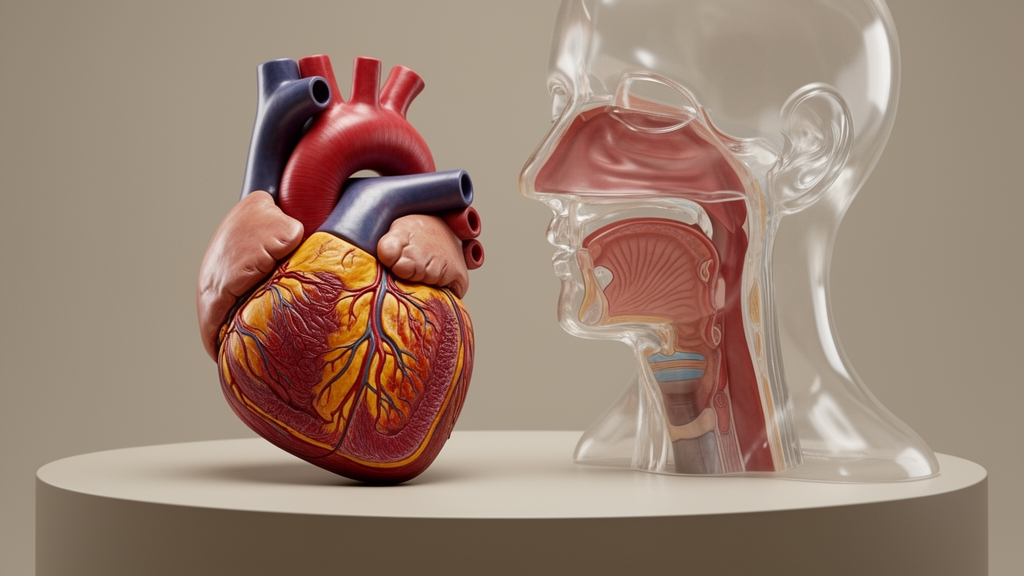
A narrative review published in Frontiers in Cardiovascular Medicine synthesizes clinical correlations and molecular crosstalk mechanisms through which obstructive sleep apnea may act as a biological amplifier of heart failure with preserved ejection fraction. The authors emphasize that while obstructive sleep apnea is firmly recognized as a partner in conditions such as hypertension, coronary artery disease, arrhythmia, and heart failure with reduced ejection fraction, its specific mechanistic relationship with preserved ejection fraction heart failure remains less defined. Rather than viewing airway obstruction as an incidental comorbidity, the authors evaluate how nocturnal mechanical stress, intermittent hypoxia, neurohumoral activation, and shared metabolic dysfunction converge to accelerate myocardial stiffening and diastolic impairment.
Heart failure with preserved ejection fraction represents a multifaceted syndrome characterized by classic heart failure symptoms and signs despite preserved left ventricular ejection fraction, frequently clustering with obesity, hypertension, diabetes, atrial fibrillation, and systemic inflammation. Concurrently, obstructive sleep apnea is marked by repeated upper-airway collapse during sleep, producing intermittent hypoxia, intrathoracic pressure swings, sleep fragmentation, and adrenergic surges. Symptoms common to heart failure with preserved ejection fraction, such as exertional dyspnea, exercise intolerance, poor sleep quality, and nocturnal breathing discomfort, often mask underlying sleep-disordered breathing, delaying targeted clinical evaluation and timely therapeutic consideration.
Epidemiological syntheses referenced in the review underscore a considerable comorbidity burden, with observational cohorts reporting an obstructive sleep apnea prevalence ranging between 37 percent and 79 percent among patients diagnosed with heart failure with preserved ejection fraction. In a notable echocardiographic sub-analysis of 1,097 participants from the PARAGON-HF trial, patient-reported sleep apnea correlated significantly with higher body mass index, atrial fibrillation, increased left ventricular mass index, abnormal biventricular strain, and elevated risks of heart failure hospitalization and cardiovascular death. However, that trial sub-analysis was limited by reliance on self-reported history rather than objective polysomnography. Similarly, meta-analytic evidence pooling observational cohorts demonstrated significant associations between sleep apnea and indices of diastolic dysfunction, including elevated E/e-prime ratios, increased left ventricular mass index, and larger left atrial volume index, though persistent confounding from age, hypertension, and obesity precludes definitive causal conclusions.
From a biomechanical standpoint, the generation of severe negative intrathoracic pressure against an occluded pharynx alters biventricular loading conditions on a nightly basis. These negative pressure swings markedly increase systemic venous return and right ventricular preload, which can displace the interventricular septum toward the left ventricle and impede left ventricular diastolic filling. Simultaneously, negative pleural pressure augments left ventricular transmural pressure, sharply increasing left ventricular afterload. Over extended intervals, the repetitive combination of augmented preload, elevated afterload, and impaired diastolic filling creates an adverse hemodynamic environment that promotes structural remodeling, elevates wall tension, and diminishes functional diastolic reserve, particularly in patients who carry underlying hypertension or elevated body mass index.
At the molecular level, chronic intermittent hypoxia functions as a cardinal driver of cellular injury through cycles of deoxygenation and reoxygenation that generate excessive reactive oxygen species. Pre-clinical experimental models demonstrate that oxidative stress inhibits prolyl hydroxylase domain protein 3 and stabilizes hypoxia-inducible factor 1-alpha, which in turn upregulates microRNA-210 to suppress electron transport chain activity and amplify oxidant production in a self-reinforcing hub. Experimental models show this signaling nexus disrupts intracellular calcium handling by downregulating sarcoplasmic or endoplasmic reticulum calcium ATPase 2a and destabilizing ryanodine receptor 2. Sarcoplasmic reticulum calcium leak and subsequent cytosolic calcium overload delay active cardiomyocyte relaxation and elevate passive cellular tension, directly mirroring the early pathophysiological alterations observed in human heart failure with preserved ejection fraction.
Hypoxia-responsive and inflammatory signaling cascades further drive structural cardiac remodeling by initiating cardiomyocyte hypertrophy, apoptosis, and interstitial fibrosis. Experimental rodent models indicate that stabilized hypoxia-inducible factor 1-alpha transactivates natriuretic peptide A and myosin heavy chain 7 expression while magnifying cellular sensitivity to angiotensin II, thereby stimulating concentric wall thickening. Concurrently, oxidative stress and hypoxia trigger endoplasmic reticulum stress cascades and mitochondrial calcium overload, prompting mitochondrial permeability transition pore opening and caspase activation. In parallel, nuclear factor kappa B activation and elevated transforming growth factor-beta-1 promote signaling through janus kinase 2, signal transducer and activator of transcription 3, thrombospondin 1, and Smad proteins in cardiac fibroblasts. This pathway stimulates alpha-smooth muscle actin-positive myofibroblast differentiation and dense collagen deposition, rendering the ventricular myocardium progressively non-compliant and stiff.
The review emphasizes systemic inflammation and neurohumoral hyperactivation as vital physiological bridges sustaining this comorbidity. Recurrent nocturnal airway collapse and repeated sleep fragmentation elevate circulating pro-inflammatory cytokines, including interleukin-1-beta, interleukin-6, tumor necrosis factor-alpha, and C-reactive protein. Persistent vascular and myocardial exposure to this inflammatory milieu degrades coronary microvascular endothelial function, limits nitric oxide bioavailability, and disrupts normal ventricular-arterial coupling. Concurrently, carotid chemoreceptor excitation and arousal-related stress provoke sustained daytime sympathetic outflow and renin-angiotensin-aldosterone axis stimulation. The resulting arterial vasoconstriction and neurohumoral fluid retention exacerbate resistant hypertension and vascular stiffness, perpetuating ventricular pressure overload and hastening the transition from subclinical diastolic dysfunction to overt heart failure.
Rather than treating obesity as a confounding variable, the authors conceptualize excess adiposity as a shared pathobiological substrate that actively promotes both conditions. Parapharyngeal fat deposition increases mechanical airway collapsibility, directly aggravating obstructive sleep apnea severity, while visceral and epicardial adiposity drives plasma volume expansion, pericardial restraint, and elevated filling pressures. Adipose tissue also generates chronic low-grade inflammation, insulin resistance, and lipotoxic cellular stress that accelerate myocardial remodeling. This profile overlaps extensively with the clinical phenotype observed in moderate-to-severe sleep apnea, indicating that metabolic dysfunction and mechanical obstruction mutually reinforce disease progression.
Regarding clinical evaluation, the authors outline distinct diagnostic markers across echocardiography, circulating biomarkers, and sleep architecture studies. Echocardiographic indices showing elevated E/e-prime ratios, increased left ventricular mass index, enlarged left atrial volume index, prolonged isovolumic relaxation time, and elevated pulmonary pressures provide valuable functional clues. The review notes that traditional reliance solely on the apnea-hypopnea index during polysomnography provides an incomplete assessment of cardiovascular vulnerability. Complementary metrics—including total sleep hypoxic burden, time spent with oxygen saturation below 90 percent, desaturation nadir, and respiratory arousal frequencies—offer enhanced insight into oxidative and neurohumoral stress. While current professional consensus guidelines, including the 2022 ACC, AHA, and HFSA heart failure guideline, support formal sleep evaluation when sleep-disordered breathing is clinically suspected, routine screening across all unselected patients is not currently recommended.
Therapeutic management in patients exhibiting both conditions requires a multifaceted, phenotype-guided strategy rather than isolated monotherapies. Positive airway pressure therapy remains the standard approach to eliminate upper-airway obstruction, effectively dampening nocturnal intrathoracic pressure swings, intermittent hypoxia, and sympathetic surges; nevertheless, robust trial evidence confirming that positive airway pressure alters the long-term clinical trajectory of heart failure with preserved ejection fraction remains limited. Interventions centered on weight reduction, structured exercise, lifestyle modification, and metabolic pharmacotherapy—such as glucagon-like peptide-1 receptor agonists—address the shared pathobiological substrate by diminishing upper-airway collapsibility, plasma volume, and systemic inflammatory activity. Concurrently, standard guideline-directed heart failure therapies, including sodium-glucose cotransporter-2 inhibitors and mineralocorticoid receptor antagonists, manage congestion and cardiometabolic strain, although dedicated randomized trials are still required to establish targeted treatments for the specific obstructive sleep apnea comorbidity.
Subject of Research: Pathophysiological links, clinical correlations, and therapeutic considerations connecting obstructive sleep apnea with heart failure with preserved ejection fraction progression
Article Title: Crosstalk mechanisms, clinical correlations and therapeutic implications linking OSA with HFpEF progression
Article References: Zhao, W., Xie, J., Lyu, T., & Zhong, Y. (2026). Crosstalk mechanisms, clinical correlations and therapeutic implications linking OSA with HFpEF progression. Frontiers in Cardiovascular Medicine, 13, Article 1879690. https://doi.org/10.3389/fcvm.2026.1879690
Image Credits: AI Generated
DOI: 10.3389/fcvm.2026.1879690
Keywords: obstructive sleep apnea, heart failure with preserved ejection fraction, chronic intermittent hypoxia, hypoxia-inducible factor 1-alpha, myocardial remodeling, diastolic dysfunction, systemic inflammation, ventricular stiffness, polysomnography, hypoxic burden, positive airway pressure, cardiometabolic disease, obesity, reactive oxygen species, calcium handling, sarcoplasmic reticulum
News Source: Ophelia Keating. (November 15, 2026). Review Examines How Obstructive Sleep Apnea May Accelerate HFpEF Progression. Scienmag.