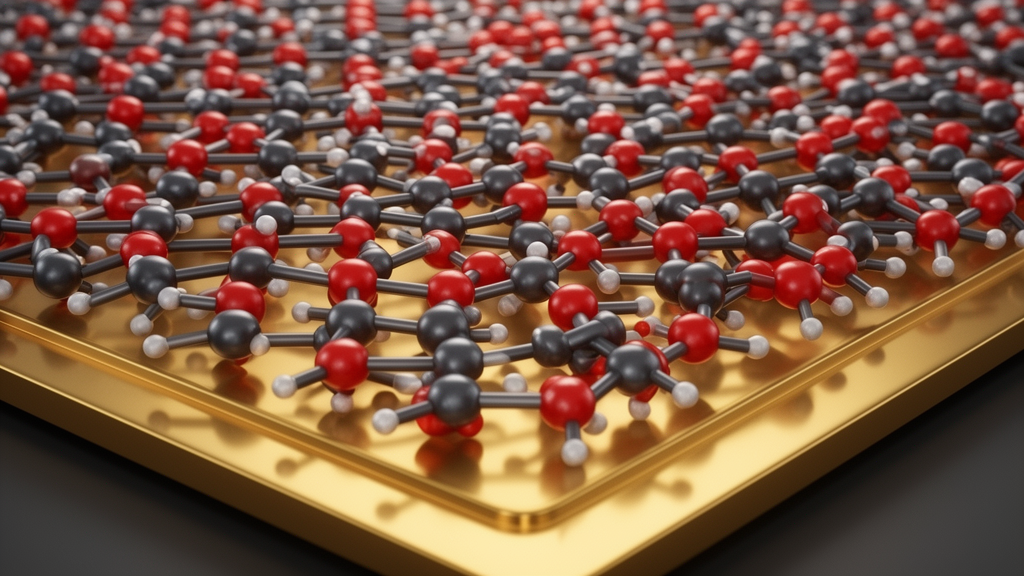
A new open-access review published in Discover Electronics provides a comprehensive analysis of N-alkylated diketopyrrolopyrrole (DPP)-based small molecules, focusing specifically on their application in organic field-effect transistors (OFETs) and photodetectors. The study, authored by Antim, Jyoti, Akshaya K. Palai, Vinod Kumar, and Amit Kumar, categorizes these organic semiconductors based on the specific type of N-alkyl side chain attached to the DPP core. By systematically examining linear, branched, and functional group-containing alkyl chains, the review highlights how structural modifications at the nitrogen position influence molecular packing, energy levels, and overall device performance. This detailed overview aims to guide the rational design of high-performance organic electronic materials for future technological applications.
Diketopyrrolopyrrole (DPP) cores have attracted significant attention in the field of organic electronics due to their advantageous physical and chemical properties. The DPP core is characterized by strong electron-withdrawing character, high planarity, excellent optoelectronic properties, and robust thermal stability. These features make DPP derivatives highly effective building blocks for synthesizing functional materials suitable for various electronic devices. The planar bicyclic lactam unit of the DPP core promotes strong intermolecular π-π interactions, which are critical for efficient charge transport in organic semiconductors. Consequently, DPPs have emerged as one of the most effective building blocks for developing high-performance materials in organic electronics.
N-alkylation is identified as a particularly effective synthetic strategy for tuning the properties of DPP-based molecules. By modifying the nitrogen position, researchers can adjust solubility, molecular packing, optical absorption, and semiconducting behavior. The review notes that while DPP exhibits excellent stability, its inherent poor solubility due to cross-conjugated N–H and carbonyl units limits its direct application. Functionalizing the nitrogen atom with alkyl chains overcomes this limitation, providing solution processability and enhanced electronic properties. This approach allows for the creation of diverse DPP derivatives with novel functions, making them suitable for low-temperature, large-area solution processing.
The synthesis of N-alkylated DPPs typically involves a two-step process. The first step utilizes the succinic method to synthesize the DPP core, a protocol known for its simple starting materials, moderate yields up to 85%, and wide-ranging substrate adaptability. The second step involves a nucleophilic substitution reaction between the DPP core and alkyl bromides or halides under basic conditions. Recent improvements to this synthesis, such as the use of cesium carbonate as a base and acetonitrile as a solvent, have enhanced the recovery of starting materials and simplified purification processes. These synthetic advancements have facilitated the production of a wide variety of N-alkylated DPP derivatives for experimental study.
In the context of organic field-effect transistors, the review categorizes DPP-based small molecules into three groups based on their side chains: linear, branched, and functional group-containing alkyl chains. For molecules with linear alkyl chains, studies have shown that these chains can enhance correlation lengths and reduce π–π stacking distances, thereby boosting charge transport. For instance, certain naphthalene-flanked DPP derivatives with octyl substituents demonstrated a hole mobility of 0.05 cm² V⁻¹ s⁻¹ in thin-film transistors, with single-crystal versions reaching up to 0.125 cm² V⁻¹ s⁻¹. This performance was attributed to favorable naphthalene–naphthalene interactions and backbone stacking enabled by the specific side-chain engineering.
Branched alkyl chains offer different advantages, primarily enhancing solubility and solution-processability by preventing severe aggregation in solution. However, the steric hindrance caused by branching can sometimes lead to a loss in crystallinity and an increase in π–π stacking distance, which may reduce charge-carrier mobility compared to linear counterparts. The position of branching is also a critical factor; branching away from the DPP core can maintain effective molecular packing while retaining sufficient solubility. Some studies have reported that specific branched chains, such as 2-ethylhexyl groups, can induce favorable packing and highly crystalline layers, leading to high hole mobilities in OFET devices.
The integration of functional groups into alkyl chains represents another significant area of molecular design. These functionalized side chains can introduce non-covalent interactions, such as hydrogen bonding and dipole–dipole interactions, which enhance molecular ordering and self-assembly. For example, siloxane-terminated side chains have been shown to produce highly ordered microstructures by enhancing intergrain connection and promoting favorable 2D edge-on molecular orientation. In one study, an OFET based on a siloxane-functionalized DPP derivative achieved an electron mobility of 1.59 × 10⁻¹ cm² V⁻¹ s⁻¹ and an on/off ratio greater than 10⁵. These findings underscore the importance of balancing solubility, molecular packing, and intermolecular interactions in the design of high-performance OFET materials.
Beyond transistors, DPP-based small molecules are also being explored for their potential in organic photodetectors. The review highlights that DPPs are suitable for photodetection due to their ability to promote charge transfer and broad light absorption into the near-infrared spectrum. One notable example is a selenophene-flanked DPP derivative that exhibited a broad absorption onset up to 1120 nm and an optical bandgap of 1.11 eV. This narrow bandgap, comparable to that of silicon, allows for effective spectral response in the 300–1100 nm range. The use of doping compensation techniques in these devices has helped reduce trap density, leading to a specific detectivity of 10¹² Jones in the 410–1030 nm wavelength range.
Hybrid systems that combine DPP-based molecular semiconductors with other materials, such as graphene, have also shown promising results. Functionalizing graphene with DPP derivatives facilitates interfacial charge transfer, which is confirmed by time-resolved fluorescence data. In one study, visible-light photodetectors based on DPP60/reduced graphene oxide hybrids demonstrated a photoresponsivity of 34.2 A/W and an on/off ratio of 282. The 2D graphene serves as an electron mediator, promoting electron transport and providing a support framework for the sensitizer molecules. These hybrid architectures offer a pathway to overcome some of the limitations of purely organic photodetectors, such as lower charge mobility and stability issues.
The review also discusses the impact of processing conditions and molecular morphology on device performance. For instance, the use of solution-shearing techniques can significantly improve the crystallinity of DPP thin films, leading to enhanced OFET performance. In one case, shear-coated films of a DPP-based semiconductor exhibited a mobility of 0.26 cm² V⁻¹ s⁻¹ and a current on-off ratio of 10⁶. The correlation between film morphology, such as grain size and crystallinity, and electrical properties highlights the importance of microstructural control in optimizing the performance of organic electronic devices.
Despite the progress in OFET applications, the review notes that DPP-based photodetectors are still not as extensively studied as their transistor counterparts. The current literature indicates that only a small variety of alkyl chains have been investigated for photodetector applications, with most research focusing on widely used linear or branched alkyl groups. There is a need for more systematic studies on the influence of different side chains on photodetector performance. The review suggests that future research should focus on designing N-alkylated DPP-based small molecules with functional side chains that contribute to well-ordered molecular packing without compromising solubility.
Future perspectives include the development of self-powered DPP-based hybrid organic–inorganic heterojunction devices. These devices could offer enhanced stability, sensitivity, and practical utility for next-generation photodetectors. The integration of DPP-based molecular semiconductors in both organic and hybrid photodetectors is seen as a promising avenue for research. Additionally, the pursuit of single molecules that exhibit high performance in multiple device applications, such as both OFETs and photodetectors, remains an unexploited but robust challenge for the field.
The review concludes that side-chain engineering, molecular packing, and processing conditions have a significant impact on the charge transport properties of DPP-based thin films. Alkyl chain length and thermal annealing play crucial roles in determining thin-film morphology and, consequently, charge mobility. By providing a thorough analysis of the structure-property-performance relationships, this review serves as a valuable reference for researchers working on DPP-based materials. It offers guidance for the rational design of high-performance organic electronic materials, aiming to bridge the gap between synthetic development and practical device application.
Subject of Research: N-alkylated diketopyrrolopyrrole (DPP)-based small molecules for photodetector and organic-field-effect-transistor applications
Article Title: N-alkylated diketopyrrolopyrrole (DPP)-based small molecules for photodetector and organic-field-effect-transistor applications
Article References: Antim, Jyoti, Palai, A. K., Kumar, V., & Kumar, A. (2026). N-alkylated diketopyrrolopyrrole (DPP)-based small molecules for photodetector and organic-field-effect-transistor applications. Discover Electronics, 3(1), Article 110. https://doi.org/10.1007/s44291-026-00262-3
Image Credits: AI Generated
DOI: 10.1007/s44291-026-00262-3
Keywords: N-alkylated, diketopyrrolopyrrole, based, small, molecules, photodetector, organic-field-effect-transistor, applications
News Source: Denise Maddox. (November 13, 2026). Review details N-alkylated DPP molecules for organic electronics. Scienmag.