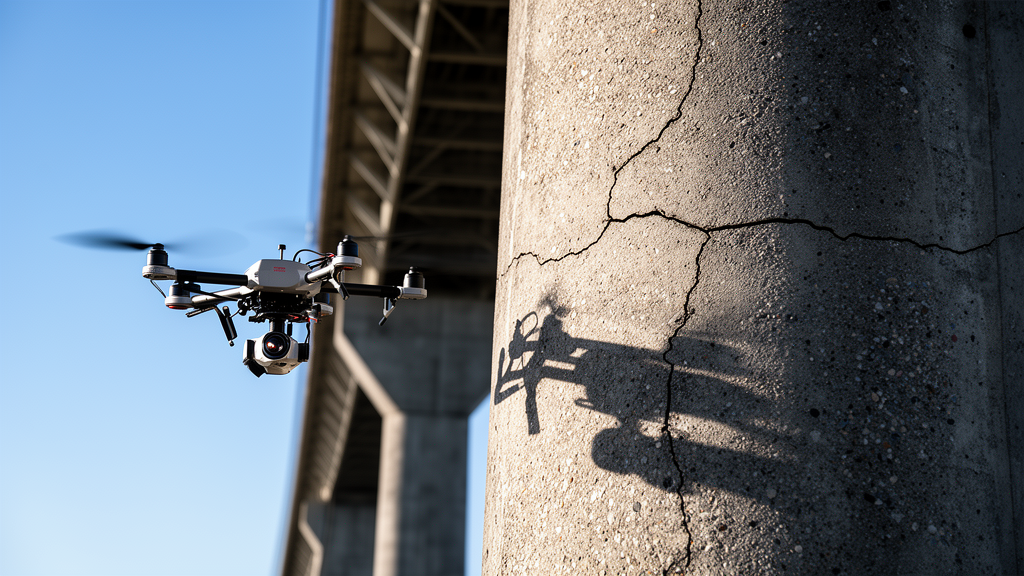
A focused review published in Discover Civil Engineering synthesizes findings from 27 representative studies to examine recent advancements in deep learning and computer vision for detecting and measuring cracks in concrete structures. The paper, authored by Amir Mohammad, Zamanzade Nasrabadi, and Alireza Mirjalili, highlights a significant technological shift from traditional manual inspections to automated, non-destructive evaluation techniques. Concrete cracking is a prevalent indicator of structural deterioration, posing risks to the safety and longevity of civil infrastructure such as bridges, tunnels, and high-rise buildings. The review categorizes methodologies into image classification, real-time object detection, and pixel-level semantic segmentation, while also addressing the translation of pixel-based detections into physical measurements using laser calibration and RGB-D cameras.
The selection of the 27 core studies was expert-driven and narrative in nature, rather than a fully systematic protocol such as PRISMA. The literature search was conducted across major academic databases, including IEEE Xplore, Scopus, ScienceDirect, and MDPI, using keywords related to concrete crack detection, deep learning, and semantic segmentation. The search was limited to peer-reviewed articles and conference proceedings published between 2016 and 2026, with a primary emphasis on studies from 2020 onward to capture the most recent advances. This approach resulted in a representative, non-exhaustive sample of the field, intended to provide a broad qualitative positioning of each approach rather than an exhaustive census of the literature.
Historically, crack detection relied on manual visual inspections by trained engineers, a method that is subjective, time-consuming, and prone to human error. Early automated methods used traditional image processing techniques, such as Canny edge detection and Sobel filters, which are computationally lightweight but highly sensitive to environmental variations like shadows and uneven lighting. The advent of deep learning, particularly Convolutional Neural Networks (CNNs), marked a paradigm shift by allowing models to automatically learn discriminative features directly from raw image data. A bibliometric review cited in the paper noted that 67% of studies published between 2010 and 2020 employed machine learning methods, with CNNs identified as the single most dominant model across the reviewed work.
Image classification determines the presence or absence of a crack within an image patch, often utilizing transfer learning to fine-tune pre-trained models like VGG, ResNet, and Inception. One foundational study by Cha et al. designed a custom CNN trained on 40,000 images, achieving a consistent 97% accuracy on large-scale test images taken from a structurally different building under uncontrolled conditions. This work established that a minimum of 10,000 annotated images is required to train a robust CNN classifier. More recently, a systematic comparative evaluation found that EfficientNetV2 emerged as the top performer with 99.6% accuracy and a perfect recall of 1.0, achieving this with only 25.7 million parameters, considerably fewer than VGG19’s 143 million.
For practical field applications, particularly those involving Unmanned Aerial Vehicles (UAVs), real-time object detection is required. Single-stage detectors, such as the YOLO series, have become the standard due to their speed-accuracy balance. A proposed lightweight, improved YOLOv4 model replaced standard convolutions with separable convolutions to reduce parameter count, enabling real-time detection on embedded edge devices. Another architecture, YOLOv8-CD, integrated a Large Separable Kernel Attention module and Ghost module, reducing computational complexity by 3.6% while increasing mean Average Precision by up to 15.2% and achieving 88 frames per second.
Semantic segmentation classifies every individual pixel as either crack or background, providing the precise crack morphology needed for quantitative analysis. The U-Net architecture dominates this space, with studies integrating pre-trained encoders like ResNet-101 and EfficientNet-B3 to achieve F1-scores over 0.91. A comparison between Mask R-CNN and U-Net found that U-Net provided superior pixel-level accuracy and was substantially faster, operating at 44 frames per second compared to 1.4 frames per second for Mask R-CNN. However, Mask R-CNN excelled at detecting very thin cracks, highlighting the trade-offs between speed and fine-grained detection capabilities in different architectural designs.
A critical limitation of most deep learning models is that they output crack dimensions in pixels rather than physical units. To address this, researchers have developed methods to translate pixel-based detections into millimeter-scale measurements. One approach combines CNN classification, U-Net segmentation, and laser calibration, achieving a mean absolute error of only 0.16 mm. This calibration step projects a known laser-line reference onto the imaged surface, allowing the pixel-to-millimeter conversion ratio to be computed directly. Another method uses a Red-Green-Blue-Depth camera system with sub-pixel ridge detection, achieving a repeatability standard deviation of 0.01 mm without requiring a separate calibration target.
Despite these advances, several critical challenges remain unresolved. Domain generalization is a fundamental obstacle, as models trained on clean, laboratory datasets often suffer a severe drop in performance when deployed in real-world environments with different concrete textures and lighting. Data imbalance is another significant issue, as crack pixels constitute a tiny fraction of total pixels, biasing models toward the background. Environmental noise, including shadows, water ponding, and surface roughness, continues to cause false positives. The CrackVision framework documented that complex textured backgrounds caused false positive rates to rise to 8.7% under standard conditions, a figure that increased further under extreme lighting angles.
Computational constraints also limit the deployment of high-accuracy models on edge devices or UAVs. While traditional Canny edge detection achieves inference in just 1.5 ms per image, it lacks accuracy and robustness. In contrast, ResNet50 requires 9.6 ms per image but achieves 99.95% accuracy. The trade-off between accuracy and computational cost is evident in the parameter counts of different architectures, with lightweight models like EfficientNetV2 offering a more viable candidate for resource-constrained platforms. This trend suggests that carefully designed lightweight architectures can match or exceed the accuracy of substantially larger models while requiring a fraction of the parameters.
The review identifies several future directions for research, including the exploration of hybrid CNN-Transformer architectures to better capture long-range dependencies and complex crack topologies. Semi-supervised learning is seen as a way to reduce reliance on extensive pixel-level annotation by leveraging self-supervised techniques. Multi-modal sensor fusion, combining RGB imagery with depth, thermal, or acoustic data, is proposed to detect subsurface defects and address the persistent environmental-noise false positives documented in the reviewed studies. Additionally, the optimization of lightweight models for seamless integration with autonomous drones and Building Information Modeling frameworks represents a promising trajectory for the next generation of structural health monitoring.
The synthesis of the 27 reviewed studies confirms that deep learning has increasingly become a dominant approach in automated concrete crack detection. However, the headline accuracy figures reported on curated benchmarks should be interpreted with caution when extrapolating to field readiness. Most of these figures were obtained under closed-set evaluation on datasets that share similar acquisition conditions with the training data. The choice of methodological category is not simply a matter of which model achieves the highest accuracy, but of which output format matches the intended use, whether it be rapid triage, real-time screening, or precise morphological analysis.
The persistent gap between pixel-based detection and engineering-relevant, physical measurement remains an under-explored area where further methodological development could yield disproportionate practical benefit. Only a small subset of the reviewed studies translate detections into calibrated millimeter-scale measurements, despite this being the information structural engineers ultimately need to assess crack severity against code-based thresholds. The absence of standardized evaluation protocols and diverse, publicly available benchmark datasets further complicates direct comparison across studies, as each work tends to report results on different, often proprietary datasets under varying conditions.
Looking ahead, the convergence of Vision Transformers, semi-supervised learning, multi-modal sensor fusion, and edge AI represents the most promising research trajectory. Systems that integrate visual crack detection with structural models, digital twins, and autonomous inspection platforms will define the next generation of structural health monitoring. This evolution aims to enable proactive, data-driven maintenance of civil infrastructure at a scale and reliability that manual inspection can never achieve, bridging the gap between computer vision research and practical structural engineering applications.
Subject of Research: Deep learning and computer vision applications in concrete crack detection and measurement
Article Title: A focused review of recent advances in deep learning and computer vision for concrete crack detection and measurement
Article References: Mohammad, A., Nasrabadi, Z., & Mirjalili, A. (2026). A focused review of recent advances in deep learning and computer vision for concrete crack detection and measurement. Discover Civil Engineering, 3(1), Article 230. https://doi.org/10.1007/s44290-026-00618-4
Image Credits: AI Generated
DOI: 10.1007/s44290-026-00618-4
Keywords: concrete crack detection, deep learning, computer vision, structural health monitoring, semantic segmentation, object detection, transfer learning, U-Net, YOLO, EfficientNet, ResNet, laser calibration, RGB-D cameras, edge computing, UAV inspection, data imbalance, domain generalization, crack measurement, non-destructive evaluation, civil infrastructure
News Source: Blake Davidson. (November 13, 2026). Review: Deep Learning Advances in Concrete Crack Detection. Scienmag.