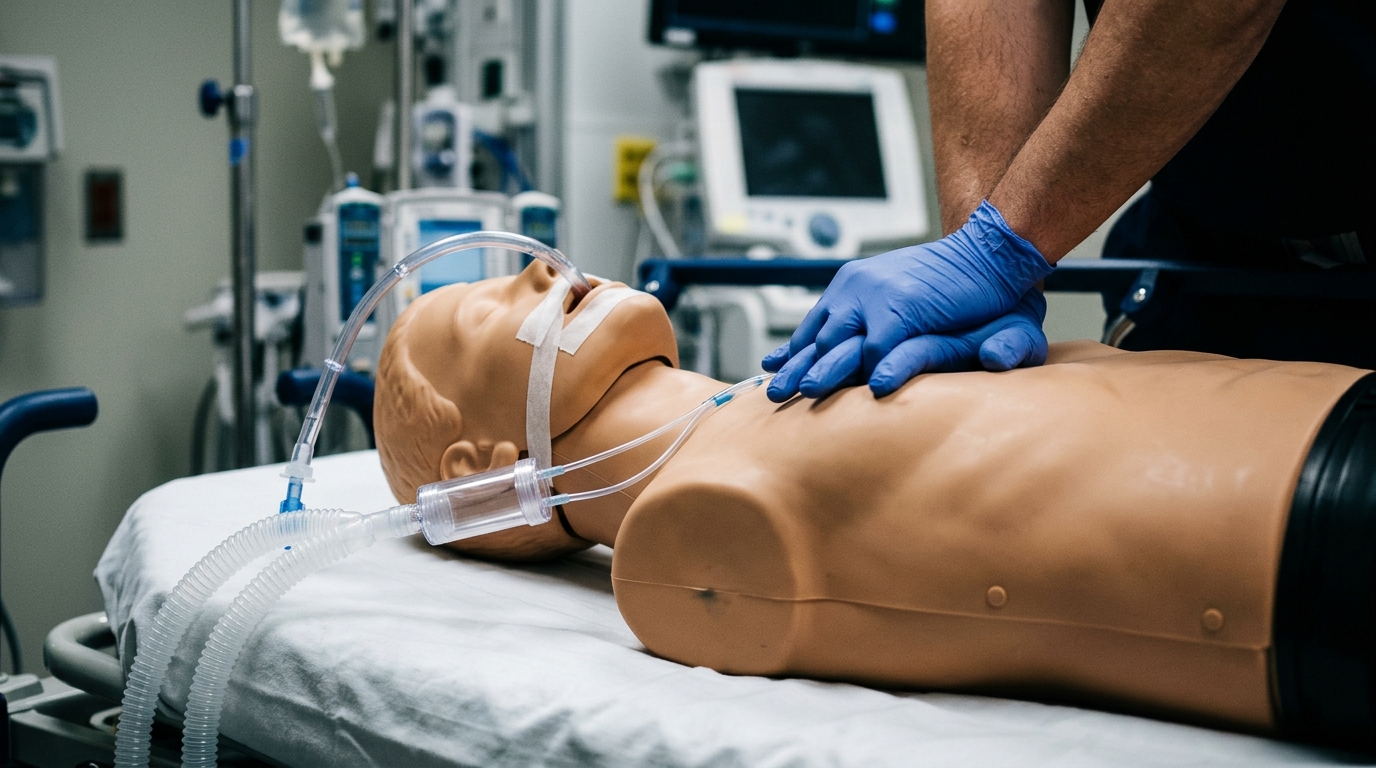
In a correspondence published in Resuscitation Plus, researchers examined the methodological challenges of evaluating airflow-based ventilation feedback devices during cardiopulmonary resuscitation. Analyzing recent experimental evaluations by Orlob and colleagues as well as Duchatelet and colleagues, the authors highlighted that compression-induced reverse airflow can disrupt airflow-based breath detection systems. This mechanical interference produces abnormal ventilation rates and distorted tidal volume measurements during testing. Because device performance depends on the instrument itself, users, and the clinical environment, validation should progressively reproduce intended conditions as closely as feasible. These experimental findings raise essential methodological considerations regarding simulated testing conditions, the comparability of performance across different feedback devices, and the selection of experimental models.
A primary methodological consideration centers on the operational testing conditions and how closely they mimic clinical manual ventilation. The authors pointed out that the EOlife ventilation feedback device is specifically designed to monitor manual ventilation during resuscitation efforts. However, in the experimental evaluation conducted by Orlob and colleagues, testing was performed using an intensive care unit mechanical ventilator set to 1.5 seconds of inflation, a 1.5-second inspiratory hold, and 3 seconds of expiration. In contrast, clinical guidelines for manual bag ventilation recommend an inflation time of approximately 1 second and specify no inspiratory hold. Extending the inspiratory phase exposes each individual breath to a greater number of chest compressions, which potentially generates reverse airflow and causes breath fragmentation.
The consequences of these ventilator settings were evident in experimental data from animal testing. In a manually ventilated animal subject, inspiratory tidal volume and ventilation rate remained within prespecified acceptable limits, whereas expiratory volume measurements did not. The authors noted that this discrepancy between inspiratory and expiratory measurements under differing ventilation mechanics likely contributes to divergence between feedback device outputs and reference measurements. Consequently, researchers must account for these technical differences when attempting to extrapolate findings gathered from mechanical ventilators to real-world manual ventilation scenarios.
A second major issue involves the parallel comparison of different ventilation feedback devices that belong to the same broad functional category. The authors observed that devices within this category frequently identify and quantify entirely different respiratory metrics. For example, in the study by Duchatelet and colleagues, breath-by-breath pairing could be achieved for the AccuVent device, but breath-by-breath pairing was not possible for the EOlife X device. Furthermore, EOlife X records and reports expiratory tidal volume, whereas AccuVent and the study reference standard evaluate inspiratory metrics. The authors explained that directly comparing devices that measure fundamentally different quantities—particularly when ventilation events and tidal volume metrics are defined inconsistently—complicates both the interpretation and comparative assessment of device performance.
The choice of experimental models represents a third critical methodological limitation in the existing literature. Both evaluated studies analyzed EOlife X, which is a training device designed specifically for use on manikins, rather than the clinical EOlife device developed for medical use in adult cardiac arrest. The authors emphasized that manikin respiratory mechanics vary substantially across models and can directly alter measured ventilation values. Although consistent observations across manikin and porcine models confirm that compression-induced airflow disruption occurs under experimental conditions, this concordance does not demonstrate that such findings generalize to the clinical EOlife device or to human patients experiencing cardiac arrest.
The authors further clarified that the physical magnitude and characteristics of compression-induced airflow depend directly on the specific mechanics of the respiratory system and the chest wall. Because synthetic manikins and animal subjects differ mechanically from human patients, clinical evaluation during actual cardiac arrest resuscitation is necessary to establish whether the performance patterns observed in laboratory and animal models translate to real clinical practice. To overcome these experimental limitations, future investigations should evaluate the actual medical devices intended for clinical use, simulate relevant physiological and technical conditions, and establish unambiguous definitions for ventilation events and reference tidal-volume metrics.
While acknowledging the contributions of Orlob and colleagues and Duchatelet and colleagues in highlighting the importance of verifying device accuracy, the authors underscored that device evaluation remains methodologically complex. Distinguishing true device capabilities from artifacts introduced by experimental ventilator parameters, manikin mechanics, or disparate measurement definitions is essential for fair appraisal. In competing interest disclosures, Professor Abdo Khoury was noted as a medical advisor for Archeon Medical and an inventor involved in developing EOlife, while the other authors reported no conflicts of interest.
Subject of Research: Methodological considerations in evaluating airflow-based ventilation feedback devices during cardiopulmonary resuscitation
Article Title: Methodological considerations in the evaluation of ventilation feedback devices
Article References: Khoury, A., Daya, M., Böttiger, B. W., Neth, M., Debaty, G., & Pretalli, J.-B. (2026). Methodological considerations in the evaluation of ventilation feedback devices. Resuscitation Plus, 32, Article 101537. https://doi.org/10.1016/j.resplu.2026.101537
Image Credits: AI Generated
DOI: 10.1016/j.resplu.2026.101537
Keywords: ventilation feedback devices, cardiopulmonary resuscitation, reverse airflow, chest compressions, breath detection, tidal volume, ventilation rate, EOlife, EOlife X, AccuVent, ICU ventilator, manual bag ventilation, manikin models, porcine models, respiratory mechanics, inspiratory hold, expiratory volume, cardiac arrest
News Source: Ophelia Keating. (November 23, 2026). Reverse Airflow From Chest Compressions Disrupts Ventilation Feedback in CPR Models. Scienmag.