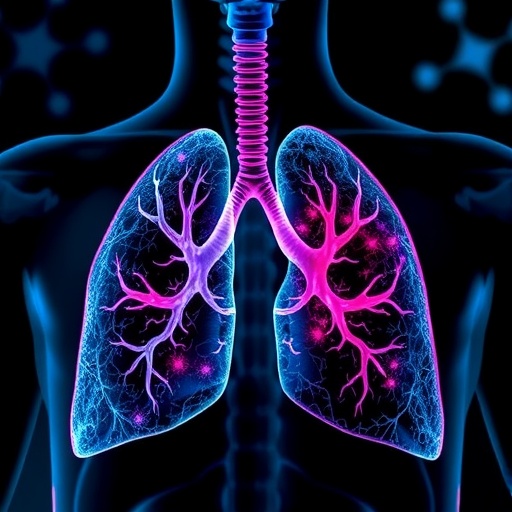
In recent years, the pervasive use of plastic materials has led to escalating environmental contamination, particularly from microplastics and nanoplastics. Among these, nanoplastics—particles smaller than 100 nanometers—pose a unique and insidious threat due to their minuscule size, which enables deep penetration into the human respiratory system. These tiny particles can remain airborne for extended periods and disperse widely, heightening the risk of inhalation and accumulation in lung tissue. Despite increasing awareness of their presence and biological impact, the precise molecular mechanisms through which nanoplastics weather pulmonary damage have remained elusive. Addressing this critical knowledge gap, a recent comprehensive investigation sheds light on the intricate physiological responses initiated by polystyrene nanoplastics (PS NPs), unraveling a hierarchical oxidative stress pathway that underpins acute and subacute lung injury.
The study utilized a multi-tiered experimental framework, combining in vitro analyses of human bronchial epithelial cells (BEAS-2B) and mouse macrophages (RAW 264.7) with in vivo mouse models (Balb/c strain) to elucidate the cellular and systemic repercussions of PS NP exposure. Through meticulous observation and biochemical assays, researchers identified a succession of oxidative stress events triggered by PS NPs, revealing how escalating reactive oxygen species (ROS) generation orchestrates a cascade of defensive and destructive cellular processes. This hierarchical oxidative stress model is structured in three distinct but interrelated tiers, each reflecting a stage of cellular reaction to nanoplastic-induced injuries and illuminating their pathophysiological consequences.
At the initial tier, exposure to PS NPs elevates intracellular ROS, disrupting the delicate redox equilibrium fundamental to cellular health. In response, cells engage antioxidant defense mechanisms principally orchestrated by the transcription factor Nrf2 (nuclear factor erythroid 2-related factor 2). Activation of Nrf2 then induces expression of various cytoprotective genes, notably the heme oxygenase-1 (HO-1) enzyme, which undertakes a critical role in neutralizing oxidative insults. This adaptive response aims to re-establish redox homeostasis, mitigating early damage and preserving cellular function. However, the efficacy of this antioxidant shield is dose-dependent and vulnerable to overload.
Progressing to the second tier, increased PS NP concentrations precipitate an overwhelming ROS burden that the antioxidant systems cannot fully counteract. Excessive ROS initiates pro-inflammatory signaling cascades, exemplified by activation of nuclear factor-kappa B (NF-κB) and other transcriptional regulators driving cytokine production. Key inflammatory mediators such as interleukin-6 (IL-6) and tumor necrosis factor-alpha (TNF-α) are released abundantly, promoting infiltration of immune cells and amplification of local inflammation. This shift toward an inflammatory phenotype exacerbates tissue injury and heralds the transition from cellular defense toward pathological damage.
The third tier embodies the culmination of sustained oxidative stress and inflammation, manifesting as mitochondrial dysfunction and cellular toxicity. Mitochondria, vital for energy metabolism and apoptotic regulation, exhibit impaired membrane potential and compromised respiratory efficiency under persistent ROS assault. These dysfunctions trigger intrinsic apoptotic pathways, culminating in programmed cell death. The loss of epithelial and immune cell populations within pulmonary tissue undermines lung integrity and function, potentially escalating to fibrosis and chronic respiratory disorders. Experimental validation in vivo demonstrated dense inflammatory cell infiltration within lung parenchyma and increased collagen deposition, hallmark features signaling early lung damage and fibrosis onset.
A striking aspect of this investigation lies in its integration of cellular oxidative stress responses with systemic pulmonary pathology, offering a holistic view of nanoplastic toxicity. The hierarchical oxidative stress framework elegantly contextualizes how exposure severity modulates the cellular milieu—from adaptive antioxidant responses to irreparable tissue injury—providing a mechanistic continuum that reconciles disparate findings in nanoplastic research. This model not only advances fundamental knowledge but also has profound implications for public health and environmental safety, especially amid escalating plastic pollution and urban air contamination.
The implications of PS NP-induced pulmonary toxicity extend beyond laboratory observations, underscoring the urgent need for surveillance and preventive strategies. Populations exposed chronically to plastic-laden environments, including industrial workers and residents in heavily polluted urban areas, face elevated respiratory health risks. Vulnerable groups such as children, the elderly, and individuals with pre-existing respiratory conditions may suffer exacerbated effects. Hence, regular pulmonary health monitoring and mitigation efforts to reduce nanoplastic exposure emerge as critical public health imperatives.
Looking forward, the research community is prompted to broaden the scope beyond polystyrene nanoplastics and examine other prevalent nanoplastic types such as polypropylene and polyethylene. Comparative studies are essential to decipher both shared and unique toxicological signatures among these polymers, as their differing physicochemical properties may influence cellular uptake, ROS generation, and inflammatory potential. Establishing a comprehensive toxicity profile for diverse nanoplastics will enable the development of standardized risk assessment protocols and inform regulatory policies targeting environmental pollutants.
Furthermore, future studies may benefit from exploring molecular interventions that reinforce antioxidant defenses or inhibit pro-inflammatory mediators activated by nanoplastics. Therapeutic strategies enhancing Nrf2 signaling or mitochondrial resilience could offer protective avenues to attenuate pulmonary damage. Additionally, refining detection technologies for airborne nanoplastics and improving exposure quantification will enhance epidemiological assessments, facilitating early intervention and policy formulation.
This pioneering research constitutes a significant stride in unveiling the molecular underpinnings of nanoplastic-induced lung injury, establishing hierarchical oxidative stress as a unifying pathogenic mechanism. Its rigorous methodology and translational relevance position it as a foundational reference for future inquiries and underline the pressing necessity to address plastic pollution from both environmental and health perspectives. The findings resonate as a clarion call, advocating for intensified research, public awareness, and proactive measures to safeguard respiratory health against this evolving environmental hazard.
As we continue to grapple with the myriad consequences of our plastic-dependent society, understanding the nuanced interplay between nanoplastics and biological systems becomes paramount. This study not only elucidates a critical pathway of injury but also frames a cautionary narrative about the long-term human health implications of environmental nanoplastic exposure. The integration of cellular biology, toxicology, and environmental science showcased here exemplifies the multidisciplinary efforts required to confront such complex challenges, forging a path toward sustainable and health-conscious solutions for a polluted world.
In sum, the hierarchical oxidative stress mechanism delineated in this research offers a detailed biochemical and pathophysiological depiction of how inhaled polystyrene nanoplastics inflict pulmonary harm. It spotlights the delicate balance between cellular defense and damage, governed by ROS dynamics, pro-inflammatory signaling, and mitochondrial function. This mechanistic clarity paves the way for innovative research trajectories, enhanced public health frameworks, and informed environmental governance poised to mitigate the risks posed by the escalating presence of nanoplastics in the atmosphere.
Subject of Research: Not applicable
Article Title: Unveiling the Pulmonary Toxicity of Polystyrene Nanoplastics: A Hierarchical Oxidative Stress Mechanism Driving Acute–Subacute Lung Injury
News Publication Date: 24-Nov-2025
Web References: http://dx.doi.org/10.34133/research.0995
Image Credits: Copyright © 2025 Xianyi Tang et al.
Keywords
Polystyrene nanoplastics, pulmonary toxicity, oxidative stress, reactive oxygen species, Nrf2, inflammation, cytokines, mitochondrial dysfunction, apoptosis, lung injury, environmental pollution, nanoplastic inhalation
Tags: acute vs subacute pulmonary injury mechanismscellular responses to polystyrene exposurecomprehensive investigation of nanoplastic toxicityenvironmental impact of microplasticsin vitro studies on lung cellsinhalation of nanoplastics effectsmouse models for lung injury researchnanoplastics and human health risksoxidative stress pathway in pulmonary injurypolystyrene nanoplastics lung damagereactive oxygen species and lung healthrespiratory system contamination by nanoplastics