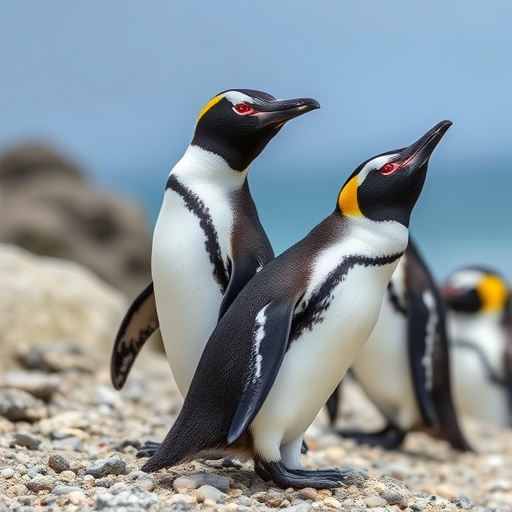
Recent scientific investigations have shed light on the complex genetic population structure of the endangered northern rockhopper penguin, scientifically known as Eudyptes moseleyi. This species, which currently faces significant threats to its survival, inhabits various islands scattered across the Southern Atlantic and Indian Oceans. The research, led by notable scientists including Ritchie-Parker, Ball, and Glass, has provided groundbreaking insights into the genetic diversity and population dynamics of these remarkable birds.
The northern rockhopper penguin is known for its distinctive appearance, characterized by its sparse, spiky crests and robust stature. Found primarily on sub-Antarctic islands, these penguins have undergone considerable population decline due to various human-induced factors such as climate change, habitat destruction, and overfishing. This latest study emphasizes the critical importance of understanding their genetic makeup to formulate effective conservation strategies.
In their thorough examination of the population structure, the researchers employed advanced genetic techniques, including genotyping and whole-genome sequencing, to assess the genetic variation among different populations of the northern rockhopper penguin. These methodologies enabled them to uncover previously hidden connections and divergences between populations residing on distinct islands. This research is not only vital for conservation efforts but also serves as a valuable case study for the genetic study of avian species facing extinction.
The findings indicate that the northern rockhopper penguin displays substantial genetic differentiation across its range. The study revealed that geographical barriers play a significant role in isolating populations, leading to varying genetic adaptations in response to their unique environments. This genetic structuring is pivotal for understanding how these penguins might respond to future environmental changes and offers insight into their evolutionary history.
One of the most striking discoveries of this research was the identification of distinct genetic clusters among populations separated by relatively short distances. Such genetic isolation may be exacerbated by the increasing threats posed by climate change, which alters the penguins’ habitat and food sources. Understanding these genetic relationships is essential for prioritizing conservation efforts and ensuring genetic diversity within the species as a whole.
Moreover, the implications of this research extend beyond the rockhopper penguin. The methodologies and findings could offer a template for studying other endangered avian species facing similar threats. By employing genetic analysis as a conservation tool, scientists can begin to tailor specific strategies to protect not only the northern rockhopper penguin but also other birds at risk of extinction.
The significance of this research cannot be overstated. With the latest data, conservationists are now equipped with the necessary information to develop more targeted and effective management plans. These plans could involve habitat protection, captive breeding programs, and enhanced monitoring of population health, all aimed at stabilizing and boosting the numbers of the northern rockhopper penguin. The public’s involvement along with government policies supporting conservation initiatives will be crucial in these efforts.
Equally important is the study’s contribution to ecological understanding. The genetic variability within populations tells a story about resilience and adaptability, key elements necessary for the survival of any species in a rapidly changing world. Insights gleaned from this research underscore the necessity for ongoing monitoring and research as environmental conditions continue to evolve.
In conclusion, the research on the northern rockhopper penguin emerges as a beacon of hope in the realm of conservation biology. By focusing on genetic population structures, this study not only delineates immediate concerns but also illuminates pathways for sustainable species recovery. Collaborative efforts among scientists, conservationists, and policymakers will be essential in ensuring that the northern rockhopper penguin and other endangered species can thrive once again in their natural habitats.
As scientists dive deeper into the genetic intricacies of the northern rockhopper penguin, what remains clear is that the knowledge acquired from such studies equips humanity to make informed decisions. Enlightened choices will pave the way for a more harmonious coexistence with the avian species that share our planet, securing their legacies for generations to come.
The continued survival of the northern rockhopper penguin is not just about preserving a single species; it is a reflection of a broader commitment to biodiversity and ecological balance. Each step taken in research and conservation adds up to a larger narrative—one that champions the plight and survival of endangered species globally. As we advance, it becomes imperative to maintain this momentum, leveraging scientific insights to foster a sustainable future for wildlife and humanity alike.
In summary, these groundbreaking findings make a compelling case for urgent action in conservation. With the unique genetic landscape of the northern rockhopper penguin now unveiled, there is an opportunity like never before to engage the public in conservation narratives and elevate the crucial nature of preserving our natural world.
Subject of Research: Genetic population structure of the northern rockhopper penguin
Article Title: Uncovering genetic population structure in the Endangered northern rockhopper penguin across islands in the Southern Atlantic and Indian oceans.
Article References:
Ritchie-Parker, H., Ball, A., Glass, T. et al. Uncovering genetic population structure in the Endangered northern rockhopper penguin across islands in the Southern Atlantic and Indian oceans. BMC Genomics (2026). https://doi.org/10.1186/s12864-025-12487-9
Image Credits: AI Generated
DOI:
Keywords: Genetic diversity, Population structure, Northern rockhopper penguin, Conservation biology, Endangered species, Sub-Antarctic islands, Climate change, Habitat preservation, Genetic analysis, Avian conservation.
Tags: advanced genetic research methodologiesclimate change effects on penguin populationsconservation genetics in avian speciesEudyptes moseleyi conservation strategiesgenetic diversity of northern rockhopper penguinsgenetic techniques in wildlife researchhabitat destruction impacts on penguinsoverfishing and penguin populationspopulation dynamics of endangered speciessignificance of genetic variation in endangered speciessub-Antarctic islands biodiversitythreats to northern rockhopper penguin survival