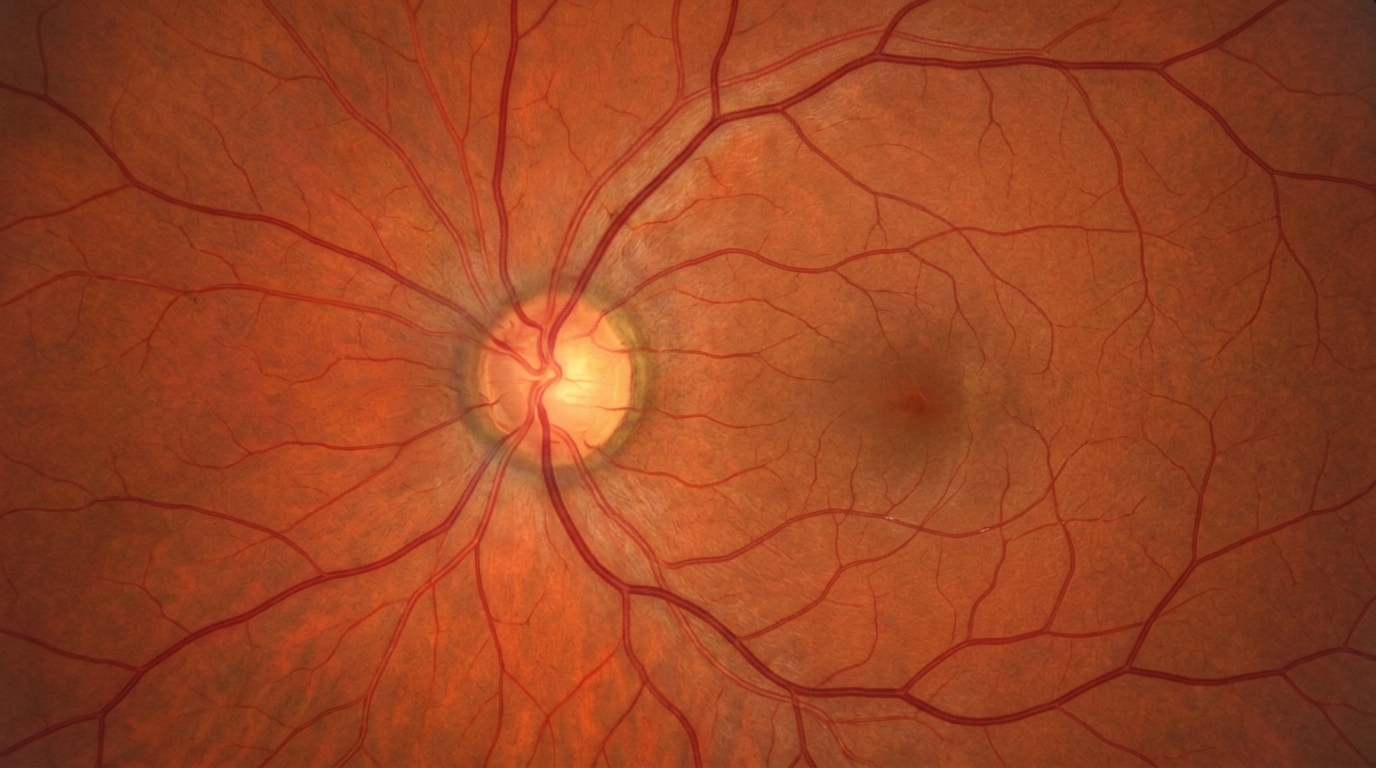
The study, published in BioData Mining, introduces AVSeg-XAI, a deep learning pipeline designed to segment arteries and veins in retinal fundus images and extract interpretable vascular features. By integrating these retinal biomarkers with non-invasive clinical data, the model achieved an overall area under the receiver operating characteristic curve (AUC) of 0.81 in a retrospective case-control cohort. This approach aims to provide a non-invasive screening tool that complements traditional risk scores, which often rely on invasive blood tests and may underperform in specific demographic groups.
The central challenge in cardiovascular disease screening is the reliance on invasive biomarkers and generic risk scores that can be inaccurate for women and middle-aged adults. Retinal microvasculature offers a non-invasive window into systemic vascular health, a concept known as oculomics. However, the integration of retinal features with routine clinical vitals for sex-specific risk assessment had remained underexplored. The study sought to address this gap by developing an interpretable multimodal AI framework that fuses retinal vascular biomarkers with easily obtainable clinical parameters. The goal was to create a model that could stratify cardiovascular disease risk while maintaining transparency in its decision-making process.
The study utilized a retrospective case-control cohort from the Qatar Biobank, comprising 911 participants after quality filtering. The cohort included 453 individuals with prevalent cardiovascular disease and 458 controls, selected to be age and sex-matched. The cardiovascular disease group was defined by major cardiovascular events and a hypertension-associated state, while being free from cancer, obesity, and diabetes. Controls were defined as participants without a personal history of cardiovascular disease and without current medications for hypertension or diabetes. This strict phenotypic eligibility criterion was designed to sharpen the contrast between groups and reduce confounding from overlapping comorbidities, although it limits the generalizability of the findings to routine screening populations.
The AVSeg-XAI framework operates in two stages. The first stage involves a DINOv2-based deep learning pipeline for artery and vein segmentation. The model was pretrained on over 90,000 fundus images from public datasets and fine-tuned on the UZLF benchmark dataset. This segmentation module achieved a mean Dice score of 0.8368, slightly outperforming the state-of-the-art LUNet model, which had a mean Dice score of 0.8327. The second stage involves the extraction of 34 geometric and topological features from the segmented vessels, including caliber, fractal complexity, tortuosity, and branching topology. A parsimonious subset of seven interpretable features was identified for the primary risk prediction model.
To predict cardiovascular disease risk, the researchers fused the seven interpretable retinal features with 15 non-invasive clinical variables, such as age, body mass index, blood pressure, and smoking status. A Random Forest classifier was used for the multimodal fusion, with hyperparameters optimized through cross-validation. The primary multimodal model achieved an AUC of 0.81, with a 95% confidence interval of 0.78 to 0.84. This performance was compared against a clinical-only baseline, which achieved an AUC of 0.80. While the difference was not statistically significant at the conventional alpha level, the multimodal model demonstrated a specificity gain of 10.5 percentage points at a fixed sensitivity of 0.80, suggesting potential utility in reducing false-positive referrals in a screening context.
Stratified analysis revealed that the model performed better in females, with an AUC of 0.83, compared to males, with an AUC of 0.79. This gender-specific advantage is consistent with the pathophysiology of cardiovascular disease in women, which often presents as coronary microvascular dysfunction rather than obstructive coronary artery disease. The model also showed peak performance in the 45 to 55-year age subgroup, achieving an AUC of 0.90. However, the researchers caution that this subgroup contained a limited number of participants and a high local prevalence of cardiovascular disease, meaning the results should be interpreted cautiously and require validation in larger, prevalence-representative cohorts.
To assess the biological plausibility of the AI-learned features, the team conducted virtual phenotyping experiments. They trained separate models to predict systemic biomarkers using only retinal features as input. The retinal features alone predicted systolic blood pressure with an R-squared value of 0.20 and smoking status with an AUC of 0.69. These associations are consistent with known hypertensive retinopathy and smoker’s vasculopathy signatures. Conversely, retinal features showed poor predictive power for body mass index and age, indicating that retinal and clinical variables provide orthogonal information. This orthogonality supports the interpretation that multimodal fusion improves discrimination by combining distinct dimensions of cardiovascular risk.
Explainable AI analysis using SHAP values revealed that systolic blood pressure was the most dominant feature in the model’s decision logic. Among the retinal biomarkers, central retinal arteriolar equivalent (CRAE) was the most important, with lower arteriolar caliber strongly associated with higher cardiovascular disease risk. The vein tortuosity index also ranked highly, indicating that venous hemodynamic stress provides complementary prognostic information. The SHAP analysis further showed that retinal vascular structure acted as a risk modifier; for patients with the same blood pressure, those with sparser vascular networks were assigned higher risk scores than those with denser networks.
The study highlights several limitations that must be considered when interpreting the results. The retrospective case-control design precludes causal inference and does not establish whether retinal vascular changes predict future incident cardiovascular disease events. The cohort was drawn from a single biobank and a specific population context, so external validation across different imaging devices, acquisition protocols, and ethnic groups is required. Additionally, the segmentation module was evaluated only on the UZLF benchmark, and its generalizability to the target cohort cannot be directly assessed due to the lack of manual labels in the Qatar Biobank data.
The authors conclude that AVSeg-XAI serves as a proof-of-concept for an explainable, non-invasive cardiovascular disease screening approach. While the observed performance gains are modest, the framework demonstrates the feasibility of integrating retinal imaging with basic vitals for risk stratification. The study underscores the need for prospective validation in prevalence-representative cohorts and external multi-center evaluation before the model can be translated into routine clinical workflows. The findings suggest that AI-driven oculomics may offer complementary information for sex-stratified cardiovascular risk assessment, particularly in midlife adults where subclinical vascular changes are emerging.
The study design incorporated specific methodological choices to ensure the model remained interpretable and applicable to community settings. The researchers restricted clinical inputs to fifteen non-invasive variables that do not require blood draws, including demographic factors, anthropometric measurements, vital signs, and lifestyle habits. This approach was intended to address the barriers associated with traditional risk calculators, which often depend on laboratory processing and invasive sample collection. By using a Random Forest classifier, the team prioritized a model that offers native feature importance and compatibility with explainable AI tools, rather than relying on complex deep neural networks that may operate as black boxes. The hyperparameters for this classifier were selected through a grid search process, optimizing for the area under the receiver operating characteristic curve. This choice was supported by sensitivity analyses showing that the performance trends remained consistent when alternative classifiers, such as logistic regression and histogram-based gradient boosting, were evaluated under the same cross-validation protocol.
Feature selection played a critical role in the model’s architecture, balancing comprehensiveness with interpretability. The pipeline extracted thirty-four geometric and topological features from the retinal vasculature, but the primary risk prediction model utilized a parsimonious subset of seven highly interpretable features. These included central retinal arteriolar and venular equivalents, the arteriolar-to-venular ratio, and measures of fractal dimension and tortuosity for both arteries and veins. The decision to use this compact subset was validated by comparative performance tests, which showed that the full thirty-four-feature set underperformed the seven-feature subset when using the Random Forest classifier. This degradation was attributed to the dilution of the candidate feature pool by mathematically correlated or uninformative geometric features, a phenomenon that was not observed when using histogram-based gradient boosting. The findings suggest that the compact subset captures the clinically relevant retinal signal without introducing overfitting, thereby maintaining the transparency necessary for clinical trust.
The statistical rigor of the study included specific corrections for multiple comparisons to control the family-wise error rate. The researchers applied Benjamini–Hochberg false discovery rate correction to several comparison families, including the univariate analysis of retinal biomarkers and the pairwise comparisons of subgroup AUC values. This approach helps mitigate the risk of false positives that can arise when testing numerous features simultaneously. In the univariate analysis, caliber metrics such as CRAE, CRVE, and AVR exhibited significant differences between the cardiovascular disease group and healthy controls, aligning with prior reports of generalized vascular narrowing in cardiovascular disease. Additionally, multiple geometric features, including artery intersection counts and fractal capacity, differed significantly, suggesting altered vascular organization or rarefaction in the disease group. These statistical associations provide internal consistency for the biological plausibility of the derived features, although they do not establish causal mechanisms or temporal relationships between retinal changes and disease onset.
Data acquisition and quality control were central to the integrity of the imaging analysis. Retinal fundus photography was captured using a TopCon-TRC-NW camera, with images centered on the optic disc to maximize the visibility of the major vascular network. An automated multi-metric pipeline assessed image quality by evaluating sharpness, contrast, blur, brightness, and border artifacts. Of the initial 1,850 images available from 926 candidate patients, 69 were flagged for insufficient quality and excluded. Patients were retained if at least one eye passed quality control, resulting in a final cohort of 911 participants contributing 1,781 images. This rigorous filtering process ensures that the extracted vascular features are derived from high-quality data, reducing the impact of acquisition variability on the model’s performance. The use of standardized regions of interest, specifically Zone B for caliber estimation, further minimized inter-image variability by focusing on major peripapillary vessels within a defined annulus from the optic disc margin.
Subject of Research: Multimodal AI framework for cardiovascular risk stratification using retinal vascular features and clinical vitals
Article Title: AVSeg-XAI: Deep learning framework for A/V segmentation with vascular features reveals retinal oculomics as biomarker for cardiovascular disease
Article References: Basit, S. A., & Alam, T. (2026). AVSeg-XAI: Deep learning framework for A/V segmentation with vascular features reveals retinal oculomics as biomarker for cardiovascular disease. BioData Mining, 19(1), Article 71. https://doi.org/10.1186/s13040-026-00573-x
Image Credits: AI Generated
DOI: 10.1186/s13040-026-00573-x
Keywords: Artificial Intelligence, Cardiovascular Disease, Retinal Imaging, Oculomics, Deep Learning, Biomarkers, Risk Stratification, Qatar Biobank, AVSeg-XAI, Deep, learning, framework
News Source: Frances Kline. (November 10, 2026). Retinal AI Model Predicts Heart Disease Risk. Scienmag.