In the evolving landscape of neonatal care, the management of hyperbilirubinemia remains a pivotal concern, balancing the urgent need to prevent bilirubin-induced neurotoxicity with minimizing invasive procedures on fragile newborns. The current clinical paradigm predominantly relies on total serum bilirubin (TSB) levels to guide therapeutic decisions. Despite its widespread acceptance, growing scrutiny challenges TSB’s status as the infallible standard, prompting a critical reevaluation of alternative methodologies, particularly transcutaneous bilirubinometry (TcB), which promises less discomfort and greater efficiency in neonatal jaundice management.
TSB measurement has long been entrenched as the gold standard, providing a quantifiable serum concentration indicative of bilirubin burden. However, this strict dependence assumes a direct correlation between specific serum bilirubin thresholds and the risk of neurotoxicity—an assumption that, upon rigorous examination, reveals gaps in evidence. No conclusive, causal relationship definitively delineates exact TSB levels above which bilirubin neurotoxicity unequivocally occurs. This lack of precise risk demarcation exposes a vulnerability in the current clinical framework, compelling neonatology researchers and practitioners to explore avenues that might circumvent these uncertainties.
Adding to this complexity is the inherent variability in laboratory TSB analysis. Factors such as analytical equipment calibration, technician proficiency, and sample handling contribute to a margin of error, which, though often marginal, can be clinically crucial in neonates where treatment thresholds hover near these variability limits. Such fluctuations underline the pressing need for complementary or alternative diagnostic tools that could mitigate these uncertainties while safeguarding neonatal outcomes.
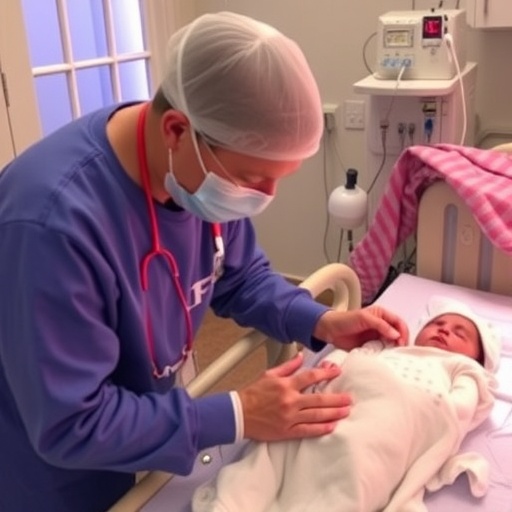
Enter transcutaneous bilirubinometry: a non-invasive, rapid bedside technique requiring no blood sampling, thereby eliminating the pain and potential complications associated with phlebotomy. TcB devices estimate bilirubin concentration by measuring the optical density of bilirubin pigment in the dermal and subdermal layers through the skin, which predominantly consists of the neonatal heel or forehead. This optical approach obviates the need for skin-breaking procedures, an inherent advantage considering neonates’ delicate skin and immunologic susceptibility.
The appeal of TcB extends beyond patient comfort. The technique drastically reduces turnaround time since results are obtained instantly without laboratory processing delays. This efficiency not only accelerates clinical decision-making but also alleviates workload pressures on nursing and laboratory personnel, ultimately conserving healthcare resources and lowering associated costs. Considering the ever-growing demands on neonatal care units, these operational benefits offer compelling incentives for TcB integration into routine practice.
Despite these advantages, TcB’s clinical adoption has been hampered by concerns about its reliability, which is traditionally validated through correlation studies against TSB measurements. Yet, such validation inherently inherits the limitations of TSB as a reference standard, perpetuating a fallacy if TSB thresholds themselves are not absolute indicators of pathologic risk. This cyclical dependency suggests a paradigm where both TSB and TcB are appreciated not as rigid absolutes but complementary tools within a broader clinical context emphasizing holistic patient risk assessment.
Recent research spearheaded by Wimmer challenges this status quo, advocating for a shift that embraces TcB not merely as a supplemental screening tool but as a primary modality in neonatal hyperbilirubinemia management. Wimmer’s critique centers on the premise that reliance on invasive blood draws predicated on imperfect TSB benchmarks is no longer justifiable, especially when non-invasive options offer comparable predictive reliability combined with enhanced patient-centric outcomes.
Key to realizing this shift is standardization of TcB measurement protocols. Developing universally accepted guidelines encompassing device calibration, measurement sites, timing post-birth, and integrating patient-specific variables such as skin pigmentation and gestational age are critical to optimizing TcB accuracy. Such consensus would mitigate inter-device and inter-operator variability, fostering confidence among clinicians hesitant to rely on TcB readings exclusively.
Advancing the clinical utility of TcB also entails integrating this technology within a multidimensional risk stratification framework. By combining TcB data with clinical signs, patient history, and other biomarkers, neonatal units could craft personalized management algorithms minimizing unnecessary interventions while maintaining vigilance against neurotoxicity. Digital health platforms and artificial intelligence hold promise for synthesizing these complex data streams into actionable insights, streamlining decision-making further.
From an ethical standpoint, minimizing painful procedures aligns with contemporary principles emphasizing patient comfort and minimizing harm. Neonates, unable to articulate discomfort, rely on caregivers to prioritize non-invasive and gentle treatment approaches. Widespread adoption of TcB can significantly reduce the psychological and physiological stress imposed by frequent blood sampling, improving both short- and long-term developmental trajectories.
Implementation of these practice changes will require concerted effort encompassing clinician education, institutional policy updates, and robust multicenter trials validating TcB’s safety and effectiveness in various population subsets, including preterm infants and those with hemolytic disorders. Such evidence will be pivotal to persuading guideline-issuing bodies to revise longstanding recommendations favoring laboratory-based bilirubin assays exclusively.
Moreover, integrating TcB usage aligns with sustainable healthcare initiatives by reducing consumable usage and laboratory workload, contributing to environmentally and economically responsible neonatal healthcare delivery. In resource-constrained settings, TcB could democratize hyperbilirubinemia monitoring, enabling equitable, rapid patient evaluation where laboratory infrastructure is limited or unavailable.
In sum, the trajectory of neonatal jaundice management is poised at a transformative juncture. Revisiting long-held assumptions about the infallibility of TSB and embracing transcutaneous bilirubinometry not only reflects scientific progress but also embodies a compassionate shift towards optimizing neonatal care. As the neonatal community embraces innovation and evidence-based revisions, the ultimate beneficiaries will be the newborns whose comfort, safety, and developmental integrity this renewed paradigm aims to protect.
This emerging perspective does not signal the abandonment of TSB assays but rather advocates for a more nuanced, integrative approach prioritizing non-invasive, efficient methods without conceding clinical vigilance. Harmonizing TcB with rigorous clinical oversight could herald a safer, kinder era in neonatal hyperbilirubinemia management, underscoring medicine’s relentless evolution toward precision and empathy.
In the forthcoming years, it is anticipated that advances in device technology, coupled with growing clinical endorsement, will catalyze a widespread transition to TcB-centric protocols. These developments promise to reduce patient trauma significantly, streamline workload for healthcare providers, and maintain or enhance neurotoxicity prevention, satisfying the dual imperatives of efficacy and compassion in neonatal care.
As clinicians and researchers navigate these evolving paradigms, sustained advocacy for patient safety, backed by robust scientific inquiry, will be paramount. The question is no longer merely about whether TcB correlates well with TSB but whether the neonatal care community is ready to reimagine bilirubin management in a less invasive, more patient-friendly light—because for newborns, every degree of pain spared is a better start to life.
Subject of Research: Neonatal hyperbilirubinemia management and bilirubin measurement techniques.
Article Title: Reconsidering transcutaneous bilirubinometry for management of neonatal hyperbilirubinemia: is it time for change?
Article References:
Wimmer, J.E. Reconsidering transcutaneous bilirubinometry for management of neonatal hyperbilirubinemia: is it time for change?.
J Perinatol (2026). https://doi.org/10.1038/s41372-025-02532-6
Image Credits: AI Generated
DOI: 05 January 2026
Tags: alternatives to total serum bilirubin levelsbilirubin-induced neurotoxicity preventionclinical challenges in neonatal bilirubin managementefficiency of non-invasive bilirubin measurementsevidence gaps in bilirubin toxicity thresholdshyperbilirubinemia management in newbornsneonatal jaundice assessment techniquesreducing invasive procedures for jaundicereevaluating neonatal care standardstotal serum bilirubin measurement limitationstranscutaneous bilirubinometry in neonatal carevariability in bilirubin laboratory analysis