


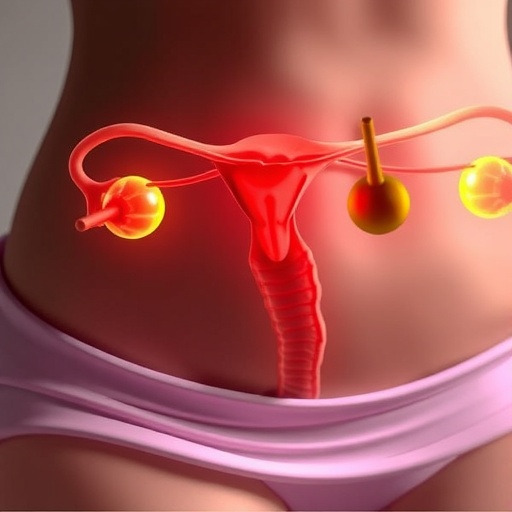
A groundbreaking study led by researchers Cao, Tong, Hu, and colleagues has unveiled an innovative therapeutic approach for addressing premature ovarian insufficiency (POI). This condition, which affects a significant number of women worldwide, leads to hormonal imbalances and infertility due to the reduced capacity of the ovaries. The research focuses explicitly on the manipulation of mitochondrial dynamics through targeting MFF (Mitochondrial Fission Factor) succinylation—a pivotal mechanism that offers new hope for restoring ovarian function in affected patients. By delving deep into the intricacies of cellular metabolism and mitochondrial health, the researchers have proposed a potential pathway to revolutionize treatments for POI.
The role of mitochondria in cellular health cannot be overstated. Often referred to as the powerhouses of the cell, mitochondria are responsible for energy production, and their functionality is directly linked to cell survival and overall reproductive health. The study emphasizes how disturbances in mitochondrial dynamics can lead to detrimental metabolic consequences, contributing to conditions such as premature ovarian insufficiency. By understanding the connection between MFF and mitochondrial behavior, the researchers aim to manipulate this relationship to restore cellular balance and improve reproductive outcomes.
Recent advancements in the understanding of succinylation—one of the critical post-translational modifications of proteins—have opened new avenues in biological research. Succinylation can influence protein function, localization, and stability. The study highlights the significance of MFF succinylation within granulosa cells, the somatic cells surrounding developing ovarian follicles, which are essential for oocyte health and maturation. By selectively targeting this modification, the researchers propose a mechanism to enhance the resilience and functionality of granulosa cells, which could, in turn, ameliorate the effects of POI.
The implications of this research extend beyond the laboratory. As the global fertility crisis continues to escalate, understanding the underlying mechanisms contributing to premature ovarian insufficiency is paramount. The current treatments available for POI are limited and often involve hormone replacement therapy, which does not address the root causes. By targeting MFF succinylation, this new strategy could potentially provide a more holistic treatment option that optimizes ovarian health rather than merely managing symptoms.
To validate their hypothesis, the researchers conducted a series of meticulous in vitro and in vivo experiments aimed at analyzing the effects of MFF modulation on mitochondrial dynamics. Utilizing advanced imaging techniques, the study was able to visualize the alterations in mitochondrial morphology and function following targeted interventions. The results showcase significant improvements in mitochondrial function, protein expression, and energy metabolism within granulosa cells—an encouraging sign for the future of POI treatments.
The interplay between mitochondrial health and reproductive success is a complex relationship that offers numerous avenues for exploration. This study not only identifies MFF succinylation as a pivotal modulator of mitochondrial dynamics but also emphasizes the potential for cross-talk between metabolic pathways and reproductive physiology. As this research unfolds, there is an exciting prospect of identifying further molecular targets that could enhance fertility treatments and offer solutions for infertility associated with aging and other factors.
Moreover, the findings pave the way for the potential development of pharmacological agents that could mimic the effects of MFF succinylation modification. Through a precise understanding of the biochemical pathways involved, researchers could devise drugs that enhance mitochondrial performance and support granulosa cell function, fundamentally reshaping the therapeutic landscape of reproductive health.
While the results of this study are positive, the road ahead involves further research to translate these findings into clinical practice. Large-scale clinical trials will be necessary to assess the efficacy and safety of any potential therapeutic strategies derived from this research. Understanding the broader implications of mitochondrial health in women’s reproductive health could also lead to the development of preventative measures for women at risk of developing POI.
This research is not just a step forward for reproductive health science; it highlights the importance of metabolic regulation in the maintenance of ovarian function. As we move toward a more integrated approach to health, understanding how different biological systems interact will be crucial. The findings from this study may serve as a catalyst for an entire field of research focused on cellular metabolism, metabolic disorders, and reproductive health.
The researchers have set a new benchmark in the investigation of POI and mitochondrial dynamics, raising pivotal questions about how we understand and treat fertility issues. By drawing attention to MFF succinylation, they have opened the door to novel therapeutic strategies that may one day alleviate the burdens faced by many women experiencing premature ovarian failure.
In conclusion, this research illuminates a path forward in the quest to combat premature ovarian insufficiency. By unveiling the critical role of MFF succinylation in mitochondrial health, we are reminded of the delicate balance that sustains reproductive function. The future of ovarian health lies in our ability to harness and manipulate these biochemical pathways, offering hope not only for current patients but for future generations as well.
As this exciting field of research continues to evolve, collaboration between basic science and clinical practitioners will be essential. The real-world application of these findings has the potential to reshape the narratives surrounding fertility, offering new avenues of hope to women grappled with the challenges of early ovarian insufficiency. The rebirth of ovarian function through mitochondrial dynamics signifies a new era in reproductive health, and we stand on the brink of remarkable advancements that could change lives.
Subject of Research: Targeting MFF succinylation to restore mitochondrial dynamics in granulosa cells for premature ovarian insufficiency treatment.
Article Title: Targeting MFF succinylation: a novel therapeutic strategy for premature ovarian insufficiency by restoring mitochondrial dynamics in granulosa cells.
Article References:
Cao, Y., Tong, X., Hu, W. et al. Targeting MFF succinylation: a novel therapeutic strategy for premature ovarian insufficiency by restoring mitochondrial dynamics in granulosa cells.
J Ovarian Res (2026). https://doi.org/10.1186/s13048-026-01964-8
Image Credits: AI Generated
DOI: 10.1186/s13048-026-01964-8
Keywords: premature ovarian insufficiency, mitochondrial dynamics, MFF succinylation, granulosa cells, reproductive health, therapeutic strategy.
Tags: cellular metabolism and infertilityenergy production in ovarieshormonal imbalances in womeninnovative therapies for POImitochondrial dynamics manipulationMitochondrial Fission Factormitochondrial health and fertilityovarian function restorationpost-translational modifications and ovarian healthpremature ovarian insufficiency treatmentreproductive health research advancementssuccinylation in reproductive health



