• HOME
  • NEWS
  • EXPLORE
    • CAREER
      • Companies
      • Jobs
    • EVENTS
    • iGEM
      • News
      • Team
    • PHOTOS
    • VIDEO
    • WIKI
  • BLOG
  • COMMUNITY
    • FACEBOOK
    • INSTAGRAM
    • TWITTER
Tuesday, December 16, 2025
BIOENGINEER.ORG
No Result
View All Result
  • Login
  • HOME
  • NEWS
  • EXPLORE
    • CAREER
      • Companies
      • Jobs
        • Lecturer
        • PhD Studentship
        • Postdoc
        • Research Assistant
    • EVENTS
    • iGEM
      • News
      • Team
    • PHOTOS
    • VIDEO
    • WIKI
  • BLOG
  • COMMUNITY
    • FACEBOOK
    • INSTAGRAM
    • TWITTER
  • HOME
  • NEWS
  • EXPLORE
    • CAREER
      • Companies
      • Jobs
        • Lecturer
        • PhD Studentship
        • Postdoc
        • Research Assistant
    • EVENTS
    • iGEM
      • News
      • Team
    • PHOTOS
    • VIDEO
    • WIKI
  • BLOG
  • COMMUNITY
    • FACEBOOK
    • INSTAGRAM
    • TWITTER
No Result
View All Result
Bioengineer.org
No Result
View All Result
Home NEWS Science News

Researchers offer overview of composite metal foams and potential applications

Bioengineer by Bioengineer
March 13, 2017
in Science News
Reading Time: 2 mins read
0
Share on FacebookShare on TwitterShare on LinkedinShare on RedditShare on Telegram
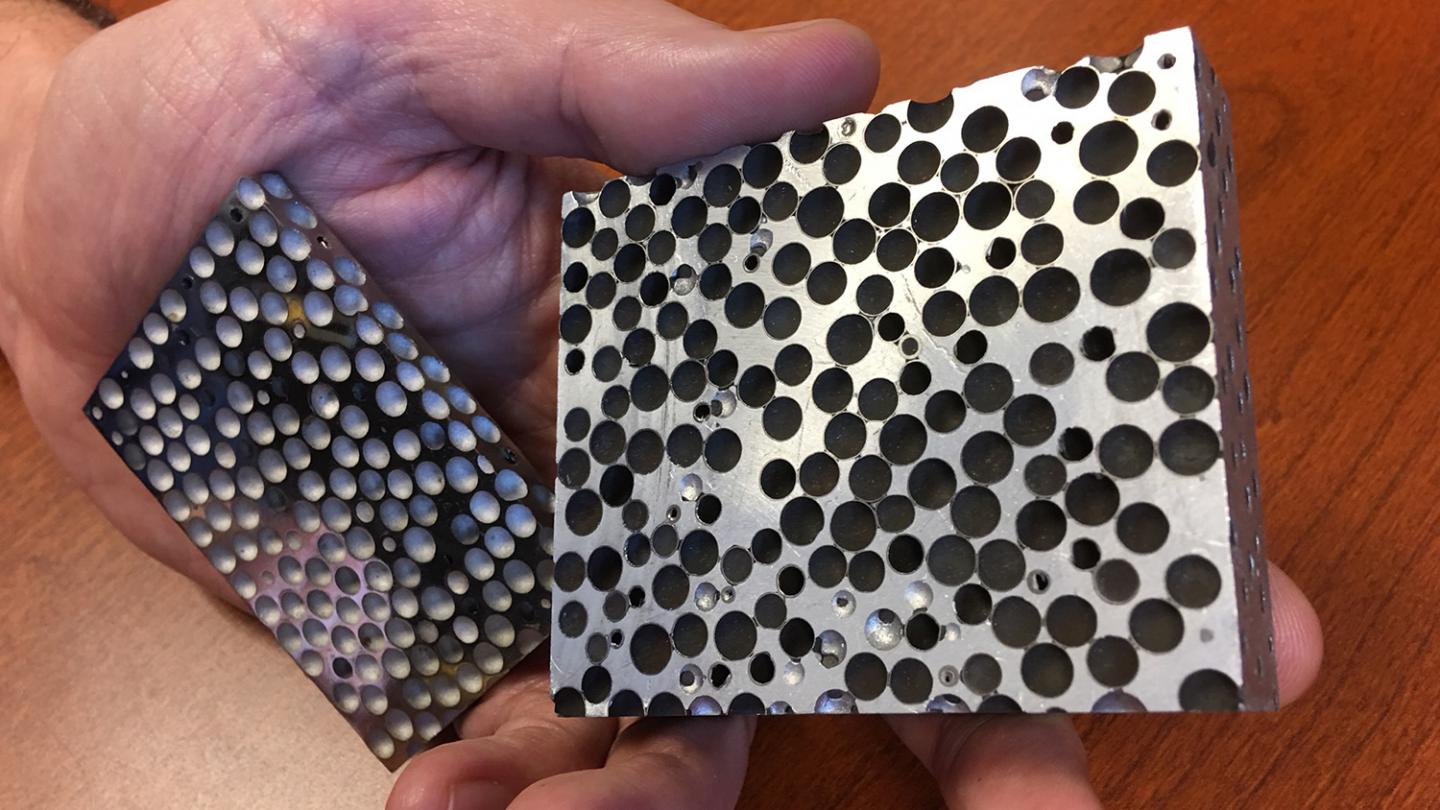
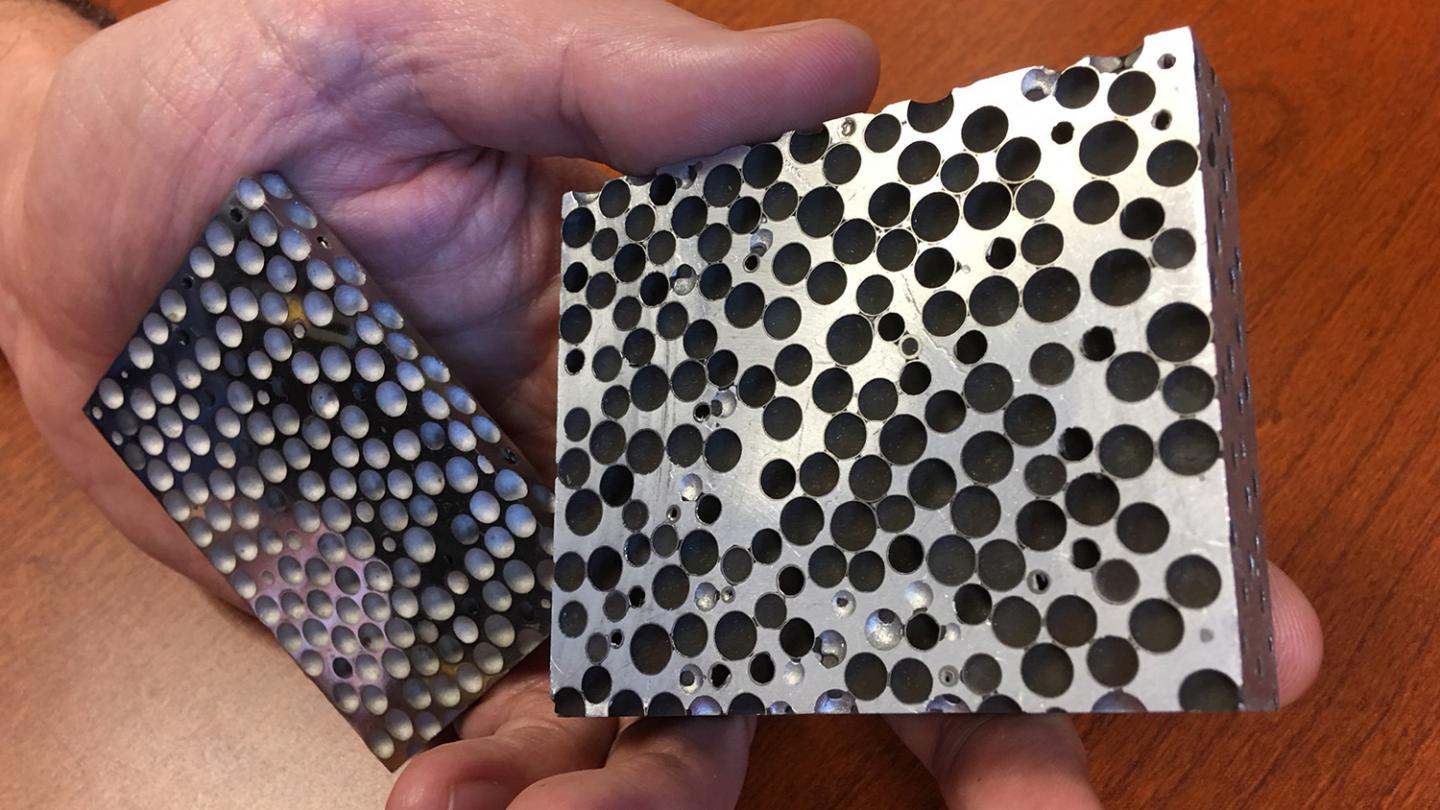
IMAGE

Credit: Afsaneh Rabiei

Researchers at North Carolina State University have developed a range of composite metal foams (CMFs) that can be used in applications from armor to hazardous material transport – and they're now looking for collaborators to help identify and develop new applications. To that end, the researchers are issuing a comprehensive overview and new data on their CMFs.

"Over the past 12 years, we have published a suite of papers on everything from how to make CMFs to a wide variety of the materials' properties, including how they handle high-speed impacts, radiation and intense heat," says Afsaneh Rabiei, a professor of mechanical and aerospace engineering at NC State and creator of the CMFs.

"The CMFs and their manufacturing processes are patented, but our goal for this paper is to give other researchers a thorough overview of the materials – including previously unpublished data – because we think the material can save lives in a variety of applications," Rabiei says. "We're hopeful that others in the research community may think of additional applications and come to us with ideas that we can collaborate on."

Previous work from Rabiei's group has shown that CMFs, in addition to being lightweight: can reduce armor-piercing bullet penetration; are very effective at shielding X-rays, gamma rays and neutron radiation; and can handle fire and heat twice as well as the plain metals they are made of. Video of the material stopping an armor-piercing bullet can be viewed at https://www.youtube.com/watch?v=lWmFu-_54fI.

The new data in the recent paper relates to previous research; for example, previously unpublished figures on how the material performs in response to high-speed impacts and cyclic loading. The information is useful to researchers, but does not change our understanding of the material's fundamental properties.

Rabiei's team is currently at work on three projects that make use of the CMFs:

    * A Department of Defense-funded effort to create vehicle armor that addresses threats from small arms, blasts and fragmentation from explosives;

    * A Department of Transportation-funded project to develop storage containers for transporting hazardous materials; and

    * A NASA-funded project focused on structural applications for airplanes.

"If others in the research community would like to work together in exploring additional applications, we'd love to talk to them," Rabiei says.

###

The paper, "Overview of Composite Metal Foams and their Properties and Performance," was published online March 13 in the journal Advanced Engineering Materials. The paper was co-authored by Rabiei and Jacob Marx, a Ph.D. student at NC State.

Media Contact

Matt Shipman
[email protected]
919-515-6386
@NCStateNews

Why Not Us?

############

Story Source: Materials provided by Scienmag

Share12Tweet8Share2ShareShareShare2

Related Posts

TyG-ABSI: A New Obesity Marker for Carotid Plaque

December 16, 2025
blank

Unlocking Fagopyrum: DNA Barcoding and Nutritional Insights

December 16, 2025

New Insights into Micro- and Nanoplastics Neurotoxicity

December 16, 2025

S-Methylcysteine Shields Rats from Toxoplasma Reproductive Harm

December 16, 2025
Please login to join discussion

POPULAR NEWS

  • Scientists Uncover Chameleon’s Telephone-Cord-Like Optic Nerves, A Feature Missed by Aristotle and Newton

    Scientists Uncover Chameleon’s Telephone-Cord-Like Optic Nerves, A Feature Missed by Aristotle and Newton

    122 shares
    Share 49 Tweet 31
  • Nurses’ Views on Online Learning: Effects on Performance

    70 shares
    Share 28 Tweet 18
  • NSF funds machine-learning research at UNO and UNL to study energy requirements of walking in older adults

    70 shares
    Share 28 Tweet 18
  • MoCK2 Kinase Shapes Mitochondrial Dynamics in Rice Fungal Pathogen

    72 shares
    Share 29 Tweet 18

About

BIOENGINEER.ORG

We bring you the latest biotechnology news from best research centers and universities around the world. Check our website.

Follow us

Recent News

TyG-ABSI: A New Obesity Marker for Carotid Plaque

Unlocking Fagopyrum: DNA Barcoding and Nutritional Insights

New Insights into Micro- and Nanoplastics Neurotoxicity

Subscribe to Blog via Email

Enter your email address to subscribe to this blog and receive notifications of new posts by email.

Join 70 other subscribers
  • Contact Us

Bioengineer.org © Copyright 2023 All Rights Reserved.

Welcome Back!

Login to your account below

Forgotten Password?

Retrieve your password

Please enter your username or email address to reset your password.

Log In
No Result
View All Result
  • Homepages
    • Home Page 1
    • Home Page 2
  • News
  • National
  • Business
  • Health
  • Lifestyle
  • Science

Bioengineer.org © Copyright 2023 All Rights Reserved.