• HOME
  • NEWS
  • EXPLORE
    • CAREER
      • Companies
      • Jobs
    • EVENTS
    • iGEM
      • News
      • Team
    • PHOTOS
    • VIDEO
    • WIKI
  • BLOG
  • COMMUNITY
    • FACEBOOK
    • INSTAGRAM
    • TWITTER
Saturday, February 7, 2026
BIOENGINEER.ORG
No Result
View All Result
  • Login
  • HOME
  • NEWS
  • EXPLORE
    • CAREER
      • Companies
      • Jobs
        • Lecturer
        • PhD Studentship
        • Postdoc
        • Research Assistant
    • EVENTS
    • iGEM
      • News
      • Team
    • PHOTOS
    • VIDEO
    • WIKI
  • BLOG
  • COMMUNITY
    • FACEBOOK
    • INSTAGRAM
    • TWITTER
  • HOME
  • NEWS
  • EXPLORE
    • CAREER
      • Companies
      • Jobs
        • Lecturer
        • PhD Studentship
        • Postdoc
        • Research Assistant
    • EVENTS
    • iGEM
      • News
      • Team
    • PHOTOS
    • VIDEO
    • WIKI
  • BLOG
  • COMMUNITY
    • FACEBOOK
    • INSTAGRAM
    • TWITTER
No Result
View All Result
Bioengineer.org
No Result
View All Result
Home NEWS Science News

Researchers measure the coherence length in glasses using the supercomputer JANUS

Bioengineer by Bioengineer
May 30, 2017
in Science News
Reading Time: 2 mins read
0
Share on FacebookShare on TwitterShare on LinkedinShare on RedditShare on Telegram
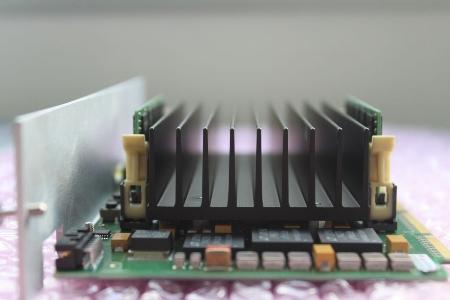
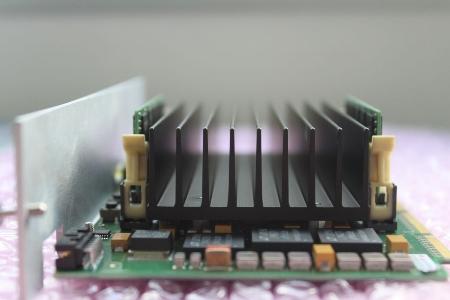
IMAGE

Credit: http://www.janus-computer.com/galery-janusII

The use of the JANUS supercomputer has enabled researchers to reproduce the experimental protocol of equilibrium dynamics in spin glasses. The success of the simulation enables us to connect theoretical physical developments with experimental ones, using this new generation of computers.

One common characteristic of certain systems such as polymers, supercooled liquids, colloids or spin glasses is that they require very long times to reach equilibrium. They are determined by very slow dynamics at low temperatures. Actually, their dynamic is so slow that thermal equilibrium is never attained in macroscopic samples. This type of dynamic is characterised by a correlation or coherence length that indicates that particles situated at a shorter distance than this length are very correlated.

Theoretical physicists can calculate this (microscopic) correlation length by simulating a large number of particles and following the individual behaviour of all the particles in a supercomputer. These kinds of studies cannot be carried out experimentally (it is impossible to track all the particles of a system), but it is possible to calculate a (macroscopic) correlation length by applying external fields on the system which modify the energy barriers between the different states.

Thanks to the JANUS II supercomputer, researchers from Spain and Italy (Institute of Biocomputation and Physics of Complex Systems (BIFI) of the University of Zaragoza, Complutense University of Madrid, University of Extremadura, La Sapienza University of Rome and University of Ferrara), have refined the calculation of the microscopic correlation length and have reproduced the experimental protocol, enabling them to calculate the macroscopic length. The success of the simulation confirmed that both microscopic and experimental (macroscopic) length are equal.

"This study provides a theoretical basis for studies in these physical systems and the results obtained allow one to directly connect the theoretical developments to the experimental ones. We did the research taking as a reference spin glasses, because they are cleaner to study as a reference system", explains Juan Jesús Ruiz Lorenzo, a theoretical physicist at the UEx and one of the authors of this study which has been published in the magazine Physical Review Letters.

JANUS computer

The JANUS II computer is a new generation of supercomputer located in the BIFI (Institute of Biocomputation and Physics of Complex Systems). "Thanks to this 'dedicated' computer, we are able to simulate one second of the experiment, within the range of the experimental times", says Juan Jesús Ruíz Lorenzo. JANUS II is a dedicated supercomputer based on reconfigurable FPGA processors.

The researchers have reproduced a landmark experiment on the Janus I and Janus II supercomputers that measures the coherence length in spin glasses. The coherence (correlation) length value estimated through analysis of microscopic correlation functions is quantitatively consistent with its measurements via macroscopic response functions

###

Media Contact

Marta Fallola Sánchez-Herrera
[email protected]
34-924-289-649
@infouex

http://www.unex.es

############

Story Source: Materials provided by Scienmag
Share12Tweet7Share2ShareShareShare1

Related Posts

Succinate Receptor 1 Limits Blood Cell Formation, Leukemia

February 7, 2026

Palmitoylation of Tfr1 Drives Platelet Ferroptosis and Exacerbates Liver Damage in Heat Stroke

February 7, 2026

Oxygen-Enhanced Dual-Section Microneedle Patch Improves Drug Delivery and Boosts Photodynamic and Anti-Inflammatory Treatment for Psoriasis

February 7, 2026

Scientists Identify SARS-CoV-2 PLpro and RIPK1 Inhibitors Showing Potent Synergistic Antiviral Effects in Mouse COVID-19 Model

February 7, 2026
Please login to join discussion

POPULAR NEWS

  • Robotic Ureteral Reconstruction: A Novel Approach

    Robotic Ureteral Reconstruction: A Novel Approach

    82 shares
    Share 33 Tweet 21
  • Digital Privacy: Health Data Control in Incarceration

    63 shares
    Share 25 Tweet 16
  • Study Reveals Lipid Accumulation in ME/CFS Cells

    57 shares
    Share 23 Tweet 14
  • Breakthrough in RNA Research Accelerates Medical Innovations Timeline

    53 shares
    Share 21 Tweet 13

About

We bring you the latest biotechnology news from best research centers and universities around the world. Check our website.

Follow us

Recent News

Succinate Receptor 1 Limits Blood Cell Formation, Leukemia

Palmitoylation of Tfr1 Drives Platelet Ferroptosis and Exacerbates Liver Damage in Heat Stroke

Oxygen-Enhanced Dual-Section Microneedle Patch Improves Drug Delivery and Boosts Photodynamic and Anti-Inflammatory Treatment for Psoriasis

Subscribe to Blog via Email

Enter your email address to subscribe to this blog and receive notifications of new posts by email.

Join 73 other subscribers
  • Contact Us

Bioengineer.org © Copyright 2023 All Rights Reserved.

Welcome Back!

Login to your account below

Forgotten Password?

Retrieve your password

Please enter your username or email address to reset your password.

Log In
No Result
View All Result
  • Homepages
    • Home Page 1
    • Home Page 2
  • News
  • National
  • Business
  • Health
  • Lifestyle
  • Science

Bioengineer.org © Copyright 2023 All Rights Reserved.