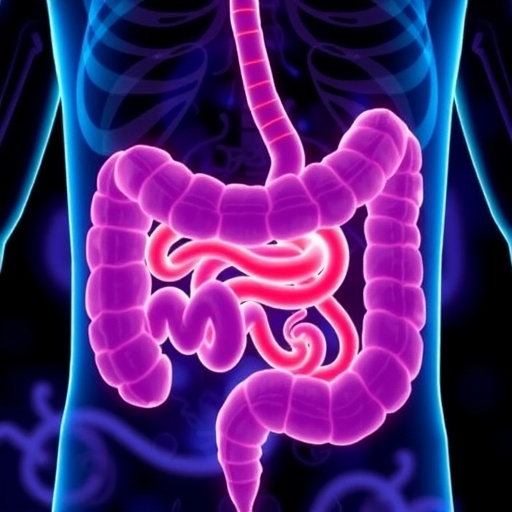
In a groundbreaking collaborative study published in the prestigious journal Science, researchers from Rutgers University, Universidad de Granada, and Princeton University have unveiled a novel perspective on gut microbiome dynamics that shifts the focus from individual bacterial species to the intricate network of interactions within microbial communities. This innovative approach offers a revolutionary framework for distinguishing healthy gut states from diseased ones and promises new avenues for early diagnosis and targeted treatment of complex gastrointestinal disorders.
Central to the investigation is the realization that the gut microbiota does not operate merely as a collection of isolated microbes but rather as a highly interconnected ecosystem, whose health-related functionality emerges from patterns of competition and cooperation among bacterial groups. By analyzing these relationships at the community level, the research team developed a powerful metric—termed the Ecological Network Balance Index (ENBI)—to quantitatively capture the balance between antagonistic and synergistic interactions within the gut microbiome.
The ENBI serves as a computational lens that reveals whether the microbial network in a given individual is dominated by competitive dynamics, often indicative of a robust, diverse ecosystem, or by cooperative clusters that can signify pathological reorganization. When applied retrospectively to datasets encompassing multiple disease states, including inflammatory bowel diseases and colorectal cancer, the ENBI consistently distinguished healthy microbiomes from those disrupted by disease processes, with its values correlating with disease progression in a clinically meaningful way.
Juan Bonachela, an associate professor at Rutgers and senior author of the study, elaborates on this paradigm shift, emphasizing the departure from traditional taxonomic analyses. “Our focus moved beyond identifying which bacteria are present to understanding how bacterial entities interact with each other,” Bonachela explains. This change in analytical focus provides a more nuanced and mechanistic understanding of how microbial ecosystems transition between health and illness, revealing fundamentally distinct ecological states rather than incremental taxonomic shifts.
The study’s co-author, Maria Gloria Dominguez-Bello, reinforces this insight by highlighting the complex cooperative networks that form in diseased states. “We see that in conditions like Clostridioides difficile infection and irritable bowel syndrome, bacterial communities restructure themselves into tightly knit cooperative modules,” she explains. Such configurations can disrupt homeostasis, enabling pathogenic overgrowth and reduced microbial diversity, which exacerbate disease pathology.
Adding another dimension to this research, Martin Blaser, director of the Center for Advanced Biotechnology and Medicine at Rutgers, underscores the clinical implications of the findings. Gut-related ailments have long perplexed scientists and clinicians due to their heterogeneity and unpredictable progression. By conceptualizing disease emergence as a systemic shift in microbial interaction networks, rather than isolated microbial presence or absence, these findings pave the way for predictive diagnostics and precision-based therapies, potentially transforming clinical management protocols.
The initial phase of the project involved constructing sophisticated computational models simulating bacterial competition for nutrients and metabolic exchange. Roberto Corral López, the study’s lead author, describes how these simulations spontaneously yielded two dominant ecosystem configurations closely mirroring empirical patient data. “This convergence between theoretical models and observed datasets reassured us that we were tapping into fundamental ecological principles governing gut microbiomes,” he notes.
Remarkably, the healthy gut microbiome exhibited a diverse and competitively balanced network, whereas the diseased microbiome favored small, tightly integrated communities exhibiting enhanced cooperation. This ecological bifurcation suggests that disease may often be a consequence of the microbiome’s inability to maintain competitive checks and balances, resulting in dominance by cooperative clusters that impair microbial functionality and resilience.
The practical applications of the ENBI are profound. Because microbial interactions can be inferred from stool samples in a non-invasive manner, tracking ENBI values could become a routine method for monitoring gut health and diagnosing disease earlier than is currently possible. Such early detection could facilitate timely clinical interventions before overt symptoms manifest, significantly improving patient outcomes.
Furthermore, the study offers fresh insights into variable responses to therapies like probiotics and fecal microbiota transplantation (FMT). Traditional approaches emphasizing the reintroduction of specific bacterial species may be insufficient if the underlying community interactions remain unbalanced. Instead, restoring the full microbial community—preserving the ecological network—is likely critical for achieving sustained therapeutic benefits.
The researchers suggest that the success of fecal transplants derives from their ability to re-establish entire microbial ecosystems, including the essential interplay of competitive and cooperative interactions that sustain gut health. Bonachela articulates this concept succinctly: “It’s not just about introducing particular bacteria but about reinstating the relationships that preserve a healthy microbiome framework.”
Looking ahead, this network-focused methodology could revolutionize donor selection protocols for microbiome-based therapies by emphasizing compatibility of interaction networks over species similarity. Corral López envisions a future where personalized microbiome treatments are designed to synergize with an individual’s unique microbial architecture, enhancing therapeutic efficacy and minimizing trial-and-error approaches.
Ultimately, this research heralds a new era of microbiome science, where system-level understanding replaces reductionist views, enabling breakthroughs in diagnosing and managing diseases traditionally linked with gut dysbiosis. As Bonachela summarizes, “Our goal is to unravel these complex microbial systems so that our insights translate into concrete improvements in human health.”
This study represents a significant stride in microbiome research, underscoring the critical importance of ecological perspectives in deciphering the complexity of microbial communities and their role in health and disease. As scientists continue to explore the dynamic interplay within the gut microbiome, the promise of leveraging these interactions to predict, prevent, and treat disease becomes increasingly attainable.
Subject of Research:
Not applicable
Article Title:
Imbalance in gut microbial interactions as a marker of health and disease
News Publication Date:
26-Feb-2026
Web References:
http://dx.doi.org/10.1126/science.ady1729
Image Credits:
Xuesong Zhang/Rutgers University
Keywords:
Gut microbiota, Microorganisms
Tags: competition and cooperation in gut bacteriaearly diagnosis of gut diseasesEcological Network Balance Indexgastrointestinal disorder diagnosisgut health metricgut microbiome dynamicsinflammatory bowel disease microbiomemicrobial community interactionsmicrobial ecosystem balancemicrobiome disease progressionmicrobiome network analysistargeted gut microbiome treatment