• HOME
  • NEWS
  • EXPLORE
    • CAREER
      • Companies
      • Jobs
    • EVENTS
    • iGEM
      • News
      • Team
    • PHOTOS
    • VIDEO
    • WIKI
  • BLOG
  • COMMUNITY
    • FACEBOOK
    • INSTAGRAM
    • TWITTER
Sunday, February 8, 2026
BIOENGINEER.ORG
No Result
View All Result
  • Login
  • HOME
  • NEWS
  • EXPLORE
    • CAREER
      • Companies
      • Jobs
        • Lecturer
        • PhD Studentship
        • Postdoc
        • Research Assistant
    • EVENTS
    • iGEM
      • News
      • Team
    • PHOTOS
    • VIDEO
    • WIKI
  • BLOG
  • COMMUNITY
    • FACEBOOK
    • INSTAGRAM
    • TWITTER
  • HOME
  • NEWS
  • EXPLORE
    • CAREER
      • Companies
      • Jobs
        • Lecturer
        • PhD Studentship
        • Postdoc
        • Research Assistant
    • EVENTS
    • iGEM
      • News
      • Team
    • PHOTOS
    • VIDEO
    • WIKI
  • BLOG
  • COMMUNITY
    • FACEBOOK
    • INSTAGRAM
    • TWITTER
No Result
View All Result
Bioengineer.org
No Result
View All Result
Home NEWS Science News Health

Researchers develop new devices to test retinal cells

Bioengineer by Bioengineer
October 24, 2018
in Health
Reading Time: 2 mins read
0
Share on FacebookShare on TwitterShare on LinkedinShare on RedditShare on Telegram
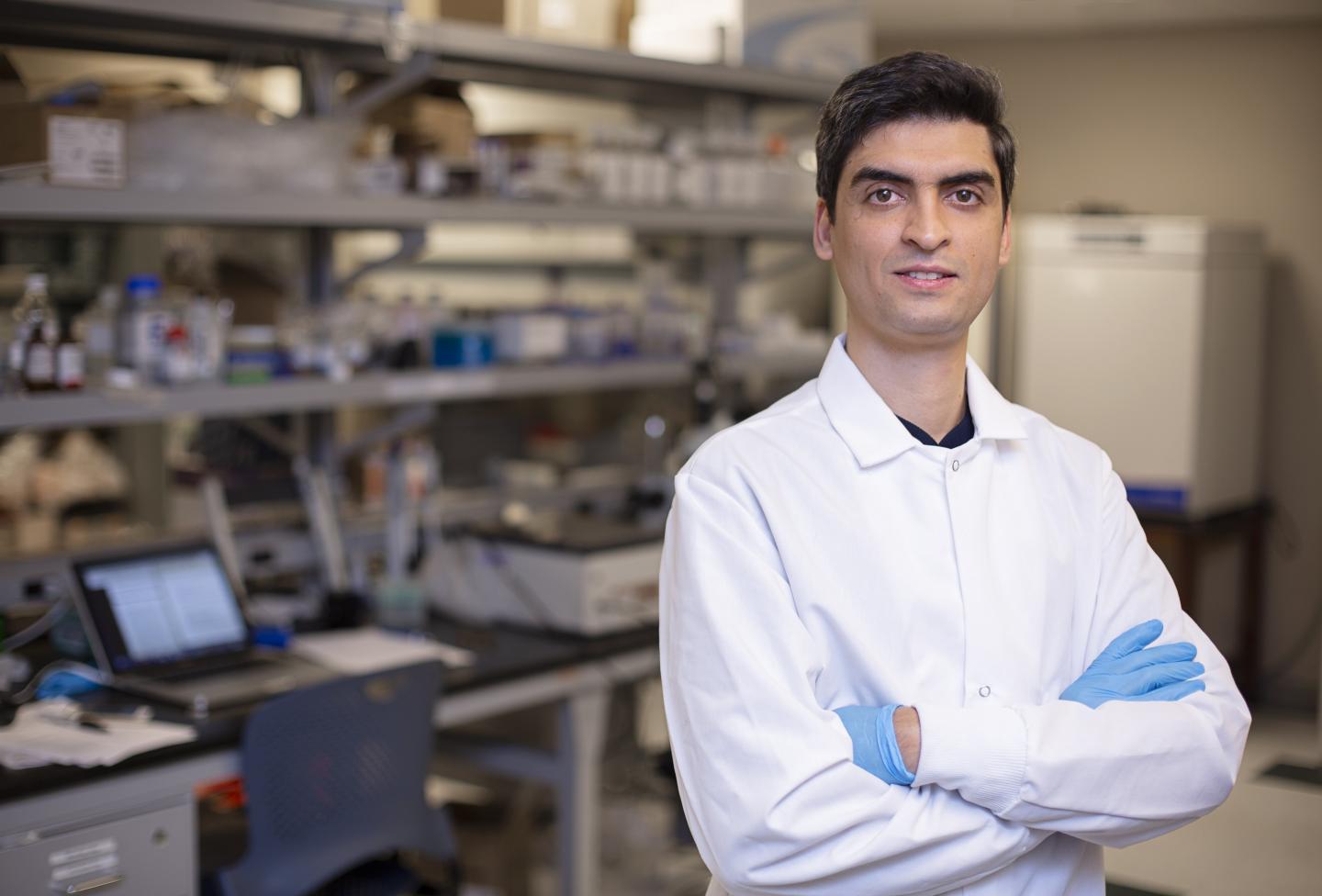
IMAGE

Credit: Utah State University

LOGAN, UTAH — Researchers at Utah State University have developed new devices to mechanically stress human cells in the lab.

In a study published in Lab on a Chip, researchers Elizabeth Vargis, a USU assistant professor of biological engineering and Farhad Farjood, a Ph.D. student in Vargis' Lab, wanted to better understand the triggers of age-related macular degeneration (AMD), a degenerative eye disease and the leading cause of adult blindness in developed countries. Physical changes within the retina are an important factor in the development of AMD. However, the effect of physical changes during the disease is not clearly understood.

"Physical changes that occur prior to or during disease are difficult to model outside of the body," said Vargis. "We know that these changes are important, so we decided to build devices to better replicate them."

Currently there are no devices to realistically model varying levels of physical disruption available on the market. Therefore the researchers created two new devices: one that mimics slow and continuous stress levels and one for mimicking high levels of stress.

"We used these devices to replicate stress on retinal cells and found that mechanical stress results in the expression of vascular endothelial growth factor, a protein that can cause disease initiation and progression," said Farjood.

The purpose of the study was to mimic changes in cells and find the mechanisms for the initiation and progression of diseases. The study looks at the effects of mechanical stress on elevated protein levels and abnormal development of new blood vessels.

Besides AMD, mechanical stress can occur in other diseases including diabetic retinopathy and even cancer.

"There are many clinical studies taking place to discover the causes of disease," said Farjood. "Our work is an example of how engineering techniques can help us better understand the disease mechanisms."

###

Media Contact

Dr. Elizabeth Vargis
[email protected]
435-797-0618

http://www.usu.edu

Original Source

https://engineering.usu.edu/news/main-feed/2018/vargis-retinal-cell-mechanical-stress-study http://dx.doi.org/10.1039/C8LC00659H


Share12Tweet7Share2ShareShareShare1

Related Posts

Guiding Patients Through Obesity Diagnosis: A Primer

February 8, 2026

Evaluating a Self-Care App for Chest Trauma Patients

February 8, 2026

Anesthesia Method’s Impact on Elderly Hip Fracture Recovery

February 8, 2026

Menopause Care: Insights from Workforce Review and Consultation

February 7, 2026
Please login to join discussion

POPULAR NEWS

  • Robotic Ureteral Reconstruction: A Novel Approach

    Robotic Ureteral Reconstruction: A Novel Approach

    82 shares
    Share 33 Tweet 21
  • Digital Privacy: Health Data Control in Incarceration

    63 shares
    Share 25 Tweet 16
  • Breakthrough in RNA Research Accelerates Medical Innovations Timeline

    53 shares
    Share 21 Tweet 13
  • Mapping Tertiary Lymphoid Structures for Kidney Cancer Biomarkers

    50 shares
    Share 20 Tweet 13

About

We bring you the latest biotechnology news from best research centers and universities around the world. Check our website.

Follow us

Recent News

Guiding Patients Through Obesity Diagnosis: A Primer

Evaluating a Self-Care App for Chest Trauma Patients

Anesthesia Method’s Impact on Elderly Hip Fracture Recovery

Subscribe to Blog via Email

Enter your email address to subscribe to this blog and receive notifications of new posts by email.

Join 73 other subscribers
  • Contact Us

Bioengineer.org © Copyright 2023 All Rights Reserved.

Welcome Back!

Login to your account below

Forgotten Password?

Retrieve your password

Please enter your username or email address to reset your password.

Log In
No Result
View All Result
  • Homepages
    • Home Page 1
    • Home Page 2
  • News
  • National
  • Business
  • Health
  • Lifestyle
  • Science

Bioengineer.org © Copyright 2023 All Rights Reserved.